Elaboração de atividades didáticas com inteligência artificial generativa: uma experiência de pesquisa na formação inicial de professores do ensino fundamental
DOI:
https://doi.org/10.7346/-fei-XXIV-02-26_18Palavras-chave:
Plano de aula, Formação inicial de professores, Inteligência artificial generativa, Ensino fundamental, Inteligência artificial generativa na formação de professoresResumo
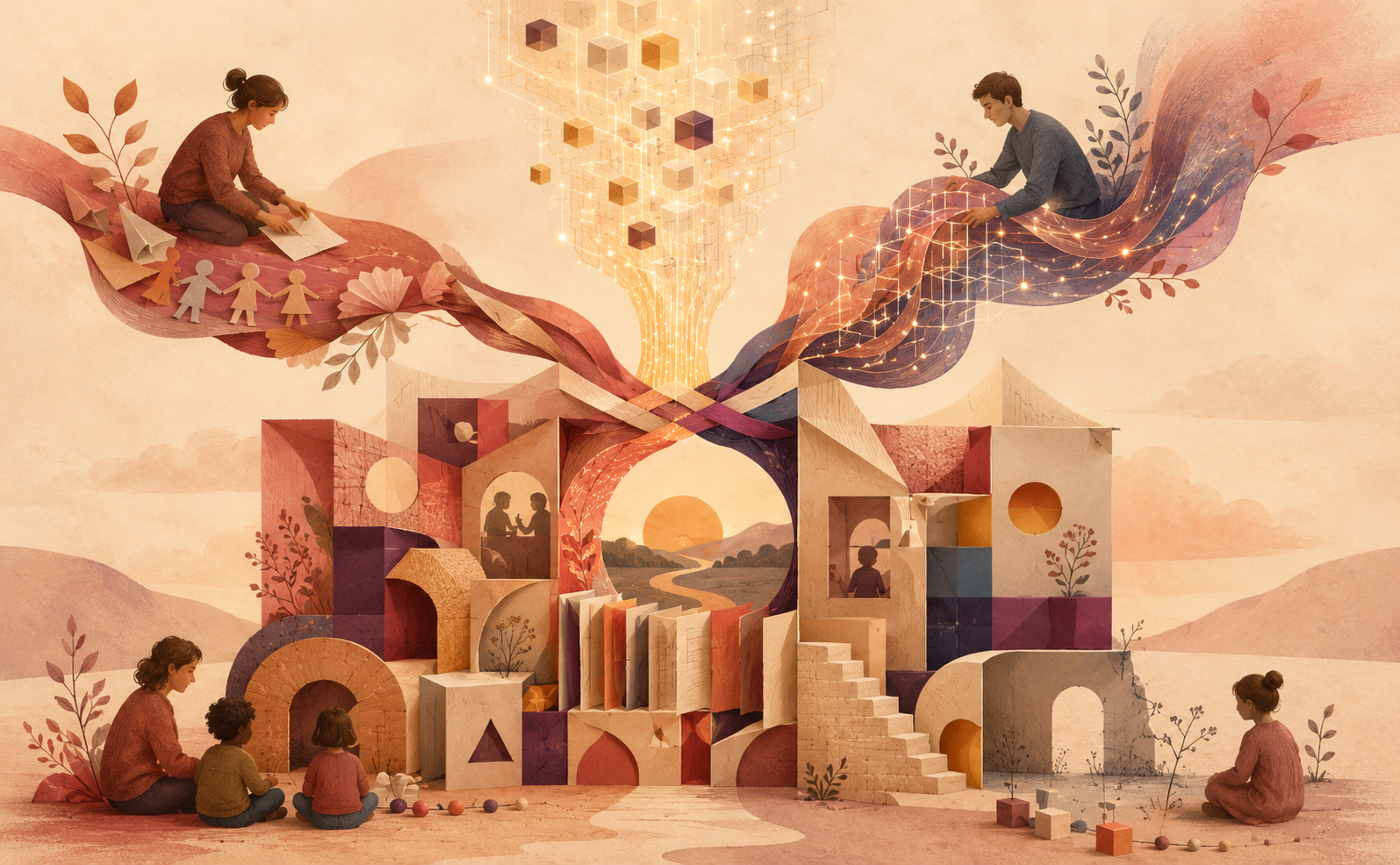
A inteligência artificial generativa (IAG) está redefinindo numerosos processos pedagógicos. Este estudo investigou o papel da IAG na elaboração de planos de aula no ensino fundamental, envolvendo 46 estudantes do curso de formação de professores oferecido pela University of Genova durante o ano acadêmico de 2025/2026. A pesquisa analisa e compara três tipos de planos de aula: aqueles elaborados pelos estudantes sem ferramentas digitais, aqueles gerados pela IAG por meio de um comando específico fornecido pelo pesquisador e aqueles produzidos pelos estudantes com uso autônomo da ferramenta. Dois avaliadores - um professor com ampla experiência e um par - avaliaram todos os planos de aula utilizando um instrumento voltado à análise de cinco dimensões: o envolvimento cognitivo, a promoção da interação em sala de aula, a qualidade dos conteúdos didáticos, a eficácia do feedback e o apoio socioemocional. Os resultados mostram pontuações elevadas nos planos de aula produzidos pelos estudantes e oferecem contribuições valiosas nas dimensões observadas. Os achados evidenciam o bom desempenho da IAG no apoio à produção de conteúdos, ao mesmo tempo que revelam limitações em áreas relacionadas à inclusão e ao feedback.
Referências
Aljemely, Y. (2024). Challenges and best practices in training teachers to utilize artificial intelligence: A systematic review. Frontiers in Education, 9, Article 1470853. https://doi.org/10.3389/feduc.2024.1470853
Almufareh, M. F., Kausar, S., Humayun, M., & Tehsin, S. (2024). A conceptual model for inclusive technology: Advancing disability inclusion through artificial intelligence. Journal of Disability Research, 3, 1–11. e20230060. https://doi.org/10.57197/JDR-2023-0060
Aravantinos, S., Lavidas, K., Komis, V., Karalis, T., & Papadakis, S. (2026). Artificial intelligence in K-12 education: A systematic review of teachers’ professional development needs for AI integration. Computers, 15(1), Article 49. https://doi.org/10.3390/computers15010049
Benvenuto, G. (2015). Stili e metodi della ricerca educativa. Carocci.
Campbell, D. T., & Stanley, J. C. (1966). Experimental and quasi-experimental designs for research. Rand McNally.
Celik, I., Kontkanen, S., Laru, J., & Dalyanci, A. A. (2026). Co-constructing adaptive lesson plans with GenAI: Pre-service teachers’ Intelligent-TPACK and prompt engineering strategies. Computers & Education, 241, Article 105485. https://doi.org/10.1016/j.compedu.2025.105485
Charmaz, K. (2014). Constructing grounded theory. Sage.
Chassignol, M., Khoroshavin, A., Klimova, A., & Bilyatdinova, A. (2018). Artificial intelligence trends in education: A narrative overview. Procedia Computer Science, 136, 16–24. https://doi.org/10.1016/j.procs.2018.08.233
Chen, L., Chen, P., & Lin, Z. (2020). Artificial intelligence in education: A review. IEEE Access, 8, 75264–75278. https://doi.org/10.1109/ACCESS.2020.2988510
Commissione europea. (2022). Orientamenti etici per gli educatori sull’uso dell’intelligenza artificiale (IA) e dei dati nell’insegnamento e nell’apprendimento. Ufficio delle pubblicazioni dell’Unione europea. https://doi.org/10.2766/153756
Corbin, J., & Strauss, A. (2015). Basics of qualitative research: Techniques and procedures for developing grounded theory. Sage.
Creswell, J. W. (2019). Research design: Qualitative, quantitative, and mixed methods approaches. Sage.
Di Martino, V. (2024). L’intelligenza artificiale in ambito educativo: Percezioni dei docenti in formazione iniziale. Education Sciences & Society, 2, 88–104. https://doi.org/10.3280/ess2-2024oa18470
Dicataldo, M. C., Guerriero, M. A., Lamacchia, M., & Dipace, A. (2025). Intelligenza artificiale e formazione dei docenti di scuola: Una revisione della letteratura. IUL Research, 6(12), 103–116. https://doi.org/10.57568/iulresearch.v6i12.741
Ding, Y. (2025). New pathways for teacher professional development: A case study of pre-service teachers using AI for lesson planning and reflection. Artificial Intelligence Education Studies, 1(2), 63–78. https://doi.org/10.6914/aiese.010205
ElSayary, A., Kuhail, M. A., & Hojeij, Z. (2025). Examining the role of prompt engineering in utilizing generative AI tools for lesson planning: Insights from teachers’ experiences and perceptions. Human Behavior and Emerging Technologies, 2025(1), Article 9986139. https://doi.org/10.1155/hbe2/9986139
Ferrari, S. (2012). Forme e ambiti della progettazione: Indicazioni operative. In P. C. Rivoltella, & P. G. Rossi (Eds.). L’agire didattico: Manuale per l’insegnamento (pp. 217–233). La Scuola.
Fiorucci, A., & Bevilacqua, A. (2025). Il dibattito scientifico sull’intelligenza artificiale in ambito educativo: Una scoping review sugli approcci e sulle tendenze della ricerca pedagogica in Italia. Education Sciences & Society, (2), 416–436. https://doi.org/10.3280/ess2-2024oa18523
Foschi, L. C., Doria, B., Laici, C., Gratani, F., Screpanti, L., Fiorentino, M. G., Rossi, P. G., Giannandrea, L., Grion, V., & Montone, A. (2025). AI e feedback: Interazione tra agenti umani e artificiali per valutare prove scritte in ambito universitario. Education Sciences & Society, (2), 142–156. https://doi.org/10.3280/ess2-2024oa18951
Gentile, M., Città, G., Perna, S., & Allegra, M. (2023). Do we still need teachers? Navigating the paradigm shift of the teacher’s role in the AI era. Frontiers in Education, 8, Article 1161777. https://doi.org/10.3389/feduc.2023.1161777
Glavaš, A., Staščik, A., & Jukić, R. (2025). Evaluation of lesson plan generated by ChatGPT 4.0: Focus group. Retrieved May 6, 2026, from https://ieeexplore.ieee.org/document/11131755/
Grassini, S. (2023). Shaping the future of education: Exploring the potential and consequences of AI and ChatGPT in educational settings. Education Sciences, 13(7), Article 692. https://doi.org/10.3390/educsci13070692
Gülbay, E., Falzone, Y., & La Marca, A. (2024). Intelligenza artificiale e formazione dei futuri insegnanti. Pensa MultiMedia.
Hansen, R., Prilop, C. N., Alsted Nielsen, T., Møller, K. L., Frøhlich Hougaard, R., & Büchert Lindberg, A. (2025). The effects of an AI feedback coach on students’ peer feedback quality, composition, and feedback experience. Tidsskriftet Læring og Medier, 17(31), 195841. https://doi.org/10.7146/lom.v17i31.148831
Heine, S., & König, J. (2025). Applying artificial intelligence in teacher education: Preservice teachers’ attitudes and reflections in using ChatGPT for teaching and learning. European Journal of Teacher Education, 48(5), 1–30. https://doi.org/10.1080/02619768.2025.2540791
Huynh, L., Le, T. H., Dang, B., An, B. T., Vu, C. T., & Nguyen, A. (2025). Mindset matters: Fostering teachers’ responsible AI use through professional development. Journal of New Approaches in Educational Research, 14(1), Article 23. https://doi.org/10.1007/s44322-025-00043-y
Jamal, D. A. (2023). The role of artificial intelligence (AI) in teacher education: Opportunities & challenges. International Journal of Research and Analytical Reviews, 10(1), 140–146. Retrieved May 6, 2026, from https://ijrar.org/papers/IJRAR23A2629.pdf
Karaman, M. R., & Göksu, İ. (2024). Are lesson plans created by ChatGPT more effective? An experimental study. International Journal of Technology in Education, 7(1), 107–127. https://doi.org/10.46328/ijte.607
Kehoe, F. (2023). Leveraging generative AI tools for enhanced lesson planning in initial teacher education at post primary. Irish Journal of Technology Enhanced Learning, 7(2), 172–182. https://doi.org/10.22554/ijtel.v7i2.124
Kerr, R. C., & Kim, H. (2025). From prompts to plans: A case study of pre-service EFL teachers’ use of generative AI for lesson planning. English Teaching, 80(1), 95–118. https://doi.org/10.15858/engtea.80.1.202503.95
Kohnke, L., & Zou, D. (2025). The role of ChatGPT in enhancing English teaching: A paradigm shift in lesson planning and instructional practices. Educational Technology & Society, 28(3), SP02. https://doi.org/10.30191/ETS.202507_28(3).SP02
Laru, J., Celik, I., Jokela, I., & Mäkitalo, K. (2025). The antecedents of pre-service teachers’ AI literacy: Perceptions about own AI driven applications, attitude towards AI and knowledge in machine learning. European Journal of Teacher Education, 48(5), 964–986. https://doi.org/10.1080/02619768.2025.2535623
Li, T., Ji, Y., & Zhan, Z. (2024). Expert or machine? Comparing the effect of pairing student teacher with in-service teacher and ChatGPT on their critical thinking, learning performance, and cognitive load in an integrated-STEM course. Asia Pacific Journal of Education, 44(1), 45–60. https://doi.org/10.1080/02188791.2024.2305163
Ministero dell’Istruzione e del Merito. (2025). Linee guida per l’introduzione dell’intelligenza artificiale nelle istituzioni scolastiche. Version 1.0. Retrieved May 6, 2026, from https://mim.gov.it/documents/20182/0/MIM_Linee+guida+IA+nella+Scuola_09_08_2025-signed.pdf/b70fdc45-4b75-1f7e-73bf-eab12989b928
OECD. (2025). Unlocking high-quality teaching. OECD Publishing. https://doi.org/10.1787/f5b82176-en
OECD. (2023). Schools+ Pedagogical Taxonomy: Progress Report. OECD Publishing. [EDU/TALIS/GB(2023)10]. Retrieved May 6, 2026, from https://one.oecd.org/document/EDU/TALIS/GB(2023)10/en/pdf
Okonkwo, C. W., & Ade-Ibijola, A. (2021). Chatbots applications in education: A systematic review. Computers and Education: Artificial Intelligence, 2, Article 100033. https://doi.org/10.1016/j.caeai.2021.100033
Panjwani-Charania, S., & Zhai, X. (2024). AI for students with learning disabilities: A systematic review. In X. Zhai, & J. Krajcik (Eds.). Uses of artificial intelligence in STEM education (pp. 469–493). Oxford University Press. https://doi.org/10.1093/oso/9780198882077.003.0021
Ranieri, M. (2024). Intelligenza artificiale a scuola: Una lettura pedagogico-didattica delle sfide e delle opportunità. Rivista di scienze dell’educazione, 62(1), 123–135. Retrieved May 6, 2026, from https://rivista.pfse-auxilium.org/it/pdf/rse/maria-ranieri_rse01-2024.pdf
Scarano, R., & Ferrantino, C. (2025). Formare all’intelligenza artificiale: Un progetto-studio con docenti e futuri docenti. Education Sciences & Society, 15(2), 72–87. https://doi.org/10.3280/ess2-2024oa18463
Setyaningsih, E., Asrori, M., Ngadiso, Sumardi, Zainnuri, H., & Hariyanti, Y. (2024). Exploring high school EFL teachers’ experiences with Magic School AI in lesson planning: Benefits and insights. Voices of English Language Education Society, 8(3), 685–700. https://doi.org/10.29408/veles.v8i3.27700
Spasić, A. J., & Janković, D. S. (2023). Using ChatGPT standard prompt engineering techniques in lesson preparation: Role, instructions and seed-word prompts. https://doi.org/10.1109/ICEST58410.2023.10187269
Stenberg, C. J., Åkerfeldt, A., Stenliden, L., & McGrath, C. (2025). Teaching with the algorithm: Anticipations of AI in teacher education. European Journal of Teacher Education, 48(5), 1056–1076. https://doi.org/10.1080/02619768.2025.2540793
Teddlie, C., & Tashakkori, A. (2009). Foundations of mixed methods research: Integrating quantitative and qualitative approaches in the social and behavioral sciences. Sage.
Trinchero, R., & Robasto, D. (2019). I mixed methods nella ricerca educativa. Mondadori.
UNESCO. (2024). AI competency framework for teachers. UNESCO. https://doi.org/10.54675/ZJTE2084
UNESCO. (2021). AI and education: Guidance for policy-makers. UNESCO. https://doi.org/10.54675/PCSP7350
Van den Berg, G., & Du Plessis, E. (2023). ChatGPT and generative AI: Possibilities for its contribution to lesson planning, critical thinking and openness in teacher education. Education Sciences, 13(10), Article 998. https://doi.org/10.3390/educsci13100998
Wintersberg, L., & Pittich, D. (2025). Toward a universal definition of instructional design: A systematic review. Discover Education, 4(1), Article 100. https://doi.org/10.1007/s44217-025-00491-w
Yim, I. H. Y., & Su, J. (2025). Artificial intelligence literacy education in primary schools: A review. International Journal of Technology and Design Education, 35(5), 2175–2204. https://doi.org/10.1007/s10798-025-09979-w
Yorulmaz, A., Okulu, H. Z., Muslu-Komurcu, N., & Cokcaliskan, H. (2025). Enhancing STEM lesson plans: Preservice primary teachers’ collaboration with ChatGPT. Education and Information Technologies, 30, 24543–24573. https://doi.org/10.1007/s10639-025-13736-w
Ó Ceallaigh, T. J., O’Brien, E., Tømte, C., Kulaksız, T., & Connolly, C. (2025). Rethinking teacher education in an AI world: Perceptions, readiness and institutional support for generative AI integration. European Journal of Teacher Education, 48(5), 1–20. https://doi.org/10.1080/02619768.2025.2563696
Özdemir, S. (2024). Getting support from Microsoft Copilot in lesson plan preparation: Pre-service teachers’ experiences and opinions. Information Technologies and Learning Tools, 104(6), 180–196. https://doi.org/10.33407/itlt.v104i6.5859
Downloads
Publicado
Como Citar
Edição
Seção
Categorias
Licença
Copyright (c) 2026 Elisabetta Nicchia

Este trabalho está licenciado sob uma licença Creative Commons Attribution 4.0 International License.
Formazione & insegnamento é distribuído sob a Attribution 4.0 International (CC BY 4.0).
Para obter mais detalhes, consulte nossa Política de Repositório e Arquivamento, bem como nossos Termos de Direitos Autorais e Licenciamento.