Il fumetto "contestuale" come dispositivo di consapevolezza: Co-educare nei servizi educativi per la prima infanzia durante la fase di ambientamento
DOI:
https://doi.org/10.7346/-fei-XXIV-02-26_10Parole chiave:
Ambientamento, Co-educazione, Consapevolezza genitoriale, Fumetto, Servizi educativi per la prima infanziaAbstract
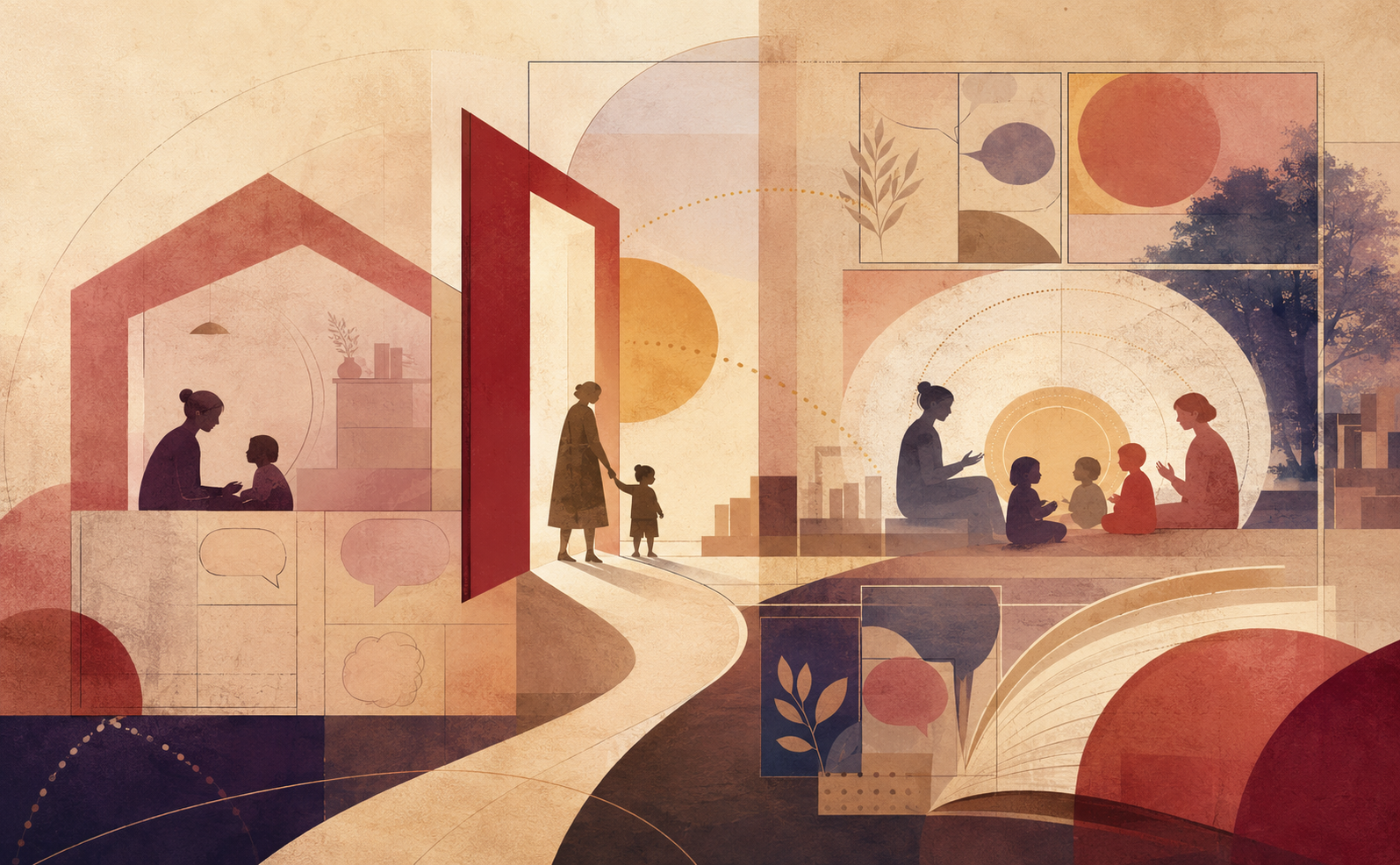
Il presente contributo esplora l’uso del fumetto come strumento di consapevolezza pedagogica all’interno della fase di ambientamento nei servizi educativi per la prima infanzia, attraverso un progetto di ricerca-azione condotto in una realtà educativa specifica del territorio partenopeo. Superando la visione dell’inserimento come processo unidirezionale centrato quasi esclusivamente sul bambino, si propone un paradigma sistemico e co-educativo che valorizza l’interazione tra educatori e caregiver, all’interno della quale il fumetto assume la funzione di linguaggio riflessivo e dispositivo narrativo in grado di rappresentare e decostruire alcune ‘configurazioni’ relazionali osservate, soprattutto nelle modalità di separazione-ricongiungimento, promuovendo processi trasformativi nei caregiver in direzione co-educativa. Dopo aver delineato il quadro teorico e metodologico, il contributo discute i principali risultati emersi, sottolineando il potenziale educativo del linguaggio visivo e la sua capacità di stimolare processi di autoriflessione e alleanza educativa.
Riferimenti bibliografici
Ainsworth, M. D. S., Blehar, M. C., Waters, E., & Wall, S. (1979). Patterns of attachment: A psychological study of the Strange Situation (1st ed.). Psychology Press. https://doi.org/10.4324/9781315802428
Bandura, A. (1997). Self-efficacy: The exercise of control. W. H. Freeman.
Batini, F. (2008). Le storie siamo noi: Gestire le scelte e costruire la propria vita con le narrazioni. Liguori.
Bettelheim, B. (1987). Un genitore quasi perfetto. Feltrinelli.
Bion, W. R. (1962). Learning from experience (1st ed.). Jason Aronson.
Bove, C. (2012). Accogliere i bambini e le famiglie nei servizi per l’infanzia. Rivista Italiana di Educazione Familiare, 1, 5–17.
Bowlby, J. (1969). Attachment and loss: Vol. 1. Attachment. Basic Books.
Bowlby, J. (1988). A secure base: Parent-child attachment and healthy human development. Basic Books.
Bracken, B. A. (Ed.). (1996). Handbook of self-concept: Developmental, social, and clinical considerations. John Wiley & Sons.
Brazelton, T. B., & Greenspan, S. I. (2000). The irreducible needs of children: What every child must have to grow, learn, and flourish. Da Capo Press.
Bronfenbrenner, U. (1979). The ecology of human development: Experiments by nature and design. Harvard University Press. https://doi.org/10.2307/j.ctv26071r6
Brooker, L. (2008). Supporting transitions in the early years. Open University Press.
Bruner, J. (1990). Acts of meaning. Harvard University Press.
Cassidy, J. (1994). Emotion regulation: Influences of attachment relationships. Monographs of the Society for Research in Child Development, 59(2–3), 228–249.
Cescato, S. (2012). Bambini, genitori, educatori al nido d’infanzia: Un’esplorazione “micropedagogica” dei momenti di transizione [Doctoral dissertation, Università degli Studi di Milano-Bicocca]. BOA Bicocca Open Archive. https://boa.unimib.it/handle/10281/37950
Chodorow, N. (1978). The reproduction of mothering: Psychoanalysis and the sociology of gender. University of California Press. Updated ed. https://doi.org/10.2307/jj.2373318
Coopersmith, S. (1967). The antecedents of self-esteem. W. H. Freeman.
De Simone, M. (2020). L’educativo per gli studenti universitari: Un’analisi qualitativa. Formazione, Lavoro, Persona, 10(30), 104–123. https://doi.org/10.3280/FLP2020-030007
De Simone, M. (2024). La pedagogia contemplativa per la formazione dei professionisti in ambito educativo. Liguori.
Demetrio, D. (1997). Nel tempo della pluralità: Educazione interculturale in discussione e in ricerca. La Nuova Italia.
Denham, S. A. (1998). Emotional development in young children. Guilford Press.
Dockett, S., Petriwskyj, A., & Perry, B. (2014). Theorising Transition: Shifts and Tensions. In B. Perry, S. Dockett, & A. Petriwskyj (Eds.), Transitions to school: International research, policy and practice (pp. 1–18). Springer. https://doi.org/10.1007/978-94-007-7350-9
Dusi, P., & Pati, L. (2011). Corresponsabilità educativa. La Scuola.
Elliot, J., Giordan, A., & Scurati, C. (1993). La ricerca azione: Metodiche, strumenti, casi. Bollati Boringhieri.
Epstein, J. L. (2018). School, family, and community partnerships: Preparing educators and improving schools (2nd ed.). Routledge.
Fonagy, P. (2002). Psicoanalisi e teoria dell’attaccamento. Raffaello Cortina.
Fonagy, P., Gergely, G., & Jurist, E. L. (Eds.). (2002). Affect regulation, mentalization and the development of the self. Routledge. https://doi.org/10.4324/9780429471643
Fraiberg, S. (1977). Every child’s birthright: In defense of mothering. Basic Books.
Garcia De Avila, M. A., Prata, R. A., Jacob, F. L. D. S., Nóbrega, F. M. O., De Barros, G. R., & Sugiura, B. M. G. (2022). Educational intervention through a comic book for preoperative anxiety in children, adolescents, and their parents: A randomized clinical trial. Journal of Pediatric Nursing, 67, e208–e214. https://doi.org/10.1016/j.pedn.2022.07.010
Goleman, D. (1995). Emotional intelligence. Bantam Books.
Goodall, J., & Montgomery, C. (2014). Parental involvement to parental engagement: A continuum. Educational Review, 66(4), 399–410. https://doi.org/10.1080/00131911.2013.781576
Gottman, J., & DeClaire, J. (1998). Raising an emotionally intelligent child. Simon & Schuster.
Harter, S. (1999). The construction of the self: A developmental perspective. Guilford Press.
Kohlberg, L. (1984). The psychology of moral development: Essays on moral development. Harper & Row.
LeVine, R. A., & New, R. S. (Eds.). (2009). Antropologia e infanzia: Sviluppo, cura, educazione. Studi classici e contemporanei. Raffaello Cortina.
Mahler, M. S. (1975). The psychological birth of the human infant: Symbiosis and individuation (1st ed.). Routledge. https://doi.org/10.4324/9780429482915
Main, M., & Solomon, J. (1990). Procedures for identifying infants as disorganizd/disoriented during the Ainsworth Strange Situation. In M. T. Greenberg, D. Cicchetti, & E. M. Cummings (Eds.), Attachment in the preschool years: Theory, research, and intervention (pp. 121–160). University of Chicago Press.
Mantovani, S. (2007). Bambini e genitori immigrati nelle scuole dell’infanzia in cinque paesi. Educazione interculturale, 5(3), 323–339. https://boa.unimib.it/handle/10281/6316
Mantovani, S., Saitta, R. L., & Bove, C. (2000). Attaccamento e inserimento: Stili e storie delle relazioni al nido. FrancoAngeli.
Massa, R. (Ed.). (1992). La clinica della formazione: Un’esperienza di ricerca. FrancoAngeli.
Mayer, R. E., & Moreno, R. (2003). Nine ways to reduce cognitive load in multimedia learning. Educational Psychologist, 38(1), 43–52. https://doi.org/10.1207/S15326985EP3801_6
Milani, P. (2008). Co-educare i bambini: Genitori e insegnanti insieme a scuola. Pensa MultiMedia.
Milani, P. (2018). Educazione e famiglie: Ricerche e nuove pratiche per la genitorialità. Carocci.
New, R. S., Mallory, B. L., & Mantovani, S. (2000). Cultural images of children, parents and professionals: Italian interpretations of home-school relationships. Early Education and Development, 11(5), 597–616. https://doi.org/10.1207/s15566935eed1105_4
Papalia, D. E., Olds, S. W., & Feldman, R. D. (2007). Human development (10th ed.). McGraw Hill.
Papoušek, H. (2007). Communication in early infancy: An arena of intersubjective learning. Infant Behavior and Development, 30(2), 258–266.
Piaget, J. (1932). Il giudizio morale nel fanciullo. Giunti.
Riva, M. G. (2016). Per un’ermeneutica delle pratiche educative concrete: Il contributo della psicoanalisi allo studio della materialità educativa. Scuola democratica, Learning for Democracy, 1, 249–260. https://doi.org/10.12828/83023
Rogers, C. R. (1961). On Becoming a Person: A Therapist's View of Psychotherapy. Houghton Mifflin.
Rogoff, B. (2003). La natura culturale dello sviluppo. Raffaello Cortina. (Original work published 2003)
Rosas-Blum, E. D., Granados, H. M., Mills, B. W., & Leiner, M. (2018). Comics as a medium for parent health education: Improving understanding of normal 9-month-old developmental milestones. Frontiers in Pediatrics, 6, Article 203. https://doi.org/10.3389/fped.2018.00203
Rothwell, E., Cheek-O’Donnell, S., Johnson, E., Wilson, A., Anderson, R. A., & Botkin, J. (2021). Exploring the use of a comic for education about expanded carrier screening among a diverse group of mothers. Journal of Communication in Healthcare, 14(3), 252–258. https://doi.org/10.1080/17538068.2021.1909398
Schore, A. N. (1994). Affect regulation and the origin of the self: The neurobiology of emotional development (1st ed.). Psychology Press. https://doi.org/10.4324/9781410604163
Siegel, D. J., & Bryson, T. P. (2012). The whole-brain child: 12 revolutionary strategies to nurture your child’s developing mind. Bantam Books.
Siegel, D. J., & Hartzell, M. (2003). Parenting from the inside out: How a deeper self-understanding can help you raise children who thrive. Tarcher/Penguin.
Stern, D. N. (1985). The interpersonal world of the infant: A view from psychoanalysis and developmental psychology (1st ed.). Routledge. https://doi.org/10.4324/9780429482137
Tomasello, M. (2003). Constructing a language: A usage-based theory of language acquisition. Harvard University Press. https://doi.org/10.2307/j.ctv26070v8
Trevarthen, C. (1998). The concept and foundations of infant intersubjectivity. In S. Bråten (Ed.), Intersubjective communication and emotion in early ontogeny (pp. 15–46). Cambridge University Press.
Tronick, E. Z. (Ed.). (2007). The neurobehavioral and social-emotional development of infants and children. W. W. Norton & Company.
Van Gennep, A. (1981). I riti di passaggio. Boringhieri. (Original work published 1909)
Vygotsky, L. S. (1978). Mind in society: The development of higher psychological processes. Harvard University Press. https://doi.org/10.2307/j.ctvjf9vz4
Winnicott, D. W. (1965). The maturational processes and the facilitating environment: Studies in the theory of emotional development (1st ed.). The Hogarth Press and the Institute of Psycho-Analysis.
##submission.additionalFiles##
Pubblicato
Come citare
Fascicolo
Sezione
Categorie
Licenza
Copyright (c) 2026 Mariarosaria De Simone, Alessandra De Simone

TQuesto lavoro è fornito con la licenza Creative Commons Attribuzione 4.0 Internazionale.
Formazione & insegnamento è distribuita con la seguente licenza: Attribution 4.0 International (CC BY 4.0).
Per ulteriori dettagli, si rimanda alle Politiche di archiviazione e ai Termini di Copyright e Licenza.