Deschooling Society, Re-embodying Education: A Contemporary Reading of Ivan Illich on Differences, Genders and Pedagogical Frontiers
Keywords:
Ivan Illich, Deschooling, Embodiment, Gender, ConvivialityAbstract
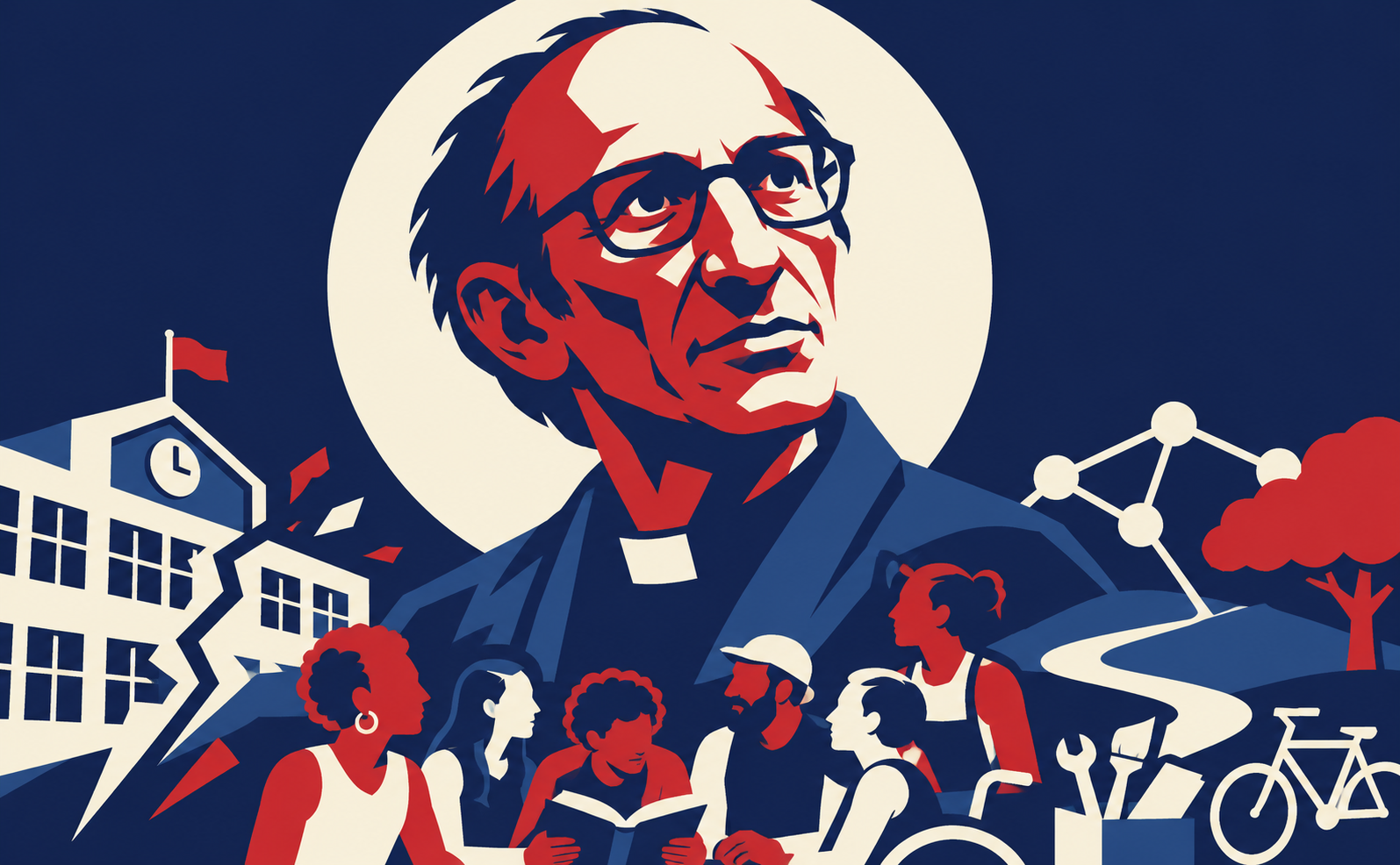
More than fifty years after the publication of Deschooling Society, Ivan Illich’s work continues to provide valuable critical insights for understanding contemporary transformations in education. This article proposes a reading of Illich’s work through the interconnected lenses of bodily differences, genders, and educational plurality. Moving beyond interpretations that reduce deschooling to the rejection of formal schooling, the paper argues that Illich’s broader critique concerns the institutional production of normality and the standardization of human experience. Drawing on Illich’s Deschooling Society, Tools for Conviviality, and Gender, the article explores how contemporary educational systems continue to shape the ways in which differences are recognized, categorized, and governed. Particular attention is devoted to gender as a privileged terrain through which embodied differences become intelligible within educational contexts. While increasing attention has been devoted to diversity within educational policy and practice, many efforts at recognition remain anchored in classificatory frameworks that risk transforming difference into deficit, vulnerability, or deviation from an assumed norm. In dialogue with perspectives on embodiment and educational difference, the article advances the notion of re-embodying education as a pedagogical challenge for the present. Re-embodying education does not imply abandoning educational institutions, but rethinking them as convivial spaces capable of welcoming plural ways of inhabiting bodies, identities, and relationships. Revisiting Illich from this perspective allows us to imagine pedagogical frontiers in which differences are not normalized, corrected, or merely included, but understood as constitutive dimensions of democratic educational life.
References
Ahmed, S. (2006). Queer phenomenology: Orientations, objects, others. Duke University Press.
Ahmed, S. (2012). On being included: Racism and diversity in institutional life. Duke University Press.
Barone, P. (2004). L’animale, l’automa, il cyborg: Figurazioni del corpo nei saperi e nelle pratiche educative. Mimesis.
Barone, P. (2024). I teatri del corpo: Studi pedagogici alla luce del pensiero di Michel Foucault. Guerini e Associati.
Becker, H. S. (1963). Outsiders: Studies in the sociology of deviance. Free Press.
Bowles, G. (1983). Introduction: The context. Feminist Issues, 3, 3–6. https://doi.org/10.1007/BF02685580
Burgio, G., & Lopez, A. G. (Eds.). (2023). La pedagogia di genere: Percorsi di ricerca contemporanei. FrancoAngeli.
Burgio, G. (2012). Adolescenza e violenza: Il bullismo omofobico come formazione alla maschilità. Mimesis.
Burgio, G. (2022). Pedagogia queer. Mimesis.
Butler, J. (1990). Gender trouble: Feminism and the subversion of identity. Routledge.
Butler, J. (2004). Undoing gender. Routledge.
Chiappelli, T. (2025). Inclusive education and social justice: Queer, feminist, and decolonial studies to combat violence and discrimination in schools. Civitas Educationis. Education, Politics, and Culture, 14(2), 267–281. https://doi.org/10.7413/2281-9568149
Chiappelli, T. (2026a). Identity is not destiny: Reflections on the body through reading the Manifesto for Secularly Inspired Pedagogy. Form@re – Open Journal per la formazione in rete, 26(2), 50–62. Year suffix: a. https://doi.org/10.36253/form-20504
Chiappelli, T. (2026b). Migrant women’s bodies between coloniality, racialization, and resistance: Queer, Black, and decolonial pedagogical perspectives. Cultura Pedagogica e Scenari Educativi, 4(1), 18–26. Year suffix: b. https://doi.org/10.7347/spgs-01-2026-03
Crenshaw, K. (1991). Mapping the margins: Intersectionality, identity politics, and violence against women of color. Stanford Law Review, 43(6), 1241–1299.
Di Grigoli, A. R. (2023). La pedagogia queer e il riconoscimento della non-linearità identitaria: Verso un modello critico della cis-normatività in educazione. In G. Burgio & A. G. Lopez (Eds.), La pedagogia di genere: Percorsi di ricerca contemporanei (pp. 205–214). FrancoAngeli.
Flecha, R. (Ed.). (2014). Successful educational actions for inclusion and social cohesion in Europe. Springer. https://doi.org/10.1007/978-3-319-11176-6
Foucault, M. (1975). Surveiller et punir: Naissance de la prison. Gallimard.
Freire, P. (1970). Pedagogy of the oppressed (M. B. Ramos, Trans.). Herder and Herder. (Original work published 1968).
Fricker, M. (2007). Epistemic injustice: Power and the ethics of knowing. Oxford University Press.
Gamelli, I. (2011). Pedagogia del corpo. Raffaello Cortina.
Haraway, D. (1991). Simians, Cyborgs and Women: The Reinvention of Nature. Routledge.
Héritier, F. (1996). Masculin/Féminin: La pensée de la différence. Odile Jacob.
Illich, I. (1971). Deschooling society. Harper & Row.
Illich, I. (1973). Tools for conviviality. Harper & Row.
Illich, I. (1975). Medical nemesis: The expropriation of health. Calder & Boyars.
Illich, I. (1977). Disabling professions. In I. Illich, I. K. Zola, J. McKnight, J. Caplan, & H. Shaiken (Eds.), Disabling professions (pp. 11–39). Marion Boyars.
Illich, I. (1978). Toward a history of needs. Pantheon Books.
Illich, I. (1982). Gender. Pantheon Books.
Iori, V. (2006). Nei sentieri dell’esistere: Spazio, tempo, corpo nei processi formativi. Erickson.
Lopez, A. G. (2023). Intersezionalità: Paradigma centrale per la pedagogia. In G. Burgio & A. G. Lopez (Eds.), La pedagogia di genere: Percorsi di ricerca contemporanei (pp. 175–178). FrancoAngeli.
Lugones, M. (2008). The coloniality of gender. Worlds & Knowledges Otherwise, 2(2), 1–17.
Mancaniello, M. R., & Chiappelli, T. (2025). Fostering inclusive learning cultures through Successful Educational Actions (SEAs): Evidence-based practices in formal and non-formal settings in Sicily. Pedagogia Oggi, 23(2), 33–40. https://doi.org/10.7346/PO-022025-04
Massa, R. (1986). Le tecniche e i corpi: Un contributo alla teoria della formazione. Unicopli.
Mayo, P. (1999). Gramsci, Freire and adult education: Possibilities for transformative action. Zed Books.
Merleau-Ponty, M. (2012). Phenomenology of perception (D. A. Landes, Trans.). Routledge. (Original work published 1945).
Mezirow, J. (1991). Transformative dimensions of adult learning (1). Jossey-Bass.
Mitcham, C. (2023). Tools for conviviality: Argument, insight, influence. Conspiratio, 5, 41–92. (Original work published 1991).
Movimento della pedagogia laica. (2026). Manifesto of Secular Pedagogy. Formazione & insegnamento, 24(M1), 1–19. https://doi.org/10.7346/-fei-XXIV-M1-26_01
Popkewitz, T. S. (2008). Cosmopolitanism and the age of school reform: Science, education, and making society by making the child. Routledge.
Quijano, A. (2000). Coloniality of power, eurocentrism, and Latin America. Nepantla: Views from South, 1(3), 533–580. https://doi.org/10.1177/0268580900015002005
Rose, N. (1999). Powers of freedom: Reframing political thought. Cambridge University Press.
Samerski, S. (2018). Tools for degrowth? Ivan Illich’s critique of technology revisited. Journal of Cleaner Production, 197, 1637–1646.
Scheper-Hughes, N. (1983). Vernacular sexism: An anthropological response to Ivan Illich. Feminist Issues, 3(1), 28–37. https://doi.org/10.1007/BF02685586
Spivak, G. C. (1988). Can the subaltern speak? In C. Nelson & L. Grossberg (Eds.), Marxism and the interpretation of culture (pp. 271–313). University of Illinois Press.
Todd, S. (2001). Bringing more than I contain: Ethics, curriculum and the pedagogical demand for altered egos. Journal of Philosophy of Education, 35(3), 431–446.
Varela, F. J., Rosch, E., & Thompson, E. (1991). The embodied mind: Cognitive science and human experience. MIT Press.
Vattimo, G. (1988). The end of modernity: Nihilism and hermeneutics in postmodern culture (J. R. Snyder, Trans.). Johns Hopkins University Press. (Original work published 1985).
Published
How to Cite
License
Copyright (c) 2026 Tiziana Chiappelli

This work is licensed under a Creative Commons Attribution 4.0 International License.
Formazione & insegnamento is distributed under Attribution 4.0 International (CC BY 4.0).
For further details, please refer to our Repository & Archiving Policy, as well as our Copyright & Licensing Terms.