The role of teachers’ beliefs in the implementation of self-assessment: Validation of the “Teachers’ beliefs and attitudes towards SSA” scale
DOI:
https://doi.org/10.7346/-fei-XXIV-01-26_10Keywords:
Teachers' beliefs, Self-assessment, Formative assessment, Scale self-assessment, Faculty developmentAbstract
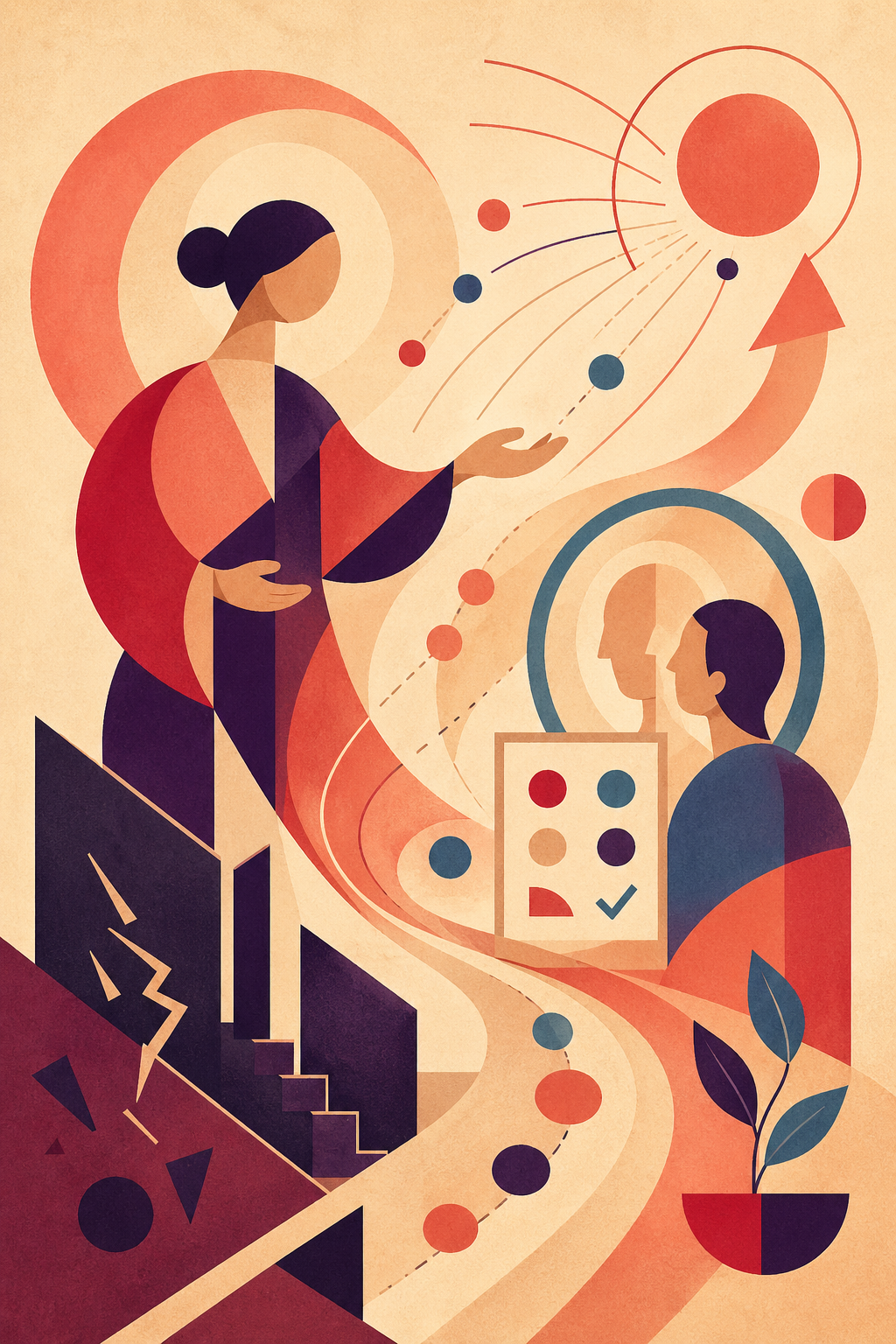
Self-assessment (SSA) in widely recognized today as a key component of formative assessment processes, as it fosters metacognitive awareness and learner responsibility. The present study aims to validate the “Teachers’ Beliefs and Attitudes towards SSA” scale by Baidoo-Anu et al. in the Italian context. Designed to systematically investigate teachers’ beliefs and attitudes towards self-assessment, the scale was administered to a large sample of 749 in-service teachers working in Italian schools. The study examined the psychometric properties of the instrument, including reliability, construct validity, and factorial structure. Findings reveal that positive beliefs are significantly associated with a greater tendency to integrate self-assessment into teaching practices, whereas negative beliefs appear to hinder its adoption. Overall, the study highlights the need to provide targeted professional development opportunities aimed at fostering a positive evolution of teachers’ beliefs, thereby helping to overcome the cultural and operational barriers that still limit the widespread implementation of self-assessment and, ultimately, promote quality education.
References
Aiello, P., Sharma, U., Di Gennaro, D. C., Dimitrov, D. M., Pace, E. M., Zollo, I., & Sibilio, M. (2017). A study on Italian teachers’ sentiments, attitudes, and concerns towards inclusive education. Formazione, Lavoro, Persona, 8(20), 10–24.
Andrade, H. L. (2019). A critical review of research on student self-assessment. Frontiers in Education, 4, Article 87. https://doi.org/10.3389/feduc.2019.00087
Baidoo-Anu, D., Asamoah, D., & Adusei, A. (2023). Teachers’ beliefs and attitudes towards students’ self-assessment: A latent profile analysis. International Journal of Educational Research Open, 5, 1–13. https://doi.org/10.1016/j.ijedro.2023.100275
Balduzzi, L., & Vannini, I. (2020). Formare un nuovo insegnante “di qualità”: L’esperienza della SSIS di Bologna. Liguori.
Black, P., & Wiliam, D. (2009). Developing the theory of formative assessment. Educational Assessment, Evaluation and Accountability, 21(1), 5–31. https://doi.org/10.1007/s11092-008-9068-5
Boud, D. (2022). Assessment-as-learning for the development of students’ evaluative judgement. In Z. Yan, & L. Yang (Eds.). Assessment as learning: Maximising opportunities for student learning and achievement (pp. 25–37). Routledge.
Boud, D. (2000). Sustainable assessment: Rethinking assessment for the learning society. Studies in Continuing Education, 22(2), 151–167. https://doi.org/10.1080/713695728
Boud, D., & Soler, R. (2016). Sustainable assessment revisited. Assessment & Evaluation in Higher Education, 41(3), 400–413. https://doi.org/10.1080/02602938.2015.1018133
Brown, G. T. L. (2004). Teachers’ conceptions of assessment: Implications for policy and professional development. Assessment in Education, 11, 301–318. https://doi.org/10.1080/0969594042000304609
Brown, G. T. L., & Harris, L. R. (2013). Student self-assessment. In J. H. McMillan (Ed.). The SAGE handbook of research on classroom assessment (pp. 367–393). SAGE. https://doi.org/10.4135/9781452218649.n21
Carless, D., & Boud, D. (2018). The development of student feedback literacy: Enabling uptake of feedback. Assessment & Evaluation in Higher Education, 43(8), 1315–1325. https://doi.org/10.1080/02602938.2018.1463354
Conway, J. M., & Huffcutt, A. I. (2003). A review and evaluation of exploratory factor analysis practices in organizational research. Organizational Research Methods, 6(2), 147–168. https://doi.org/10.1177/1094428103251541
Costello, A. B., & Osborne, J. (2005). Best practices in exploratory factor analysis: Four recommendations for getting the most from your analysis. Practical Assessment, Research, and Evaluation, 10(1), 7–27.
Fives, H., & Buehl, M. M. (2012). Spring cleaning for the “messy” construct of teachers’ beliefs: What are they? Which have been examined? What can they tell us?. In K. R. Harris, S. Graham, T. Urdan, S. Graham, J. M. Royer, & M. Zeidner (Eds.). APA educational psychology handbook (pp. 471–499). American Psychological Association. Vol. 2, Individual differences and cultural and contextual factors. https://doi.org/10.1037/13274-019
Giganti, M. (2025). La valutazione formativa: Risorsa per l’apprendimento. Cosa ci ha insegnato l’emergenza?. FrancoAngeli.
Girelli, C. (2022). Valutare nella scuola primaria: Dal voto al giudizio descrittivo. Carocci.
Hattie, J. (2009). Visible learning: A synthesis of over 800 meta-analyses on achievement. Routledge.
Izquierdo, I., Olea, J., & Abad, F. J. (2014). Exploratory factor analysis in validation studies: Uses and recommendations. Psicothema, 26(3), 395–400. https://doi.org/10.7334/psicothema2013.349
Margottini, M. (2019). Autovalutazione e promozione di competenze strategiche per la scuola e per il lavoro. Formazione & Insegnamento, 17(1), 309–322.
Mariani, L. (2013). Il ruolo dell’autovalutazione come competenza da costruire. Lingua e Nuova Didattica, 42(2), 1–6.
Martínez-Abad, F., Bielba-Calvo, M., & Herrera-García, M. E. (2017). Evaluación, formación e innovación en competencias informacionales para profesores y estudiantes de educación secundaria. Revista de Educación, 376, 110–129. https://doi.org/10.4438/1988-592X-RE-2017-376-346
Martínez-Maireles, D. (2024). Transformation of school assessment: Approaches within an educational innovation process: A cross-case analysis of schools in Catalonia (Spain). Ricerche di Pedagogia e Didattica – Journal of Theories and Research in Education, 19(2), 37–56. https://doi.org/10.6092/issn.1970-2221/19414
Martínez-Maireles, D., & Naranjo, M. (2023). Changes in assessment approaches in a process of educational innovation: A multiple case study in Catalonia (Spain). QTimes, 15(4), 176–193. https://doi.org/10.14668/QTimes_15415
Martínez-Maireles, D., Naranjo Llanos, M., & Tort Bardolet, A. (2022). Aportaciones y dificultades valoradas por las personas participantes en un proceso de innovación educativa de infantil a secundaria obligatoria. Revista de Investigación Educativa, 40(2), 495–512. https://doi.org/10.6018/rie.465491
Meusen-Beekman, K., Joosten-ten Brinke, D., & Boshuizen, E. (2016). De retentie van zelfregulatie, motivatie en self-efficacy in het voortgezet onderwijs na formatieve assessments in het basisonderwijs. Pedagogische Studiën, 93(3), 136–153.
Montalbetti, K. (2025). Promuovere l’autovalutazione: Dal setting formativo all’aula scolastica. Excellence and Innovation in Learning and Teaching, 1. https://doi.org/10.3280/exioa1-2025oa20581
Nunnally, J. C., & Bernstein, I. H. (1994). The assessment of reliability. Psychometric theory (pp. 248–292). McGraw-Hill. 3rd ed.
OECD (2018). Education at a glance 2018: OECD indicators. OECD Publishing. https://doi.org/10.1787/eag-2018-en
Pajares, M. F. (1992). Teachers’ beliefs and educational research: Cleaning up a messy construct. Review of Educational Research, 62(3), 307–332. https://doi.org/10.3102/00346543062003307
Panadero, A. (2017). A review of self-regulated learning: Six models and four directions for research. Frontiers in Psychology, 8, Article 422. https://doi.org/10.3389/fpsyg.2017.00422
Panadero, E., Alonso-Tapia, J., & Huertas, J. A. (2012). Rubrics and self-assessment scripts effects on self-regulation, learning and self-efficacy in secondary education. Learning and Individual Differences, 22(6), 806–813. https://doi.org/10.1016/j.lindif.2012.04.007
Pastore, S. (2023). Teacher assessment literacy: A systematic review. Frontiers in Education, 8, Article 1217167. https://doi.org/10.3389/feduc.2023.1217167
Pedone, F. (2016). La rubrica per promuovere l’autovalutazione degli insegnanti. Form@re, 16(2), 88–99. https://doi.org/10.13128/formare-18216
Scierri, I. D. M. (2024a). Perché valuto? Costruzione e validazione della scala delle Concezioni Valutative degli Insegnanti (CoVI). Ricerche di Pedagogia e Didattica – Journal of Theories and Research in Education, 19(1), 109–129. https://doi.org/10.6092/issn.1970-2221/19258
Scierri, I. D. M. (2024b). Beyond formative assessment: Construction and validation of the Teachers’ Assessment Strategies Scale (StraVI). Formazione & Insegnamento, 22(1), 97–108. https://doi.org/10.7346/-fei-XXII-01-24_11
Scierri, I. D. M. (2021). Strategie e strumenti di valutazione formativa per promuovere l’apprendimento autoregolato: Una rassegna ragionata delle ricerche empiriche. Journal of Educational, Cultural and Psychological Studies, 24, 213–227. https://doi.org/10.7358/ecps-2021-024-scie
Tammaro, R., & Gragnaniello, D. (2025). Assessment conceptions of pre-service and in-service teachers: Implications for the quality of educational research and social responsibility. Italian Journal of Educational Research, 18, 115–129. https://doi.org/10.7346/sird-1S2025-p115
Trinchero, R. (2023). Assessment as learning in university: Build students’ self-assessment skills. Pedagogia Oggi, 21(1), 108–117. https://doi.org/10.7346/PO-012023-12
Trinchero, R. (2021). Valutare per formare: Come formulare buoni giudizi descrittivi nella scuola primaria. Retrieved February 5, 2026, from https://www.murellilibri.it/files/valutazione/Valutareperformare.pdf
West, S. G., Finch, J. F., & Curran, P. J. (1995). Structural equation models with nonnormal variables: Problems and remedies. In R. H. Hoyle (Ed.). Structural equation modeling: Concepts, issues, and applications (pp. 56–75). Sage Publications.
Wiliam, D. (2011). What is assessment for learning?. Studies in Educational Evaluation, 37(1), 3–14. https://doi.org/10.1016/j.stueduc.2011.03.001
Yan, Z., & Boud, D. (2022). Conceptualising assessment-as-learning. In Z. Yan, & L. Yang (Eds.). Assessment as learning: Maximising opportunities for student learning and achievement (pp. 11–24). Routledge.
Downloads
Published
How to Cite
Issue
Section
Categories
License
Copyright (c) 2026 David Martínez-Maireles, Caterina Buzzai, Nicolina Pastena

This work is licensed under a Creative Commons Attribution 4.0 International License.
Formazione & insegnamento is distributed under Attribution 4.0 International (CC BY 4.0).
For further details, please refer to our Repository & Archiving Policy, as well as our Copyright & Licensing Terms.