Epistemic Access and the Tyranny of Performative Time: Technologies and Strategies for Structural Inclusion in Higher Music Education
DOI:
https://doi.org/10.7346/-fei-XXIV-01-26_05Keywords:
Aural Learning, Higher Music Education (AFAM), Epistemic Access, Universal Design For Learning, Visual ImpairmentAbstract
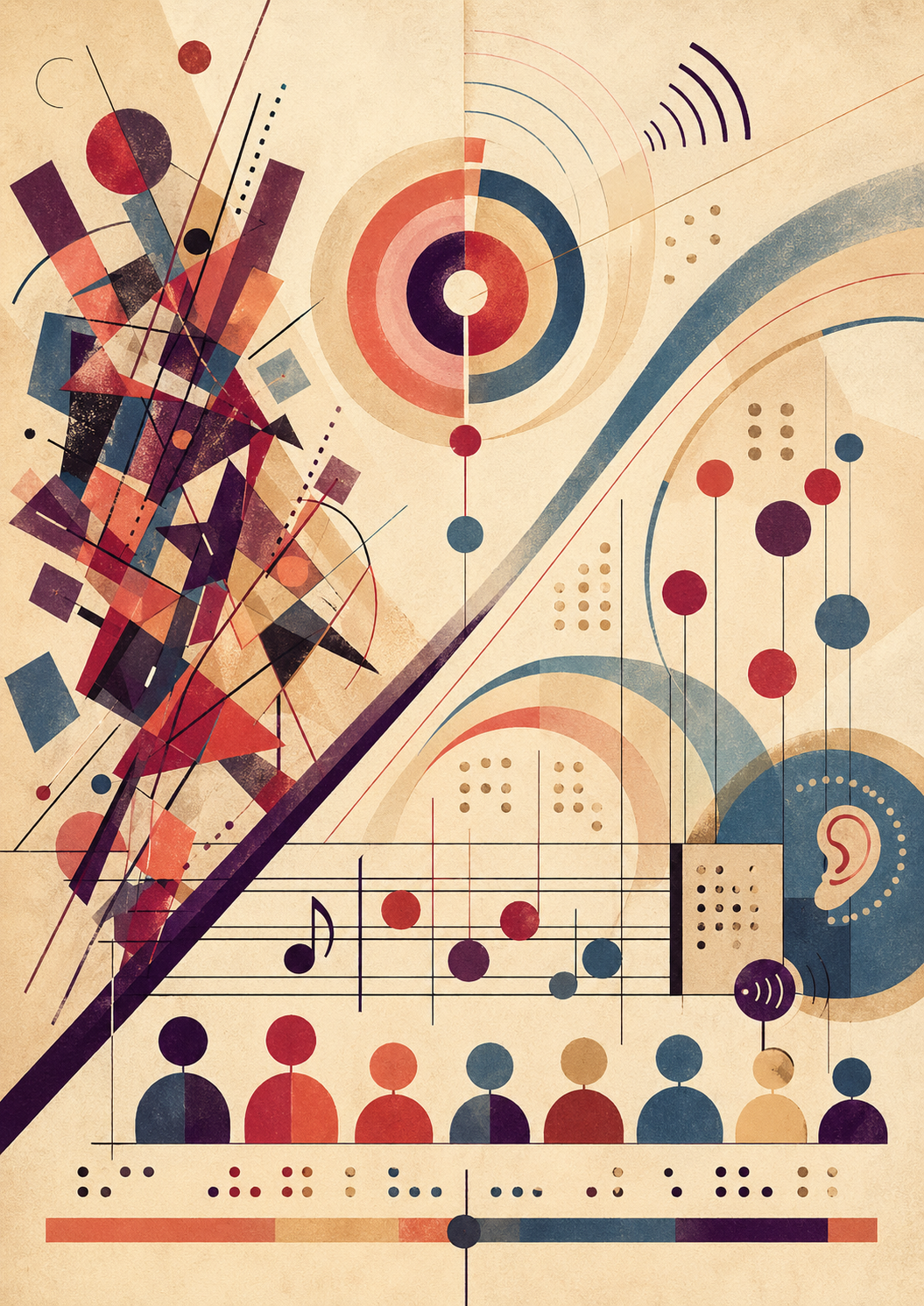
The paper analyses the structural tensions between inclusion in higher music education and its institutional architecture, highlighting the limits of conventional visual accommodations in low-vision contexts. A case study shows how chromatic-typographic remediation of scores generates excessive cognitive load and temporal asynchrony, incompatible with ensemble practice. As an alternative to the prosthetic-compensatory paradigm, a multimodal training model is proposed, based on Braille music notation, structured aural learning and mnemonic-perceptual strategies supported by haptic and audio technologies. Aurality is reframed as the generative axis of musical competence and educational technology as a systemic agent of transformation, in line with Universal Design for Learning and Article 24 of the UN Convention on the Rights of Persons with Disabilities, towards an accessible learning ecosystem beyond the primacy of visual legibility.
References
Association Européenne des Conservatoires, Académies de Musique et Musikhochschulen. (2023). Diversity, equity and inclusion in higher music education: An invitation for action. Resource package produced by the Diversity, Inclusion & Gender Equality (DIGE) Working Group. Retrieved March 5, 2026, from https://aec-music.eu/media/2023/06/Diversity-Equity-and-Inclusion-in-Higher-Music-Education-An-Invitation-for-Action.pdf
Bajo, J., Sánchez, M. A., Alonso, V., Berjón, R., Fraile, J. A., & Corchado, J. M. (2010). A distributed architecture for facilitating the integration of blind musicians in symphonic orchestras. Expert Systems with Applications, 37(12), 8508–8515. https://doi.org/10.1016/j.eswa.2010.05.025
Baker, D., Fomukong-Boden, A., & Edwards, S. (2019). “Don’t follow them, look at me!”: Contemplating a haptic digital prototype to bridge the conductor and visually impaired performer. Music Education Research, 21(3), 295–314. https://doi.org/10.1080/14613808.2019.1605344
Baker, D., Roy, A., & Yarger, R. (2014). Visually impaired musicians’ insights: Narratives of childhood, lifelong learning and musical participation. British Journal of Music Education, 31(2), 113–135. https://doi.org/10.1017/S0265051714000072
Brown, E. (2025). Disability and access in conservatoire education: A discussion of higher music education provision for people with physical disabilities. Conference abstract. Retrieved March 5, 2026, from https://www.ohmirp.org.uk/conference-abstracts/disability-and-access-in-conservatoire-education-a-discussion-of-higher-music-education-provision-for-people-with-physical-disabilities
Cappagli, G., & Gori, M. (2016). Auditory spatial localization: Developmental delay in children with visual impairments. Research in Developmental Disabilities, 53, 391–398. https://doi.org/10.1016/j.ridd.2016.02.019
Castle, C. L., Greasley, A. E., & Burland, K. (2022). The musical experiences of adults with severe sight impairment: An interpretative phenomenological analysis. Music & Science, 5, 1–19. https://doi.org/10.1177/20592043221083296
Colazzo, S. (2022). Music teaching in conservatories and processes of inclusion of pupils with disabilities. Italian Journal of Health Education, Sports and Inclusive Didactics, 6(3), 740–752. https://doi.org/10.32043/gsd.v6i3.740
DM 752/2021. (2021). Decreto ministeriale 30 giugno 2021, n. 752. Decreto ministeriale. Retrieved March 5, 2026, from https://www.mur.gov.it/sites/default/files/2021-08/DM%20n.%20752%20del%2030-06-2021.pdf
Gori, M., Sandini, G., Martinoli, C., & Burr, D. C. (2014). Impairment of auditory spatial localization in visually impaired children, and its restoration by sensorimotor training. Current Biology, 24(3), 271–274. https://doi.org/10.1016/j.cub.2013.11.020
Hourigan, R. M., Hammel, A., & Hackl-Blumstein, E. (2024). Universal design for learning in music education. Conway Publications.
IncluMusic Project. (2022). IncluMusic (2022–2025): Erasmus+ strategic partnership. Association Européenne des Conservatoires, Académies de Musique et Musikhochschulen. Erasmus+ cooperation partnership project. Retrieved March 5, 2026, from https://aec-music.eu/project/inclumusic-2022-2025-erasmus-strategic-partnership/
Jellison, J. A. (2015). Including everyone: Creating music classrooms where all children learn. Oxford University Press. https://doi.org/10.1093/acprof:oso/9780199358762.001.0001
L 104/1992(1992). Legge 5 febbraio 1992, n. 104: Legge-quadro per l'assistenza, l'integrazione sociale e i diritti delle persone handicappate. Retrieved March 5, 2026, from https://www.gazzettaufficiale.it/eli/id/1992/02/17/092G0108/sg
L 17/1999. (1999). Legge 28 gennaio 1999, n. 17: Integrazione e modifica della legge-quadro 5 febbraio 1992, n. 104, per l'assistenza, l'integrazione sociale e i diritti delle persone handicappate. Retrieved March 5, 2026, from https://www.gazzettaufficiale.it/eli/id/1999/02/02/099G0057/sg
Ministero dell’Università e della Ricerca, FLC-CGIL, CISL – Federazione Università, Federazione UIL Scuola RUA, Federazione Gilda Unams (Unione artisti AFAM), Confsal-SNALS, & CISAL-ANIEF. (2023). Contratto collettivo integrativo nazionale AFAM 2021–2024(aggiornamento 8 novembre 2023). Contrattazione collettiva nazionale integrativa. Retrieved March 5, 2026, from https://www.mur.gov.it/sites/default/files/2023-11/CIN%20AFAM%2008.11.2023%20aggiornamento%202021-2024%20formato%20accessibile.pdf
Ockelford, A. (1996). Music matters: Factors in the music education of children and young people who are visually impaired. Royal National Institute for the Blind. Institutional report.
Ockelford, A. (1992). Music notation for people with a severe visual impairment: A discussion document. Royal National Institute for the Blind. Discussion document.
Ockelford, A., Welch, G., & Zimmermann, S. (2002). Focus of practice: Music education for pupils with severe or profound and multiple difficulties—Current provision and future need. British Journal of Special Education, 29(4), 178–182. https://doi.org/10.1111/1467-8527.00266
Stake, R. E. (1995). The art of case study research. Sage.
Sweller, J., Ayres, P., & Kalyuga, S. (2011). Cognitive load theory. Springer. https://doi.org/10.1007/978-1-4419-8126-4
United Nations (2006). Convention on the Rights of Persons with Disabilities. Treaty. Retrieved March 5, 2026, from https://www.ohchr.org/en/instruments-mechanisms/instruments/convention-rights-persons-disabilities
United Nations Committee on the Rights of Persons with Disabilities. (2016). General comment No. 4(2016) on the right to inclusive education (Article 24). General comment. Retrieved March 5, 2026, from https://www.ohchr.org/en/documents/general-comments-and-recommendations/general-comment-no-4-article-24-right-inclusive
Downloads
Published
How to Cite
Issue
Section
Categories
License
Copyright (c) 2026 Paola Dato

This work is licensed under a Creative Commons Attribution 4.0 International License.
Formazione & insegnamento is distributed under Attribution 4.0 International (CC BY 4.0).
For further details, please refer to our Repository & Archiving Policy, as well as our Copyright & Licensing Terms.