Formazione & insegnamento, 24(03), 8673
Sexuality education in Italian secondary schools: Practices, challenges, and pedagogical directions
Educazione sessuale nelle scuole secondarie italiane: Pratiche, criticità e orientamenti pedagogici
ABSTRACT
Drawing on a nationwide survey of 643 lower- and upper-secondary teachers, this article offers a gender-and-education-informed snapshot of sexuality education in Italian schools. The findings reveal a sharp tension between the near-consensual recognition of sexuality education as essential and its marginal position in curricula and timetables. Provision appears fragmented, often delegated to external projects, and frequently stripped of LGBTQIA+ contents in response to local cultural and familial resistance. Teachers report limited training and uneven institutional support, but also articulate expansive aims that link sexuality education to respect, consent and inclusive citizenship. The article argues that, in the absence of a national curriculum, sexuality education becomes a key site where gendered and sexual norms are negotiated, and calls for coherent policy frameworks and sustained teacher education to move beyond episodic interventions toward structurally embedded, rights-based practice.
Basandosi su un’indagine nazionale condotta su 643 docenti della scuola secondaria di primo e secondo grado, questo articolo offre un quadro sintetico dell’educazione sessuale nelle scuole italiane, informato da una prospettiva attenta alle dimensioni di genere e ai processi educativi. I risultati mettono in luce una forte tensione tra il riconoscimento quasi unanime dell’educazione sessuale come elemento essenziale e la sua posizione marginale nei curricula e negli orari scolastici. L’offerta appare frammentata, spesso delegata a progetti esterni e frequentemente privata dei contenuti LGBTQIA+ in risposta a resistenze culturali e familiari presenti a livello locale. I docenti segnalano una formazione limitata e un sostegno istituzionale disomogeneo, ma formulano anche obiettivi ampi che collegano l’educazione sessuale al rispetto, al consenso e a una cittadinanza inclusiva. L’articolo sostiene che, in assenza di un curricolo nazionale, l’educazione sessuale diventa un luogo cruciale in cui si negoziano norme di genere e sessuali, e sollecita quadri di policy coerenti e una formazione docente continuativa per superare interventi episodici e approdare a pratiche strutturalmente integrate e fondate sui diritti.
KEYWORDS
Sexuality education, Inclusion, Teachers, Secondary school, Educational policy
Educazione sessuale, Inclusione, Docenti, Scuola secondaria, Politiche educative
AUTHORSHIP
This article is the result of the work of a single Author.
CONFLICTS OF INTEREST
The Author declares no conflicts of interest.
COPYRIGHT AND LICENSE
© Author(s). This article and its supplementary materials are released under a CC BY 4.0 license.
RECEIVED
February 24, 2026
ACCEPTED
August 16, 2026
PUBLISHED ONLINE
November 25, 2026
1. Introduction
Questions about bodies, relationships, consent and identity enter secondary classrooms whether teachers plan for them or not, through students’ questions, peer dynamics, online cultures, and the everyday work of growing up. Treating sexuality education as an optional add‑on leaves schools reacting to episodes of discomfort, conflict or violence, rather than teaching proactively. International guidance therefore frames comprehensive sexuality education as an evidence‑informed educational strategy that supports health, wellbeing and inclusive citizenship (UNESCO, 2018; WHO Regional Office for Europe & BZgA, 2010). From a gender-and-education perspective, this is not only about transmitting information, but about enabling students to interrogate gender norms, power relations and hetero‑ and cisnormative assumptions that shape their possibilities for living embodied, affective and sexual lives (Bonvini & Demozzi, 2024; Ferrero & Messi, 2023; Vanwesenbeeck et al., 2016).
In Italy, however, sexuality education remains marginal and weakly institutionalised. No national curriculum is in place, and initiatives are often implemented as short-term projects, heavily dependent on local priorities and external actors (Chinelli et al., 2024; Melendez-Torres et al., 2024; Servettini et al., 2023). Existing evidence points to a dominant biomedical and risk-prevention focus, with limited attention to emotional, relational, intercultural and identity-related dimensions, and with uneven engagement with gender- and LGBTQIA+-related issues (Aquario et al., 2024; Eleuteri et al., 2024; Rivenes Lafontan et al., 2024). This configuration produces marked territorial inequities in students’ access to inclusive sexuality education and leaves schools exposed to intense public contestation.
Schools are key institutional sites where gendered and sexual norms are produced, negotiated and challenged. What is, and is not, named in classrooms contributes to defining which bodies, relationships and identities are intelligible and worthy of protection. In contexts characterised by strong moral anxieties around gender and sexuality, such as contemporary Italy, teachers operate at the intersection of national policy vacuums, local cultural geographies and their own professional commitments (Nguyen et al., 2025). Yet their perspectives have rarely been examined through large-scale, empirically grounded studies that attend explicitly to the gendered dynamics of sexuality education and to the position of LGBTQIA+ issues within everyday school practices.
Existing Italian research has provided valuable but still fragmented evidence on sexuality education in schools, often focusing on specific educational settings, local initiatives or particular dimensions of implementation (Chinelli et al., 2024; Servettini et al., 2023). Evidence remains limited on how secondary-school teachers themselves position sexuality education within the curriculum, how prepared they feel to address sensitive topics, and how they perceive the role of school climate, cultural influences and resistance, particularly in relation to LGBTQIA+ issues. By examining these dimensions within the same empirical study, the present research addresses a still underexplored area of the Italian secondary-school context.
Against this backdrop, the present study addresses three interrelated questions: (1) how do secondary-school teachers in Italy position sexuality education in terms of perceived importance, curricular space and institutional recognition; (2) how are training, perceived preparedness and school climate associated with the implementation of sexuality-education activities; and (3) how do teachers perceive cultural influences, inclusiveness and resistances, particularly regarding LGBTQIA+ contents and diversity-related themes. Rather than limiting the analysis to the formal presence or absence of sexuality education, the article examines how it is conceptualised, implemented and regulated within schools that operate at the intersection of divergent community norms, institutional ambiguities and uneven training opportunities.
The article offers a national mapping of secondary-school teachers’ views and practices on sexuality education in Italy, showing the gap between broad normative support and limited curricular space. It also documents how teacher training, school climate and local resistances shape what can be implemented, especially when sexuality education includes LGBTQIA+ topics and diversity-related themes.
2. Theoretical framework
Sexuality education has long been a contested terrain in which biomedical, moral, religious and rights-based understandings of sexuality intersect. International scholarship converges in defining comprehensive sexuality education as an approach that integrates biological, affective, relational and socio-cultural dimensions, and that explicitly addresses gendered power relations and sexual diversity (Ferrero & Messi, 2023; UNESCO, 2018; WHO Regional Office for Europe & BZgA, 2010). Rather than limiting itself to the prevention of risk, comprehensive sexuality education aims to equip young people with critical and relational competences, supporting them in navigating intimacy, consent and difference (Nuttall et al., 2022; Servettini et al., 2023). Evidence from peer-based sexual and reproductive health interventions also suggests positive effects on adolescents’ knowledge and attitudes, although evidence concerning behavioural outcomes remains less consistent (Mason-Jones et al., 2023).
From a gender and education perspective, schools are understood as key institutions where heteronormativity and cisnormativity are reproduced, but also potentially resisted. Numerous studies show that traditional school-based programmes tend to privilege heterosexual, binary and reproductive scripts, marginalising or erasing the experiences of LGBTQIA+ youth and presenting non-normative bodies and desires as problematic or invisible (Eleuteri et al., 2024). By contrast, inclusive programmes that explicitly address gender identity, sexual orientation and diversity are associated with lower levels of victimisation, greater perceptions of safety and improved academic outcomes among sexual and gender minorities (Eleuteri et al., 2024; Ferrero & Messi, 2023).
The Italian context gives these tensions a specific institutional form. In the absence of a national curriculum, sexuality-education initiatives are often episodic, short-lived and mediated by external experts, with limited integration into the ordinary curriculum (Servettini et al., 2023). In this fragmented setting, sexuality education may become particularly contested when gender identity and sexual orientation are addressed. Teachers may therefore have to navigate sensitive topics with uneven institutional guidance and limited opportunities for specific professional development (De Simone et al., 2022; Ioverno et al., 2024; Magnanini et al., 2023).
Within this literature, three interrelated issues are particularly salient for the present study. First, several authors emphasise the paradox between widespread rhetorical support for sexuality education and its persistent marginality in curricula, timetables and institutional priorities (Milani, 2018; Servettini et al., 2023). Second, teacher education emerges as a crucial lever: without sustained work on knowledge, attitudes and classroom practice, teachers may feel unprepared to address sensitive topics or to respond to resistance from families and communities (Suligoi et al., 2023). Third, cultural and territorial factors shape the possibilities for implementing inclusive programmes, generating geographically uneven landscapes of recognition and protection for LGBTQIA+ students (Eleuteri et al., 2024; Vanwesenbeeck et al., 2016).
The present research is situated at the intersection of these debates. It brings a gender- and sexuality-aware lens to the analysis of teachers’ accounts of sexuality education, focusing on how they position this field within the curriculum, how prepared and supported they feel, and how they perceive local cultural resistance. In doing so, the study contributes to wider discussions on how schools negotiate the governance of gender and sexuality, and on the conditions under which teachers can act as agents of inclusive, rights-based sexual citizenship education.
3. Methodology
This study adopts an exploratory, cross-sectional online survey design to investigate how sexuality education is configured in Italian secondary schools, with attention to teachers’ practices, perceived preparedness, school climate and resistances around sexuality- and LGBTQIA+-related contents. The aim is to map tendencies and tensions across a broad, territorially dispersed sample rather than to provide statistically representative national estimates.
The survey addressed three questions: (1) how teachers position sexuality education in terms of perceived importance, curricular space and institutional recognition; (2) how training, perceived preparedness and school climate relate to the implementation of sexuality-education activities; and (3) how teachers perceive cultural influences, inclusiveness and resistances, particularly regarding LGBTQIA+ contents and diversity-related themes.
3.1 Sampling strategy and participants
The target population consisted of teachers working in lower and upper secondary schools in Italy. To reach a wide range of contexts without access to staff mailing lists, an invitation to complete an online questionnaire was emailed to school leaders (Dirigenti scolastici) of state lower and upper secondary schools listed on the national platform Scuola in Chiaro. School leaders were asked to forward the survey link to their teaching staff. Participation was voluntary and no incentives were offered.
This distribution strategy generated a self-selected, non-probability sample: any teacher who received the link could decide autonomously whether to participate. Because it was not possible to track how widely the link was forwarded, a response rate could not be computed. The final sample (N = 643) nevertheless covers all Italian regions and includes teachers with heterogeneous subject profiles and seniority. The geographical distribution of respondents is shown in Figure 1.
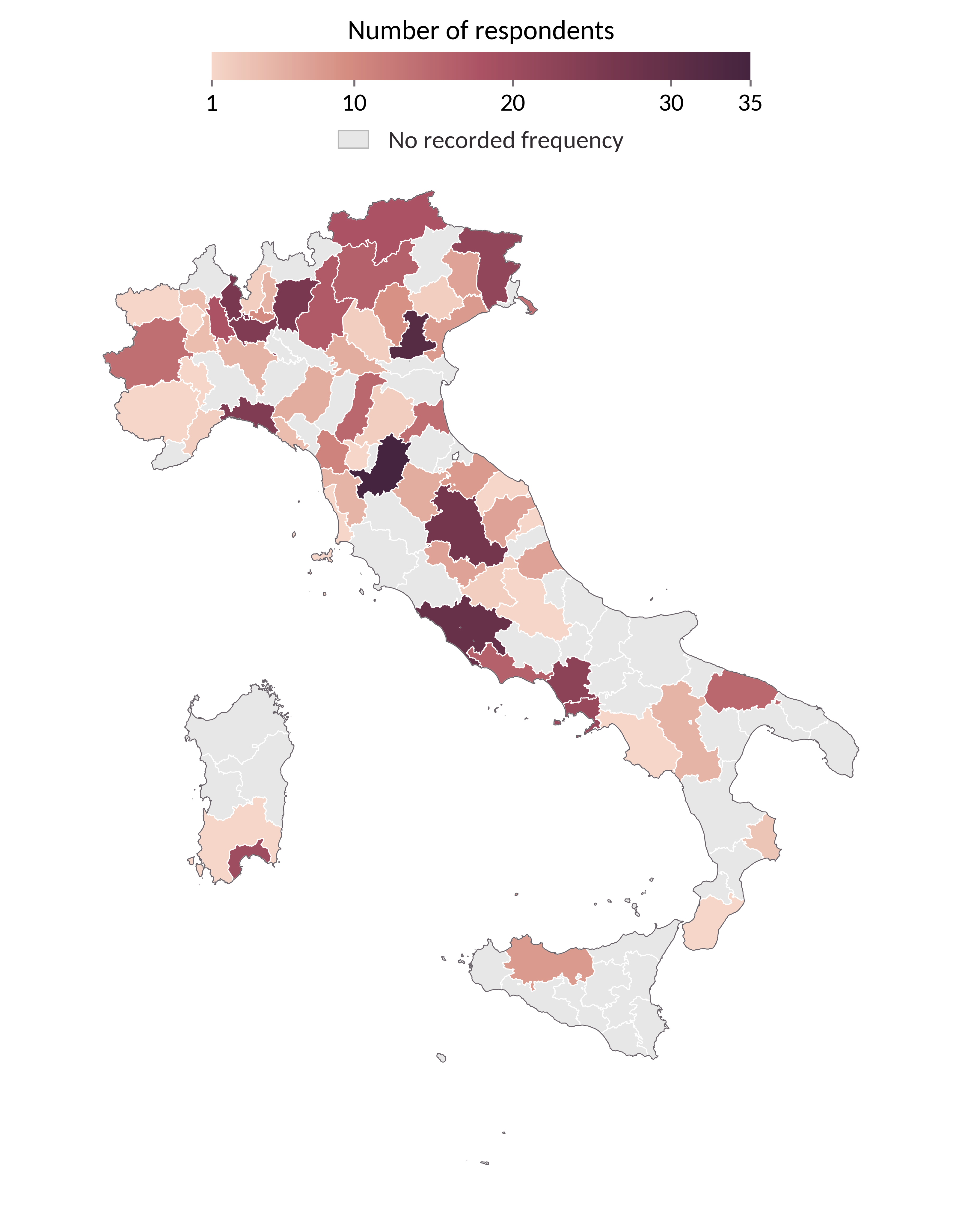
Figure . Geographical distribution of respondents by province (n = 623 out of N = 643). Note: Missing geographical responses were not imputed. Cartographic boundaries adapted from Istat (2024), CC BY 4.0.
3.2 Instrument
Data were collected through a structured questionnaire administered via Google Forms. The instrument was developed for this exploratory study, informed by international technical guidance on comprehensive sexuality education (UNESCO, 2018; WHO Regional Office for Europe & BZgA, 2010) and by recent research on teachers’ training needs and school-level barriers to inclusive implementation (Chinelli et al., 2024; De Simone et al., 2022; Eleuteri et al., 2024). These sources informed the definition of the questionnaire domains and the wording of items addressing sexuality, inclusiveness and LGBTQIA+ issues.
The questionnaire comprised four sections: (1) socio-demographic and professional information; (2) organisation of sexuality-education activities, including previous training, presence of structured programmes, delivery modes and annual hours; (3) perceived importance, educational aims, self-rated preparedness and perceived usefulness of teacher training; and (4) perceived school climate, inclusiveness, cultural influences and resistance, including staff preparedness and perceived pressures concerning LGBTQIA+ contents. Response formats included dichotomous items, multiple-choice and multiple-response items, three- and four-category ordinal items, and open-ended prompts. For example, teachers rated how prepared they felt to address sexuality-related topics in class using four ordered response categories (“not at all”, “poorly”, “fairly”, “very”), while school climate was assessed as “not favourable”, “partially favourable” or “favourable”. Items were analysed individually and no composite scores or multi-item psychometric scales were constructed. As the variables analysed in this study were based on individual items rather than multi-item scales, internal-consistency coefficients were not calculated. Open-ended prompts were included to collect additional contextual information on teaching practices, perceived barriers and possible improvements; these responses were used descriptively and were not subjected to a formal qualitative coding procedure. Teaching subject was collected as free text and subsequently grouped into four macro-categories, humanities, scientific subjects, psycho-pedagogical areas, and technical-vocational fields, according to the disciplinary area indicated in the response. Full item wording and coding rules are available from the author on request.
3.3 Data collection procedures
The questionnaire was distributed in a single wave. School leaders received a brief description of the study aims and a request to forward the link to staff. Teachers could complete the survey on any device and could interrupt participation at any time. As the invitation was mediated by schools, the exact number of teachers who received the link is unknown.
Quantitative data were exported from Google Forms and analysed in SPSS using descriptive statistics (frequencies and percentages). Missing responses were not imputed and were reported as missing where relevant; inferential analyses were conducted using available cases for each pair of variables. To explore associations between variables, cross-tabulations were produced and Pearson’s chi-square tests (χ²) were run; effect sizes were estimated via Cramér’s V. For variables treated as ordinal, Spearman’s rank-order correlation (ρ) was calculated. Given the exploratory design and non-probability sampling, the analysis focused on patterns and associations within the sample rather than on population-level inference.
3.4 Ethical considerations
The opening page of the questionnaire provided an information sheet outlining the aims of the research, the voluntary nature of participation, and the use of data exclusively in aggregated form for scientific purposes. Proceeding to the questionnaire was taken as informed consent. No identifying information was collected and IP addresses were not stored. Given the sensitivity of sexuality- and LGBTQIA+-related topics, particular care was taken in the wording of items to avoid intrusive or stigmatising formulations.
4. Results
The final sample consists of 643 secondary school teachers working in lower and upper secondary schools across all Italian regions. Responses were collected from almost all Italian provinces, with higher concentrations in densely populated areas and fewer responses from more peripheral territories, a pattern consistent with other recent survey-based research on territorial disparities in educational provision (Milani, 2018).
In line with the composition of the Italian teaching workforce, the sample is predominantly female: 73.3% identify as women, 24.4% as men, while 1.2% prefer not to specify their gender (missing 1.1%). Age bands show an ageing profile: <30 (5.8%), 30–39 (24.3%), 40–49 (24.0%), 50–59 (32.0%), and ≥60 (13.4%) (missing 0.6%). Teachers report heterogeneous disciplinary backgrounds; based on a transparent rule‑based coding of open‑text teaching‑subject labels, humanities account for 47.5% of valid responses, scientific subjects for 27.1%, psycho‑pedagogical areas for 13.5%, and technical–vocational fields for 11.9%. The distribution by subject macro-category is summarised in Figure 2.
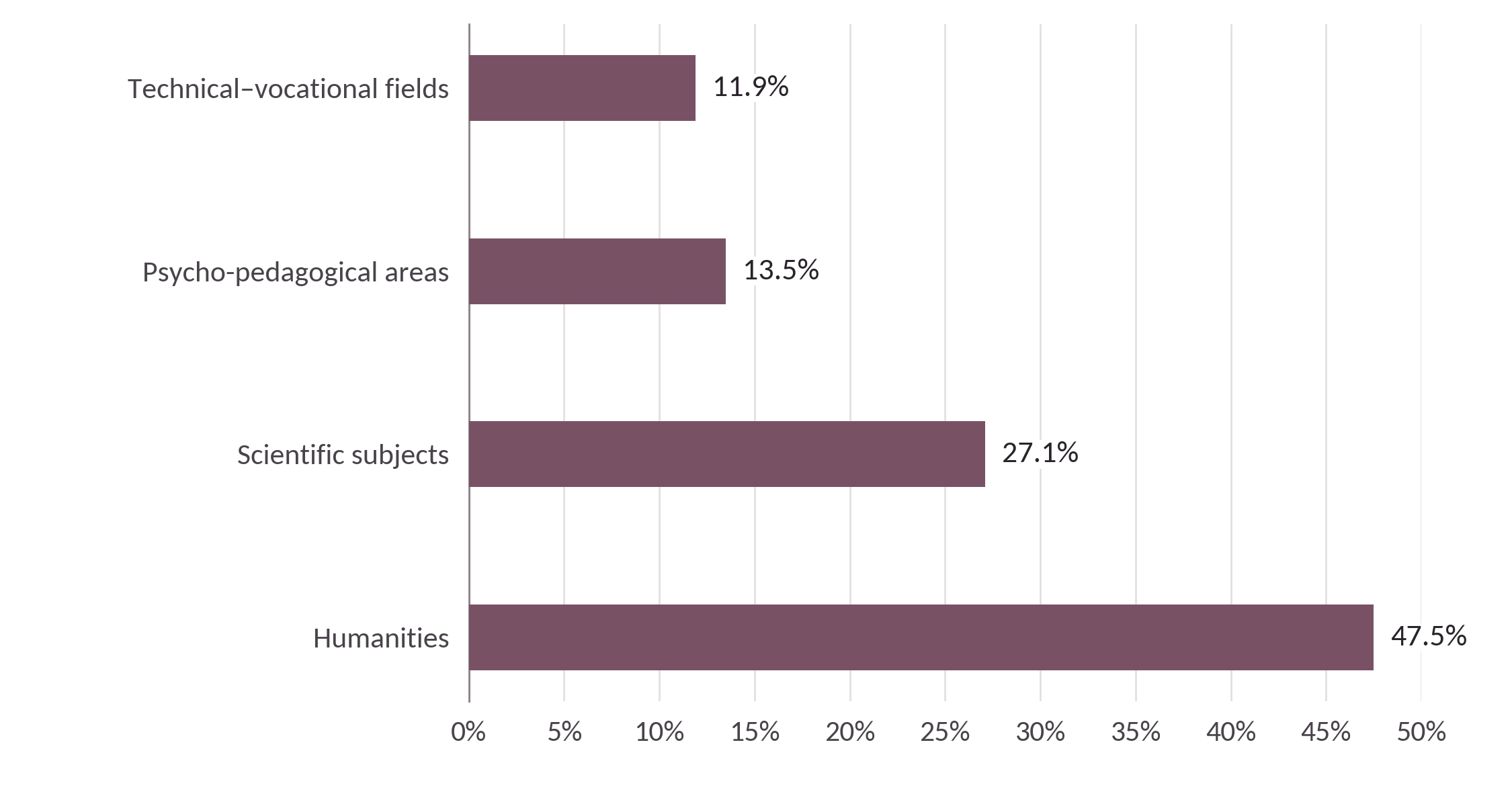
Figure . Respondents by teaching-subject macro-category (percent of valid responses; N = 643).
This configuration is coherent with the broader literature on the Italian teaching profession, which underscores its feminisation, ageing profile and disciplinary heterogeneity.
4.1. Normative consensus and curricular marginality
Despite this diversity of profiles and contexts, there is a strong shared recognition of the relevance of sexuality education. A large majority of teachers (90.5%) agree that sexuality education is an essential component of the school curriculum, while only 8.9% disagree and 0.6% do not answer. Similarly, 66.9% believe that sexuality education should be compulsory in schools, and a further 24.6% consider it mandatory at least for certain age groups; only 7.6% are clearly opposed (missing 0.9%).
However, these normative positions are not reflected in the actual time allocated to sexuality education. When asked about the number of hours dedicated to sexuality-related activities in a typical school year, more than one third of teachers (35.6%) report that no hours at all are formally dedicated to these topics. A further 25.2% indicate 1–2 hours, 25.8% report 3–5 hours, and only 10.9% declare that their school dedicates more than five hours per year; 2.5% do not answer. These findings show a marked discrepancy between perceived importance and reported curricular time. A graphical summary is provided in Figure 3.
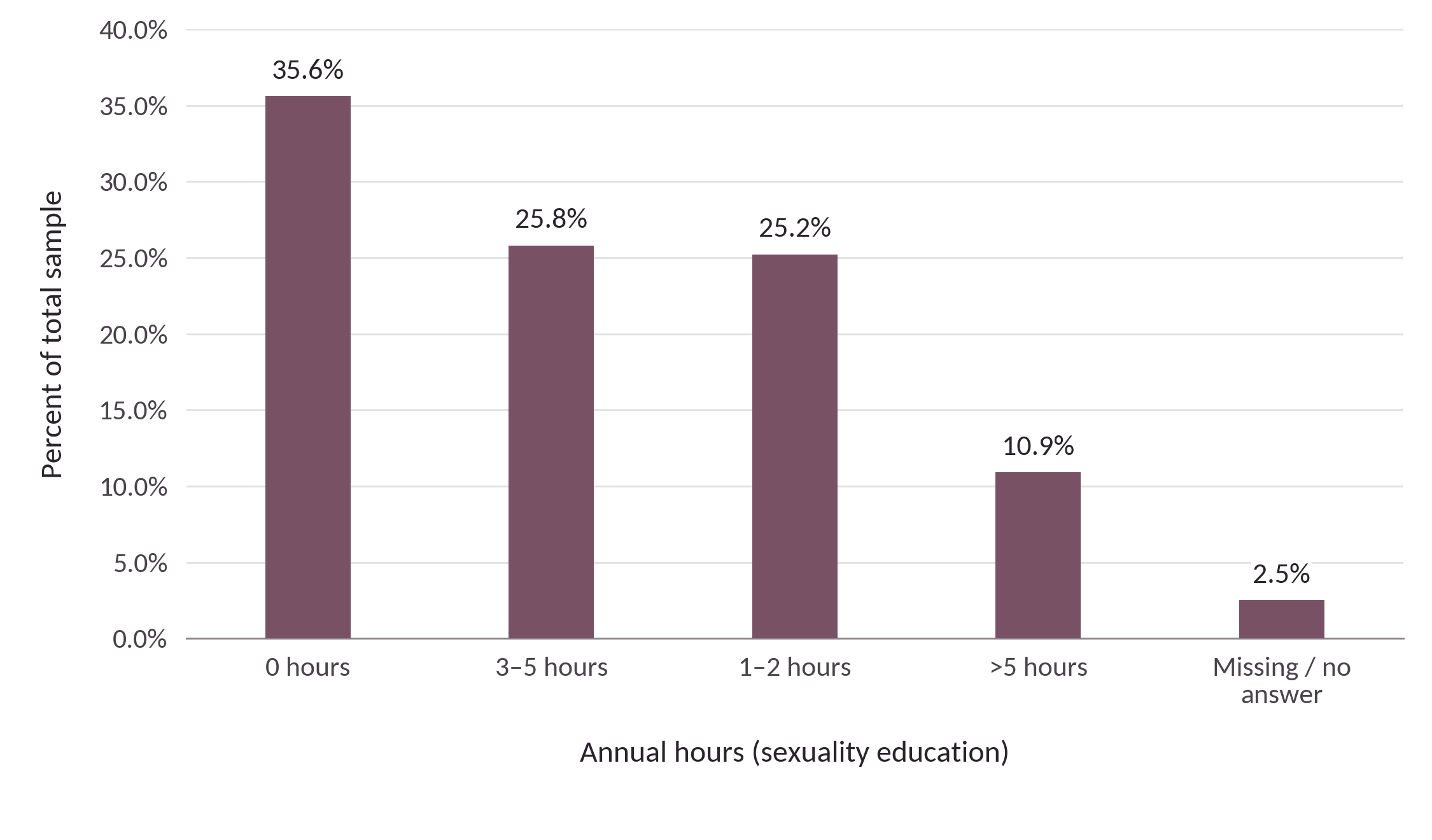
Figure . Annual hours dedicated to sexuality education in a typical school year (percent of teachers; N = 643).
The situation is further complicated by the institutional configuration of provision. Just over half of the respondents indicate that their school does not have structured programmes of sexuality education, but rather occasional and fragmented initiatives. This suggests a scenario in which sexuality education is often episodic, dependent on individual projects, external experts or local opportunities, rather than embedded within a coherent curricular framework, as other exploratory investigations into Italian schools have also noted (Melendez-Torres et al., 2024; Servettini et al., 2023).
4.2. Training, perceived preparedness and school climate
A central dimension emerging from the data is the relationship between teacher training and perceived preparedness in addressing sexuality-related issues in the classroom. Around 69.7% of respondents report that they have never attended any specific training course on sexuality or affective education, while only 29.4% have participated in such initiatives (missing 0.9%).
Overall, teachers’ self-assessment of their preparedness reveals widespread uncertainty: 10.1% feel not at all prepared, 43.1% poorly prepared, 38.3% fairly prepared, and only 7.9% very prepared (missing 0.6%).
The association between previous training and perceived preparedness was statistically significant, with a moderate effect size. A χ² test on the cross-tabulation between previous training and self-perceived preparedness is highly significant (χ² = 70.39, p < 0.001; Cramér’s V = 0.33). Row percentages show that, among teachers without training, more than half (51.0%) feel poorly prepared and 12.3% not at all prepared, while only 32.9% feel fairly prepared and 3.8% very prepared. Among those who have attended training, the pattern is reversed: the majority feel fairly (51.9%) or very (17.5%) prepared, with markedly lower percentages in the “poorly” (25.4%) and “not at all” (5.3%) categories. Figure 4 offers a visual summary.
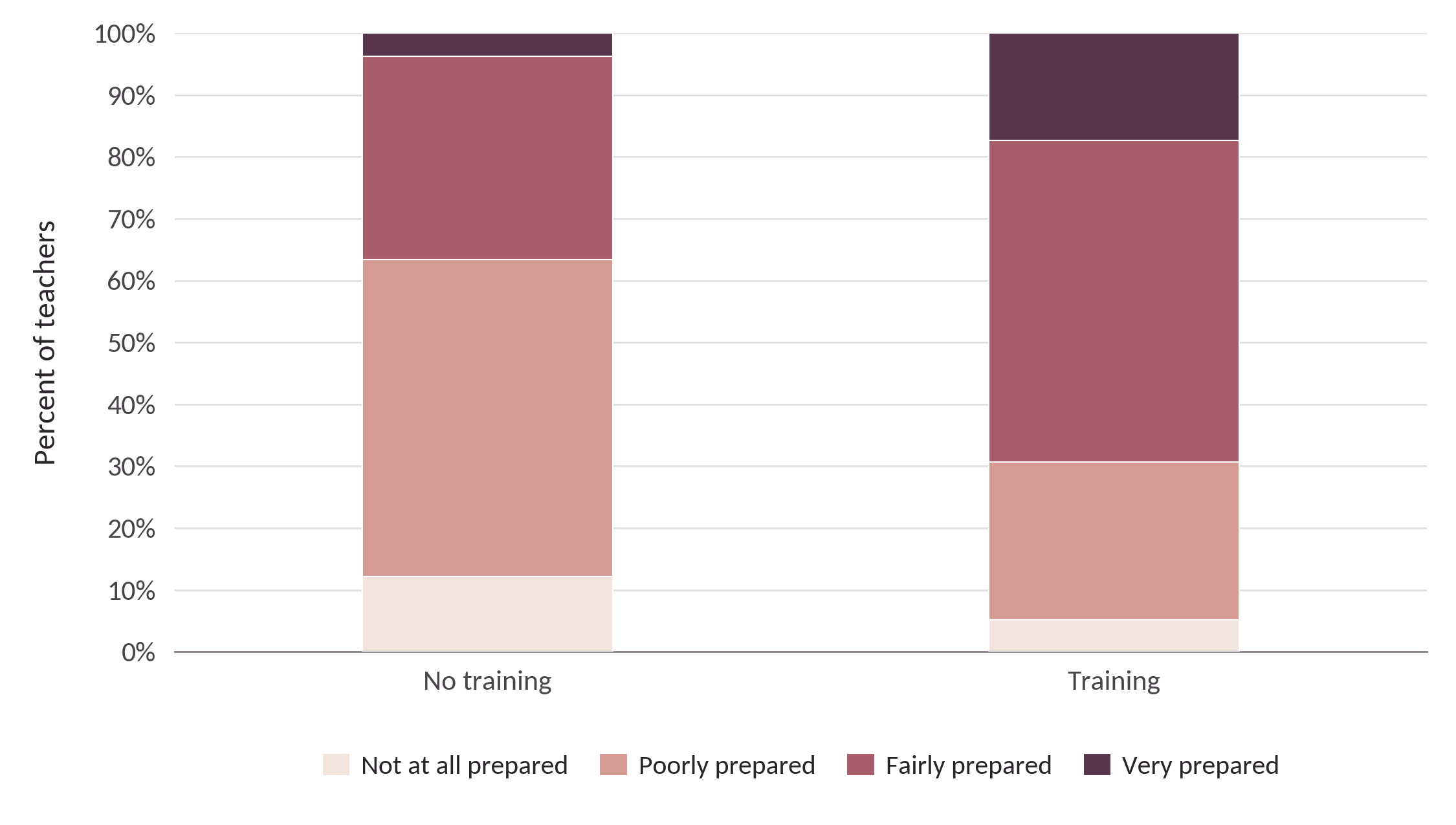
Figure . Self-reported preparedness to address sexuality-related topics by training experience (percent of teachers).
When the two variables are treated as ordinal, Spearman’s rho confirms a moderate positive correlation between having received training and higher levels of perceived preparedness (ρ = 0.31, p < 0.001). Teachers who reported previous training also reported higher levels of perceived preparedness.
The association between structured programmes and perceived school climate was also examined. Just over half of the respondents (50.7%) perceive their school as providing a favourable climate for addressing sexuality, 40.4% describe the climate as only partially favourable, and 7.8% as not favourable (missing 1.1%). A χ² test on the association between the presence of structured sexuality-education programmes and perceived school climate is again highly significant (χ² = 46.22, p < 0.001; Cramér’s V = 0.27). Where no structured programmes are in place, 10.6% of teachers perceive an unfavourable climate, 48.0% a partially favourable one, and 41.4% a favourable one. In schools with structured programmes, the distribution shifts: only 3.1% perceive the climate as unfavourable, 28.1% as partially favourable, and as many as 68.9% as favourable.
Spearman’s rho indicates a moderate association between the presence of structured programmes and more positive climate evaluations (ρ = 0.27, p < 0.001).
4.3. Culture, inclusiveness and resistances
The cultural embeddedness of sexuality education emerges clearly when teachers are asked about the impact of local culture on the possibility of dealing openly with these themes. Almost half of the respondents (44.8%) perceive the influence of local culture as moderate, while 39.8% describe it as high and 8.9% as very high; only 5.8% report no influence (missing 0.8%).
Perceptions of the inclusiveness of existing educational pathways are similarly nuanced. When asked whether the sexuality-education activities implemented in their school are sufficiently inclusive, 30.6% of teachers answer “only partly”, while 28.1% respond “yes” and another 28.1% “no” (missing 13.1%). Responses were evenly divided between positive and negative evaluations (28.1% each), while 30.6% considered existing provision only partly inclusive.
The picture becomes even more critical when focusing on issues related to LGBTQIA+ contents. In response to the question on whether school staff are adequately prepared to deal with LGBTQIA+ topics, 58.0% of teachers answer “no”, 31.9% “only partly”, and only 4.7% “yes” (missing 5.4%). In other words, almost nine out of ten respondents do not perceive the overall level of staff preparation as fully adequate.
Consistent with this perception, many teachers report explicit resistances to the inclusion of LGBTQIA+ contents in sexuality education:
- 32.5% speak of clear resistance,
- 44.9% of partial resistance,
- only 15.2% deny the existence of any resistance (missing 7.3%).
These resistances are rooted in different actors and scales: families, local communities, religious contexts, but also, in some cases, school leadership and colleagues. A related item asks whether the school has ever received pressures to limit or avoid sexuality-education contents: 7.9% of teachers report having witnessed clear pressures, 19.9% report partial pressures, while 61.3% deny such experiences (missing 10.9%).
The contents of sexuality education reflect these tensions. When teachers indicate which themes are actually covered in their school, only about a quarter of the full sample mention gender identity (27.4%) and less than one fifth refer to sexual orientation (16.8%).
4.4. Aims of sexuality education and demand for training
Despite these constraints, teachers articulate a conceptually rich view of what sexuality education should be. When asked to select up to three main aims, the most frequently chosen options were: education for respect and consent (89.9%); prevention of sexually transmitted infections (71.5%); recognition and valuing of affective and sexual diversity (64.9%); and knowledge of one’s own body (54.0%). These priorities are summarised in Figure 5.
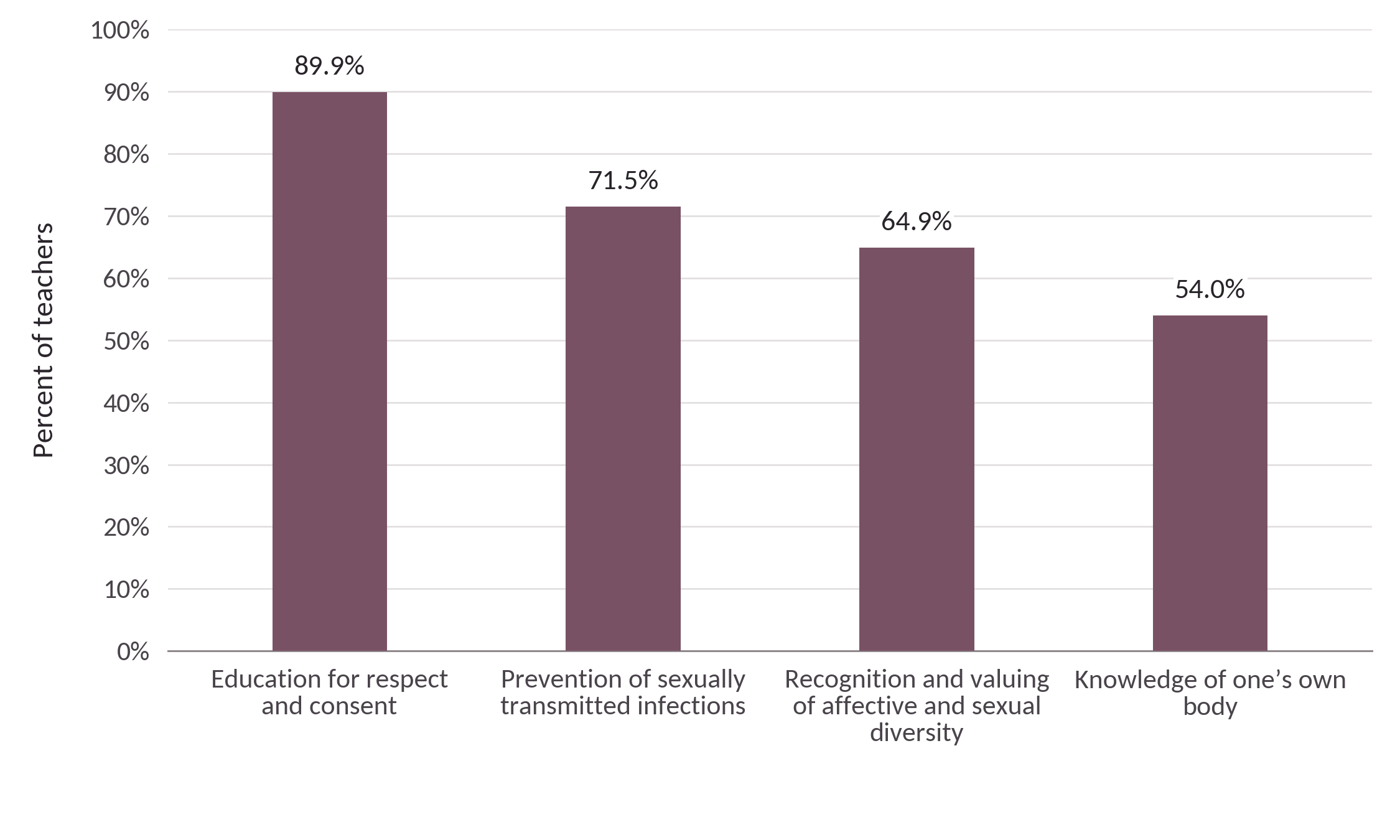
Figure . Teachers’ prioritized aims of sexuality education (multiple response; percent of teachers).
At the same time, teachers express a very clear demand for structured professional development. When asked how useful they would consider mandatory training for teachers on sexuality and affectivity, 42.0% answer “fairly useful”, 41.7% “very useful”, while only 10.3% consider it “of little use” and 5.1% “not useful at all” (missing 0.9%).
5. Discussion
Across the dataset, a consistent pattern emerges: teachers assign high educational value to sexuality education yet describe it as fragile in the everyday economy of school time. The result is a form of ‘recognition without institution’: the topic is considered important, but it rarely becomes ordinary, protected work.
Delegation to external specialists is not a problem in itself; schools can benefit from clinical, legal and community expertise. The critical issue is discontinuity. When sexuality education depends on one‑off encounters, it is harder to build shared language, revisit concepts over time, and respond pedagogically to what happens between sessions.
Teacher preparation emerges as a central theme in the findings. Most respondents report no training, while those with previous training report higher levels of perceived preparedness (Figure 4). Preparedness, however, is not only a matter of ‘content’; it includes facilitation skills, inclusive communication, and the capacity to hold disagreement without slipping into silence or conflict.
The association between structured programmes and a more favourable school climate can be interpreted as supporting a view of sexuality education as institutional infrastructure rather than as a sequence of isolated projects. A coherent framework makes it easier to coordinate staff, communicate with families, and align classroom work with wellbeing and inclusion policies.
One interpretive implication concerns institutional legitimacy. When sexuality education is not anchored in a recognised curricular frame, it becomes easier to postpone, compress or outsource. Conversely, when it is publicly framed as part of the school’s educational mandate, teachers can act with clearer boundaries and shared expectations.
Cultural embeddedness also emerges from teachers’ accounts. Respondents report substantial resistance, especially around LGBTQIA+ content. Here, the point is not to ‘win’ a cultural battle, but to create institutional conditions for dialogue: transparent objectives, careful communication with families (Buonanno & Dusi, 2023), and leadership that protects teachers from being isolated when tensions arise.
From an inclusive‑education standpoint, selective implementation is not neutral. When LGBTQIA+ topics are avoided, schools risk sending an implicit message about who is speakable, visible and safe. The emphasis on respect and consent in teachers’ stated aims (Figure 5) can be interpreted as consistent with a broader rights-based understanding of sexuality education.
Three pedagogical and policy implications can be drawn from these findings. First, moving from episodic projects towards a spiral curriculum could allow key themes, body knowledge, consent, relationships and diversity, to be revisited with age-appropriate depth. Second, greater investment in initial and in-service teacher education could support sexuality education as a shared professional competence rather than an external specialty. Third, clearer governance, including minimum guidance and protected curricular time, could reduce dependence on local and individual initiative.
Future research could strengthen these indications by combining surveys with qualitative work in schools, especially student voices and classroom observations, to understand how sexuality education is enacted, contested and sustained over time.
6. Conclusions
This article has examined how sexuality education is configured in Italian secondary schools through the perceptions of 643 teachers. The results document a broad normative consensus on the educational relevance of sexuality education, coupled with a persistent marginality in curricula and timetables. Many respondents report minimal or no formally allocated hours, while provision is frequently described as episodic rather than embedded in planned pathways.
The findings also highlight associations involving professional development and school-level organisation. Participation in specific training is associated with higher perceived preparedness, while the presence of structured programmes relates to more favourable school climates. At the same time, respondents report substantial resistance around LGBTQIA+ contents, pointing to persistent tensions in the implementation of inclusive sexuality education.
The study is limited by self-selection, its non-probability sampling strategy and its cross-sectional design. These features preclude statistical representativeness, population-level generalisation and causal inference; the findings should therefore be interpreted as patterns observed within the surveyed sample rather than as estimates for the Italian secondary-school teaching population. Even so, the study provides exploratory empirical evidence that can inform discussion of sexuality education as a matter of curriculum, teacher education and inclusive school governance. From a policy perspective, these findings support consideration of frameworks that protect curricular time, sustained training and organisational responsibility when local resistance emerges. For teacher education and professional development, the findings suggest that modules and workshops could address not only knowledge and prevention, but also facilitation, consent education, inclusive language, and strategies for managing conflict and communicating with families. Institutional recognition of these competences could support a more stable integration of sexuality education within the school’s educational mandate.
Declaration of generative AI and AI-assisted technologies in the manuscript preparation process
During the preparation of this work, the author used ChatGPT as a language-support and editorial assistance tool to improve clarity, organization, and readability of the manuscript. The tool was not used to generate original data, analyses, or scholarly interpretations. After using this service, the author critically reviewed, revised, and validated all content and takes full responsibility for the final version of the article.
References
Aquario, D., Ghedin, E., & De Martin, M. (2024). A world to be discovered. The voice of professionals on the affective-sexual dimension for people with intellectual disabilities. Ricerche di Pedagogia e Didattica, 19(1), 129–143. https://doi.org/10.6092/issn.1970-2221/19426
Bonvini, E., & Demozzi, S. (2024). Prevenire la violenza di genere: il ruolo dell’educazione sessuale olistica (CSE) come strumento di contrasto. Annali online della Didattica e della Formazione Docente, 16(27), 133–153. https://doi.org/10.15160/2038-1034/2896
Buonanno, A., & Dusi, P. (2023). Le relazioni tra scuola e famiglia: buone prassi di corresponsabilità educativa. Indagine in un istituto paritario trentino e prime azioni di intervento. Rivista Italiana di Educazione Familiare, 23(2), 91–104. https://doi.org/10.36253/rief-12562
Chinelli, A., Ubbiali, M., Paparatto, G., Torri, E., Musco, A., Galipò, R., Meli, P., Bellini, S., Catucci, N., Colaprico, L., Camposeragna, A., Farinella, M., Rancilio, L., Landi, N., Stettini, P., Salfa, M. C., Cellini, A., Suligoi, B., Palamara, A. T., & Tavoschi, L. (2024). Introducing comprehensive sexuality education in Italian schools: From the co-construction to the evaluation of a pilot intervention. BMC Public Health, 24, 2089. https://doi.org/10.1186/s12889-024-19610-7
De Simone, S., Serri, F., Lampis, J., Pileri, J., & Lasio, D. (2022). Italian primary school teachers’ comfort and training needs regarding same-sex parenting. Psychology & Sexuality, 13(2), 404–414. https://doi.org/10.1080/19419899.2020.1820557
Eleuteri, S., Girardi, M., Spadola, R., & Todaro, E. (2024). Inclusion goals: What sex education for LGBTQIA+ adolescents? Children, 11(8), 966. https://doi.org/10.3390/children11080966
Ferrero, V., & Messi, N. (2023). Educare al genere e alla sessualità in adolescenza, oltre ogni tabu: Qualche nota pedagogica. Pedagogia delle differenze – Bollettino della Fondazione «Vito Fazio-Allmayer», 52, 257–272. https://iris.unito.it/handle/2318/1920110
Ioverno, S., Nappa, M. R., McCurdy, A., James, I., Pistella, J., Baiocco, R., & Russell, S. T. (2024). Empowering teacher intention to intervene: The role of self-efficacy in addressing homophobic bullying. School Mental Health, 16(4), 1293–1310. https://doi.org/10.1007/s12310-024-09694-2
Magnanini, A., Battista, F., & Villanova, M. (2023). Sessualità, disabilità e corporeità: una ricerca esplorativa sulla formazione degli insegnanti. MeTis. Mondi educativi. Temi, indagini, suggestioni, 13(1), 303–321. https://doi.org/10.30557/MT00262
Mason-Jones, A. J., Freeman, M., Lorenc, T., Rawal, T., Bassi, S., & Arora, M. (2023). Can peer-based interventions improve adolescent sexual and reproductive health outcomes? An overview of reviews. Journal of Adolescent Health, 73(6), 975–982. https://doi.org/10.1016/j.jadohealth.2023.05.035
Melendez-Torres, G. J., Orr, N., Farmer, C., Shaw, N., Chollet, A., Rizzo, A. J., Kiff, F., Rigby, E., Hagell, A., Priolo Filho, S. R., Taylor, B., Young, H., Bonell, C., & Berry, V. (2024). School-based interventions TO prevent dating and relationship violence and gender-based violence: STOP-DRV-GBV systematic review. Public Health Research, 12(3). https://doi.org/10.3310/KTWR6997
Milani, P. (2018). Educazione e famiglie: Ricerche e nuove pratiche per la genitorialità. Carocci.
Nguyen, H. H., To, K. G., Hoang, V. T. H., Gram, L., & Yount, K. M. (2025). The effectiveness of gender-based violence prevention among adolescents aged 10 to 19 years in Southeast Asia: a systematic review. International Journal for Equity in Health, 24, 222. https://doi.org/10.1186/s12939-025-02514-2
Nuttall, A., Mancini, J., Lizin, C., Hamzaoui, S., Mariotti, S., Louesdon, H., Tardieu, S., Viton, J.-M., Delotte, J., & Bretelle, F. (2022). Multidisciplinary peer-led sexual and reproductive health education programme in France, a prospective controlled-study. BMC Public Health, 22, 2239. https://doi.org/10.1186/s12889-022-14583-x
Rivenes Lafontan, S., Jones, F., & Lama, N. (2024). Exploring comprehensive sexuality education experiences and barriers among students, teachers and principals in Nepal: A qualitative study. Reproductive Health, 21, 131. https://doi.org/10.1186/s12978-024-01876-0
Servettini, A., Morante, S., Mattiacci, G., & Batini, F. (2023). Educazione sessuale e socio-affettiva nella scuola italiana: il parere di genitori ed insegnanti della scuola dell’infanzia e primaria a confronto. Rivista Italiana di Educazione Familiare, 23(2), 73–90. https://doi.org/10.36253/rief-14963
Suligoi, B., Salfa, M. C., Chinelli, A., & Tavoschi, L. (Eds.). (2023). Educare alla sessualità nelle scuole italiane: l’esperienza di un progetto tra analisi dell’evidenza, implementazione e valutazione. Rapporti ISTISAN, 23/22.
UNESCO. (2018). International technical guidance on sexuality education: An evidence-informed approach.
Vanwesenbeeck, I., Westeneng, J., de Boer, T., Reinders, J., & van Zorge, R. (2016). Lessons learned from a decade implementing Comprehensive Sexuality Education in resource poor settings: The World Starts With Me. Sex Education, 16(5), 471–486. https://doi.org/10.1080/14681811.2015.1111203
WHO Regional Office for Europe & BZgA. (2010). Standards for sexuality education in Europe: A framework for policy makers, educational and health authorities and specialists. BZgA.