Formazione & insegnamento, 24(02), 8538
Sleep Quality as a Mediator Between Lifestyle and Cognitive and Agentic Student Engagement: A Structural Equation Modelling Approach
La qualità del sonno come mediatore tra stile di vita e engagement cognitivo e agentico degli studenti: Un approccio di modellizzazione a equazioni strutturali
ABSTRACT
This study examines relationship between lifestyles and sleep quality, and the subsequent association with levels of school engagement. 1065 Italian secondary school adolescents were involved in the study, and the data were analysed using a structural equation model in R (4.4.0), with the support of the lavaan (0.6.19) package. The model assesses the direct and indirect effects of four exogenous variables (evening consumption of tryptophan-rich foods, vigorous physical activity, the presence of electronic devices in the bedroom, and turning them off before sleep) on cognitive and agentic engagement, with sleep quality as a mediator. The model fit is excellent (CFI = 0.975, TLI = 0.980, RMSEA = 0.034 [90% CI 0.031-0.038], SRMR = .050). Vigorous physical activity and the number of devices switched off before sleep were found to be significant predictors of sleep quality, which mediates the relationship between these factors and engagement. In contrast, evening diet and the mere number of devices present in the bedroom were not significant. The theoretical and practical implications of the study are discussed.
Lo studio esamina la relazione tra stili di vita e qualità del sonno, nonché la conseguente associazione con i livelli di engagement scolastico. La ricerca ha coinvolto un campione di 1.065 adolescenti italiani frequentanti la scuola secondaria; i dati raccolti sono stati analizzati mediante un modello di equazioni strutturali che stima gli effetti diretti e indiretti di quattro variabili esogene (consumo serale di alimenti ricchi di triptofano, attività fisica vigorosa, presenza di dispositivi elettronici nella camera da letto e il loro spegnimento prima del riposo notturno) sull’engagement cognitivo e agentico, ponendo la qualità del sonno quale variabile mediatrice. La bontà di adattamento del modello è risultata eccellente (CFI = 0.975, TLI = 0.980, RMSEA = 0.034 [90% CI 0.031-0.038], SRMR = .050). L’attività fisica vigorosa e il numero di dispositivi spenti prima di coricarsi sono emersi quali predittori significativi della qualità del sonno, la quale media la relazione tra tali fattori e l’engagement scolastico. Al contrario, l’alimentazione serale e la mera quantità di dispositivi presenti nella camera da letto non sono risultate significative.
KEYWORDS
Student engagement, Sleep quality, Adolescence, Lifestyle, Technology use, Physical activity
Engagement scolastico, Qualità del sonno, Adolescenza, Stile di vita, Uso della tecnologia, Attività fisica
AUTHORSHIP
This article is co-authored.
CONFLICTS OF INTEREST
The Authors declare no conflicts of interest.
COPYRIGHT AND LICENSE
© Author(s). This article and its supplementary materials are released under a CC BY 4.0 license.
RECEIVED
December 11, 2025
ACCEPTED
June 22, 2026
PUBLISHED ONLINE
July 12, 2026
1. Introduction
In recent years, student engagement has garnered increasing attention from the scientific community, evidenced by a growing trend in publications on the topic (Gurcan et al., 2023; Salmela-Aro et al., 2021), owing to its potential association with students’ academic and extracurricular lives. Indeed, high levels of school engagement in adolescents are predictive of academic achievement (Chase et al., 2014; Ladd & Dinella, 2009; Lei et al., 2018; M.-T. Wang & Eccles, 2012), increased positive emotions, life satisfaction, and overall well-being (Cadime et al., 2016; Demirci, 2020; Upadyaya & Salmela‐Aro, 2013), as well as more favourable employment outcomes in adulthood (Symonds et al., 2023). Engagement also serves as a protective factor against numerous risk factors, such as dropout, being both a victim and a perpetrator of bullying and cyberbullying (Chen et al., 2021; L. Wang et al., 2024), and is associated with lower levels of alcohol and cannabis use (Lee & Henry, 2022). Generally, any deviation from a state of disengagement offers academic benefits (Schnitzler et al., 2021).
Although the concept of student engagement is considered a conceptually nebulous construct (Wong & Liem, 2022), many authors regard it as a measure of the extent to which students are actively involved in school activities (Astin, 1984; Eccles, 2016; Fredricks et al., 2004; Skinner et al., 2009). Engagement is a multidimensional construct generally described through three components: emotional, behavioural, and cognitive. Emotional engagement encompasses positive and negative emotions towards teachers, peers, learning activities, and the school environment in general. Behavioural engagement pertains to students’ participation in institutional curricular and extracurricular activities and their adherence to rules. Cognitive engagement, in turn, describes the student’s investment in learning and their capacity for self-regulation. Reeve & Tseng (2011) proposed the introduction of a fourth component, agentic engagement, which describes the active contribution a student makes to shape their learning experience.
School engagement is subject to a declining trend over time (Fomina et al., 2022; Lemos et al., 2020). For this reason, it is important to monitor early the predictors of student engagement, in order to implement targeted interventions aimed at fostering motivation, a sense of belonging, and active participation within the school context.
The literature identifies numerous known predictors of student engagement: evidence suggests that the teacher-student relationship (Fatou & Kubiszewski, 2018; Quin, 2017), parental support (Martins et al., 2021), previous levels of engagement and motivation (Bowles et al., 2022), self-regulation (Estévez et al., 2021), and school climate (Konold et al., 2018) positively influence engagement.
Another important predictor of engagement, albeit one that has received less research attention, is sleep quality. Sleep is a fundamental regulator of cognitive, emotional, and behavioral processes (Bacaro et al., 2023) and is influenced by a range of internal and external factors (Liu et al., 2020). Insufficient sleep in teenagers is a risk factor that can jeopardize physical and mental health, cognitive and academic performance (Mishra et al., 2022), and may also increase the likelihood of engaging in risk-taking behaviours (Alfonsi et al., 2020). The few existing studies on sleep quality and school engagement show a significant interaction between the two constructs and that their relationship must be viewed within a broader context. For example, mediating effects of adverse outcomes stemming from problematic technology use (Li et al., 2023) and moderation by students’ mental health status (Xu et al., 2025) have been identified. Furthermore, Dunbar et al. (2017) have shown that this relationship is maintained over time, since sleep quality is longitudinally associated with engagement levels.
During adolescence, a deterioration in sleep quality is observed due to both biological factors and the demands imposed by social contexts. In this life stage, the biological clock naturally tends to shift towards an evening chronotype (Hagenauer et al., 2009). However, this predisposition conflicts with predominantly morning-based school schedules, leading to a chronic misalignment known as social jetlag. The latter represents a significant risk factor, associated with both poorer sleep quality and reduced academic performance (Wittmann et al., 2006).
Moreover, sleep quality is significantly influenced by one’s lifestyle. Physical activity, information technologies, and eating habits are some of the factors studied extensively with respect to sleep quality. Vigorous physical activity (Giannotta et al., 2024), restricting the use of technologies before going to bed (Brautsch et al., 2023; Lund et al., 2021), and a diet rich in tryptophan (Zuraikat et al., 2021) are indicators of quality sleep, especially in late adolescents.
Although scholars acknowledge the importance of both student engagement and sleep quality, each subject to a declining trend in adolescence, and the influence of specific lifestyle factors on sleep quality, a significant research gap persists concerning the specific mechanisms through which these elements interact. Specifically, there is a paucity of studies that integratively examine how specific lifestyle behaviours, such as vigorous physical activity, the number of technological devices in the bedroom and the number of those switched off before sleep, and evening consumption of tryptophan-rich foods, influence poor sleep quality, and how poor sleep quality, in turn, in turn, mediates the relationship between these lifestyle predictors and the components of student engagement, as depicted in Figure 1, which outlines the conceptual target model.
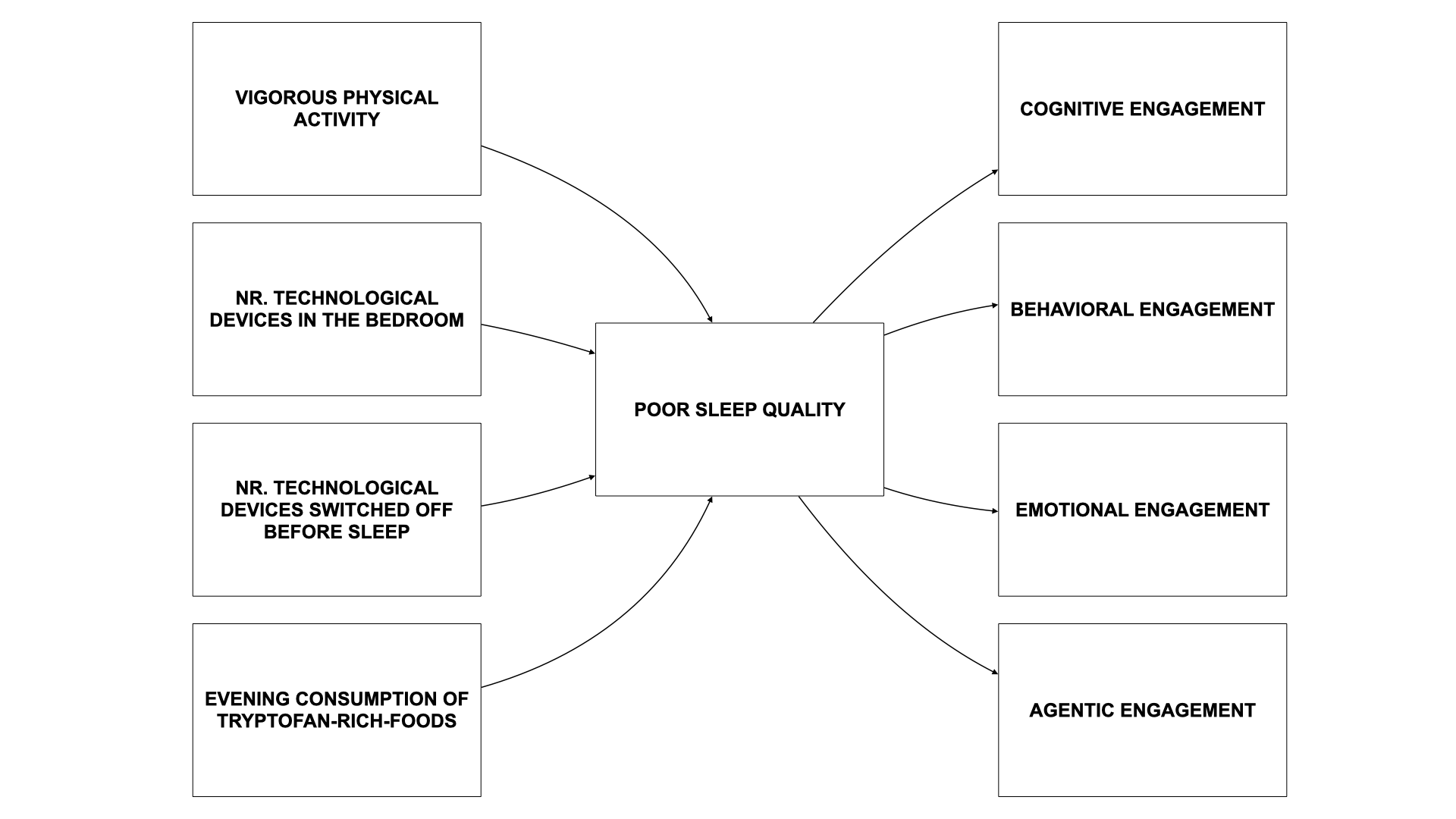
Figure 1. Conceptual model of the mediating role of poor sleep quality in the relationship between life-style behaviors and student academic engagement.
2. Research background and hypotheses
2.1. Sleep quality and school engagement
According to the American Academy of Sleep Medicine (Paruthi et al., 2016), adolescents aged 13 to 18 years should sleep between 8 and 10 hours per day. However, for several years, a trend has been observed wherein the percentage of adolescents sleeping less than seven hours per night is increasing (Twenge et al., 2017). For example, Liu et al. (2020) reported a prevalence of 41.9% for poor sleep quality among high school students.
Insufficient sleep duration is generally associated with a range of negative consequences for cognitive performance, leading to significant attention deficits, impaired cognitive control and executive functions (Campbell et al., 2024), working memory deficits (Bruin et al., 2017; Jiang et al., 2011), reduced consolidation of learned material (Huang et al., 2016), and emotional and behavioral difficulties (Beebe, 2011; Dahl & Lewin, 2002; Kortesoja et al., 2020).
School engagement is one of the constructs through which such abilities can be instantiated to support the cognitive, mental, and social development of young adults. Given that the effects of school engagement are long-term (Abbott-chapman et al., 2014; Ladd & Dinella, 2009; Upadyaya & Salmela‐Aro, 2013), it is important for research to clarify the effect of sleep on engagement. To date, studies directly relating these two aspects are scarce. Generally, individuals with better sleep quality tend to exhibit higher levels of engagement, but the relationship between the two constructs is complex and is influenced by various socio-cultural factors such as ethnic/racial discrimination (Dunbar et al., 2017), problematic smartphone use (Li et al., 2023), and mental health (Xu et al., 2025). Although not directly investigating school engagement, other studies have indicated that sleep can influence constructs partially associated with engagement, such as achievement motivation (Meijer et al., 2000), coping self-efficacy (ten Brink et al., 2021), and school connectedness (Raniti et al., 2025).
Therefore, the authors hypothesized that:
H1: Sleep quality is positively associated with levels of school engagement.
2.2. Tryptophan-rich food intake and quality of sleep
Adolescence is a developmental stage characterized by significant changes in sleep architecture and a period when modifiable dietary factors are strongly linked to adolescent sleep outcomes (Zhong et al., 2024). A balanced diet significantly influences sleep quality (Zuraikat et al., 2021), as certain foods provide nutrients that are precursors to hormones regulating the circadian rhythm, notably melatonin (a regulator of the sleep-wake cycle) and serotonin (a hormone associated with well-being), the synthesis of which depends on the availability of tryptophan, an essential amino acid that serves as a precursor to these hormones.
Indeed, the consumption of tryptophan-containing foods has been shown to improve several parameters of sleep quality, including sleep onset latency, sleep duration, number of awakenings, daytime sleepiness, and the physical and psychological restorative capacity of sleep (Binks et al., 2020; Hashimoto et al., 2020). Particularly beneficial in this regard are meals rich in carbohydrates (e.g., based on whole grains), as they facilitate the transport of tryptophan across the blood-brain barrier (Sutanto et al., 2022), thereby increasing its availability for conversion into serotonin, the precursor to melatonin, which is regarded as the primary sleep-regulating hormone. While the optimal timing for the intake of tryptophan-rich foods to achieve beneficial effects on sleep remains under debate, some authors contend that evening consumption is most effective for enhancing alertness and attentional performance (Markus et al., 2005).
In light of the foregoing, it was hypothesized that:
H2: The evening intake of tryptophan-rich foods positively contributes to sleep quality.
2.3. Vigorous physical activity and quality of sleep
Physical activity is defined as any bodily movement that results in energy expenditure above the basal metabolic rate. It is well-established that physical activity can influence sleep, particularly in adolescents, through the engagement of diverse and interconnected biological and psychological mechanisms that reduce sleep latency while enhancing deep sleep and overall sleep duration. Generally, physical activity reduces cortisol levels (Nys et al., 2022), supports the release of hypnogenic substances, and reduces inflammatory markers that can be associated with poorer sleep quality (Doroshenko et al., 2024). From a psychological standpoint, physical activity might influence sleep by alleviating the effects of stress, anxiety, and depression (Su et al., 2021), although a recent study has challenged the bidirectional anxiety/depression-sleep relationship, suggesting a potentially more complex interplay among these constructs (Giannotta et al., 2024).
In the literature, the association between physical activity and sleep is recognized as complex and can vary according to the intensity of the physical activity, as well as other factors such as diet (Cruz et al., 2024), gender, and the timing of physical activity engagement during the day (Jurić et al., 2022). In a notable study, Lang et al. (2016) demonstrated that adolescents with higher levels of both self-reported and objectively measured physical activity tend to experience better nocturnal sleep quality.
The intensity of physical activity influences sleep outcomes, and many studies often report the combined positive effects of moderate and vigorous physical activity (MVPA) on sleep (Negele et al., 2020).
Although moderate physical activity is generally well known to be beneficial for sleep (F. Wang & Boros, 2019), its dose-response relationship with sleep quality is not. Zhou et al. (2024) recently endeavored to separate the impact of vigorous physical activity (VPA), since it proved to be effective in counteracting sleep problems amongst teenagers, with a more significant reduction being evident in males as well as in 13-year-old subjects. Due to its nature, VPA causes a higher level of physiological stress, potentially eliciting more sensitive organismic adaptive responses. These might just as easily be projected into definite sleep quality improvement beyond what can be found with an increment in moderate activity only. Therefore, the present study aims to isolate and better understand the specific association of VPA with sleep, hypothesizing that:
H3: Engaging in vigorous physical activity is positively associated with sleep quality.
2.4. Technology and sleep quality
A systematic review of the association between technology use and sleep quality demonstrated that in 90% of the 67 studies included, screen time negatively influenced sleep outcomes (Hale & Guan, 2015). The detrimental association between technology and sleep is linked with three primary mechanisms: time displacement, which refers to the reduced time available for sleep; physiological arousal stemming from engagement with stimulating content; and finally, the effect of light emitted from screens, which suppresses melatonin production, thereby inducing a greater state of alertness. This latter mechanism is reportedly influenced by the environmental conditions during device use. The strength of the negative association between device use and sleep quality is significantly stronger when the use occurs in a dark room, likely because the pupils are more dilated and therefore more exposed to the blue light emitted by the devices (Mireku et al., 2019).
As early as 2015, a nationwide cross-sectional sample from Hysing et al. (2015) documented that 97% of Norwegian teenagers had one or more technological devices in their bedroom, and the use of one or more devices before bedtime was a universal practice. Since then, research has increasingly made it clear that it is not generic use, but timing and mode of use that matter. For instance, the systematic review by Dibben et al. (2023) highlighted that certain habits, such as nocturnal device use, dependency, and negative online social experiences, compromise adolescent sleep to a greater extent than a mere quantification of screen time.
In general, interactive modes of content consumption via electronic devices have more detrimental effects on sleep than passive consumption, which is why watching television emerges as one of the least problematic activities (Hale & Guan, 2015).
Increased evidence points toward the necessity for ending device use close to sleep. Experimental evidence provided by Perrault et al. (2019) illustrated how a recommendation to not use screens past 9:00 PM resulted in teenagers sleeping earlier, sleeping longer in total, and feeling more alert during the daytime.
Similarly, other research has suggested that it is beneficial to stop using devices at least 30 minutes before bedtime (Otsuka et al., 2023) to prevent non-restorative sleep and daytime sleepiness.
The use of objective tracking data on smartphone usage (Siebers et al., 2024) has revealed a robust negative association with using them after going to bed, with particularly detrimental outcomes linked to interactive apps such as social media and games. This picture is further enriched by longitudinal studies, such as that of Mazzer et al. (2018), which have revealed a bidirectional, albeit small, relationship between sleep duration and time spent using technology.
The aforementioned studies primarily focus on the active use of technologies before sleeping; however, there are more “passive” aspects that warrant scientific attention. Indeed, research has shown that not only the type of activity and the time of use can negatively influence sleep quality, but also the mere presence or accessibility of a device in the bedroom. For example, Bruni et al. (2015) highlighted that the number of devices present in an adolescent’s bedroom also has an impact, a finding also observed by Lund et al. (2021) in children aged 0-5 years.
The meta-analysis by Carter et al. (2016) supported the hypothesis that there is a strong association between the accessibility of a portable electronic device near bedtime and inadequate sleep quantity, poor sleep quality, and excessive daytime sleepiness, even when the device is not actively used. Similarly, the systematic review by Saunders et al. (2022) shows that the presence of screen-based devices in the bedroom negatively influences sleep quality. These findings are further corroborated by the prospective study from Nagata et al. (2024), in which the authors demonstrate that having an electronic device in the bedroom was associated with shorter sleep duration one year later.
Therefore, it is hypothesized that:
H4: The number of technological devices in the bedroom is negatively associated with sleep quality.
H5: The number of devices turned off before sleeping is positively associated with sleep quality.
3. Materials and Methods
The study randomly selected 400 secondary schools from a list provided by the Italian Ministry of Education. Of these, 67 schools agreed to participate.The headmasters of these schools were contacted via email and asked to distribute the link to the online questionnaire to their students. The distribution was carried out utilizing the schools’ internal communication channels. Data were collected through an online survey from March to April 2024.
Participants were informed that their responses to the questionnaire were anonymous and that there were no right or wrong answers. Data collection commenced only after obtaining informed consent from the participants. The research was reviewed and approved by the ethics committee of the University Polyclinic “Paolo Giaccone” of Palermo, receiving a favourable opinion for its conduct (record number 11/2022 registered on December 12, 2022).
3.1. Participants
2753 participants started the survey, and a total of 1065 participants finished it (38.685%), whose data were analysed (526 females and 539 males). Regarding participant attrition, among those who discontinued their involvement, 7.988% dropped out at the study’s introductory page, 48.96% during the compilation of the sociodemographic questionnaire, and 43.05% in the evening eating behaviour section. Given that dropouts occurred at these early stages of the survey, the incomplete data was rendered unusable and was consequently excluded from the final analyses. The mean age of the participants was 15.946 years (SD = 1.459).
3.2. Measures
3.2.1. Sociodemographic questionnaire
The sociodemographic questionnaire included questions about gender, age, height, weight. No information was requested that could disclose the person’s identity.
3.2.2. Evening eating behaviour (EET)
Participants were asked about their general consumption in the evening of TRP-rich foods providing them with a list 28 foods and asking them to indicate on a Likert scale how often they consumed these items at dinner or before bedtime (never, rarely, sometimes, often, almost always, always).
The list of foods has been identified according to the criteria provided by Reuter et al. (2021), including foods for which all relevant amino acids and macronutrients were reported, and which contained at least 200 mg of TRP per 100g. The basis for selecting TRP-rich foods for the questionnaire was the Food Composition Database SR-28 of the United States Department of Agriculture (U.S. Department of Agriculture, Agricultural Research Service [USDA ARS], 2020). Based on the collected data, dietary intake was quantified via a tryptophan-rich food intake index (TRP). To compute this continuous score, the self-reported consumption frequency of each food item (coded on a 6-point scale from 1 = Never to 6 = Always) was first multiplied by its standard portion size in grams, as recommended by the Società Italiana di Nutrizione Umana (SINU) (2014). For items lacking specific SINU guidelines, standard average portion sizes were reasonably inferred (e.g., 5g for a teaspoon). Finally, the TRP index was calculated as a weighted average by dividing the total sum of the weighted portions by the total sum of the reported consumption frequencies.
3.2.3. Vigorous Physical Activity
VPA performed by students was measured using the item “During the last 7 days, on how many days did you do vigorous physical activities such as heavy lifting, digging, aerobics, or fast bicycling?” extracted from the Italian translation of the International Physical Activity Questionnaire for Adolescents (IPAQ-A) (Hagströmer et al., 2008; Mannocci et al., 2021). The scoring for this measure consisted of a single continuous variable ranging from 0 to 7, representing the exact number of days the participant engaged in VPA during the previous week.
IPAQ-A is a standardized tool designed to measure physical activity levels in adolescents aged 10 to 18 and consists of 23 items that inquire about different domains of physical activity, including school-related physical activity, transportation activity, household chores and gardening, leisure-time physical activity, and sedentary behaviour.
3.2.4. Pittsburgh Sleep Quality Index
The Pittsburgh Sleep Quality Index (PSQI) is a standardized tool designed to measure sleep quality and disturbances over a one-month time interval (Buysse et al., 1989).
PSQI consists of 9 self-rated questions divided into seven component scores, each reflecting a different aspect of sleep: subjective sleep quality, sleep latency, sleep duration, habitual sleep efficiency, sleep disturbances, use of sleeping medications, and daytime dysfunction (e.g. “During the past month, when have you usually gone to bed at night?”, “During the past month, how long (in minutes) has it usually take you to fall asleep each night?”). A higher global score indicates poorer sleep quality.
PSQI has been validated in numerous studies and has demonstrated good reliability and validity (Carpenter & Andrykowski, 1998; Mollayeva et al., 2016).
The Italian version (Curcio et al., 2013) showed a high degree of internal consistency (Cronbach’s α = 0.835).
3.2.5. Evening Use of Technology
Participants were asked to answer 4 questions about what technology devices are in their room (e.g. desktop computer, television, game console, iPad/tablet, mobile phone), which ones they turn off before bedtime, and at what time. It was also asked for each device what activities were done after 9 p.m. (e.g., playing games, surfing the Internet, using social networks, watching TV, etc.). For the purpose of the analyses, two specific scores were calculated: DEV (ranging from 0 to 7), computed as the simple count of the different types of electronic devices present in the adolescent’s bedroom, and DEV_OFF (ranging from 0 to 7), computed as the sum of those specific devices that the participant actively reported switching off before going to sleep.
3.2.6. Student Engagement Scale
The study used the Student Engagement Scale (SES) created by Mameli & Passini (2017) to explore student engagement, focusing specifically on the affective, behavioral, cognitive, and agentic dimensions. The scale is composed of 43 items (e.g. “As I study, I keep track of what I understand, not just whether I am getting the right answers”) presented in Likert-type format with a scale ranging from completely disagree (1) to totally agree (7) in the affective, behavioural and agentic engagement subscales, and from never (1) to always (7) in cognitive subscale. The internal consistency of the scale is satisfactory (affective: α = .87, behavioral: α = .87, cognitive: α = .90, agentic: α = .78).
3.3. Analysis
This study employs a structural equation model (SEM) to examine the complex interrelationships between sleep quality and scholastic engagement, modeled as latent constructs. These latent constructs were measured through specific observed indicators derived from validated scales on sleep quality (PSQI) and school engagement (SES). A preliminary analysis of these scales was conducted to confirm their factorial structure, evaluate the construct validity and internal consistency of the indicators in adequately representing their respective latent constructs, before proceeding to test the overall structural model. The result of these analyses is described in detail in the following paragraphs.
The structural model examines the relationships from observed variables such as vigorous physical activity (VPA), the tryptophan-rich food intake index (TRP), the total number of electronic devices present in the bedroom (DEV), and the number of devices switched off before sleep (DEV_OFF) on latent sleep quality, and the subsequent relationships between latent sleep quality and the latent dimensions of engagement.
With 1065 observations and 81 parameters, the model exhibited an observation-to-parameter ratio of 13:1, lower than the 20:1 proportion recommended by Kline (2023) but consistent with the 10:1 ratio proposed, for instance, by Schreiber et al. (2006).
All analyses were performed using R 4.4.0, with the support of the lavaan 0.6.19 package (Rosseel, 2012).
It should be noted that while sleep quality and school engagement dimensions were rigorously modeled as latent variables in the SEM analysis to account for measurement error, they were treated as observed composite scores for the purpose of the preliminary descriptive statistics and bivariate correlations.
To test the mediating role of sleep quality between lifestyle behaviors and student engagement, a full mediation model was estimated within the overall SEM framework. Specifically, direct paths from the exogenous variables to the endogenous engagement variables were constrained to zero. The significance of the specific indirect effects was formally evaluated. Since the WLSMV estimator was employed to account for the ordinal nature of the measurement indicators, bootstrapping could not be utilized; therefore, standard errors and significance levels for the indirect effects were calculated using the Delta method.
4. Results
4.1. Descriptive statistics
The descriptive statistics presented in Table 1 indicate moderate normality thresholds of ±2.0 and ±7.0 for skewness and kurtosis, respectively (Curran et al., 1996).
Vars | Mean | Sd | Median | Min | Max | Skew | Kurtosis | |
|---|---|---|---|---|---|---|---|---|
SL_EFF | 1 | 0.521 | 0.581 | 0.50 | 0.0 | 3.0 | 1.709 | 3.281 |
POOR_SLQ | 2 | 0.973 | 0.622 | 1.00 | 0.0 | 2.5 | 0.383 | -0.428 |
DAY_DIS | 3 | 0.908 | 0.519 | 1.00 | 0.0 | 3.0 | 0.919 | 1.258 |
ENG_C | 4 | 4.229 | 1.316 | 4.22 | 1.0 | 7.0 | -0.317 | -0.169 |
ENG_A | 5 | 3.827 | 1.324 | 4.00 | 1.0 | 7.0 | -0.212 | -0.411 |
VPA | 6 | 1.659 | 2.029 | 1.00 | 0.0 | 7.0 | 0.973 | -0.188 |
TRP | 7 | 82.106 | 18.105 | 80.21 | 46.4 | 162.1 | 0.733 | 0.547 |
DEV | 8 | 3.595 | 1.629 | 4.00 | 0.0 | 7.0 | 0.113 | -0.747 |
DEV_OFF | 9 | 2.392 | 1.499 | 2.00 | 0.0 | 7.0 | 0.750 | -0.144 |
Table 1. Descriptive Statistics of Study Variables. Note: SL_EFF = Sleep Efficiency; POOR_SLQ = Poor Sleep Quality; DAY_DIS = Daytime Dysfunction; ENG_C = Cognitive Engagement; ENG_A = Agentic Engagement; VPA = Vigorous Physical Activity; TRP = Tryptophan-rich food intake index; DEV = Total number of electronic devices present in the bedroom; DEV_OFF = Number of electronic devices switched off before sleep.
Table 2 outlines the physical characteristics of the study participants. From the recorded height and weight, the Body Mass Index (BMI) was calculated and subsequently classified into four categories: underweight, healthy weight, overweight, and obese, following the reference data for the Italian population aged 2 to 20 years published by Cacciari et al. (2006). Notably, the subjects generally presented with a BMI below the ideal range; however, when overweight, they were more likely to be classified as obese.
Age (years) | Sex | N | Mean Height (cm) | Mean Weight (kg) | Underweight (%) | Healthy Weight (%) | Overweight (%) | Obese (%) |
|---|---|---|---|---|---|---|---|---|
14 | F | 86 | 163 | 55.4 | 61.6 | 25.6 | 0.0 | 12.8 |
14 | M | 119 | 171 | 61.7 | 62.2 | 15.1 | 0.8 | 21.8 |
15 | F | 110 | 162 | 54.1 | 63.6 | 20.9 | 1.8 | 13.6 |
15 | M | 155 | 174 | 64.5 | 56.1 | 25.8 | 1.9 | 16.1 |
16 | F | 118 | 163 | 56.4 | 57.6 | 22.0 | 3.4 | 16.9 |
16 | M | 103 | 176 | 65.4 | 67.0 | 21.4 | 2.9 | 8.7 |
17 | F | 95 | 162 | 57.1 | 48.4 | 31.6 | 2.1 | 17.9 |
17 | M | 74 | 176 | 69.5 | 52.7 | 24.3 | 1.4 | 21.6 |
18 | F | 93 | 165 | 57.3 | 54.8 | 26.9 | 3.2 | 15.1 |
18 | M | 73 | 179 | 70.7 | 47.9 | 37.0 | 5.5 | 9.6 |
19 | F | 24 | 163 | 55.9 | 70.8 | 16.7 | 4.2 | 8.3 |
19 | M | 15 | 182 | 75.7 | 26.7 | 60.0 | 0.0 | 13.3 |
Table 2. Mean height, weight, and BMI category of the participants. Note. BMI = Body Mass Index.
Figure 2 illustrates the quantity of electronic devices located in bedrooms and the proportion of these devices that are switched off prior to sleep. Smartphones and laptops are the most prevalent devices within the adolescents’ bedrooms, with a presence in 93% and 66% of cases, respectively. Notably, these devices are more common than televisions, which are found in only 52% of the participants’ bedrooms.
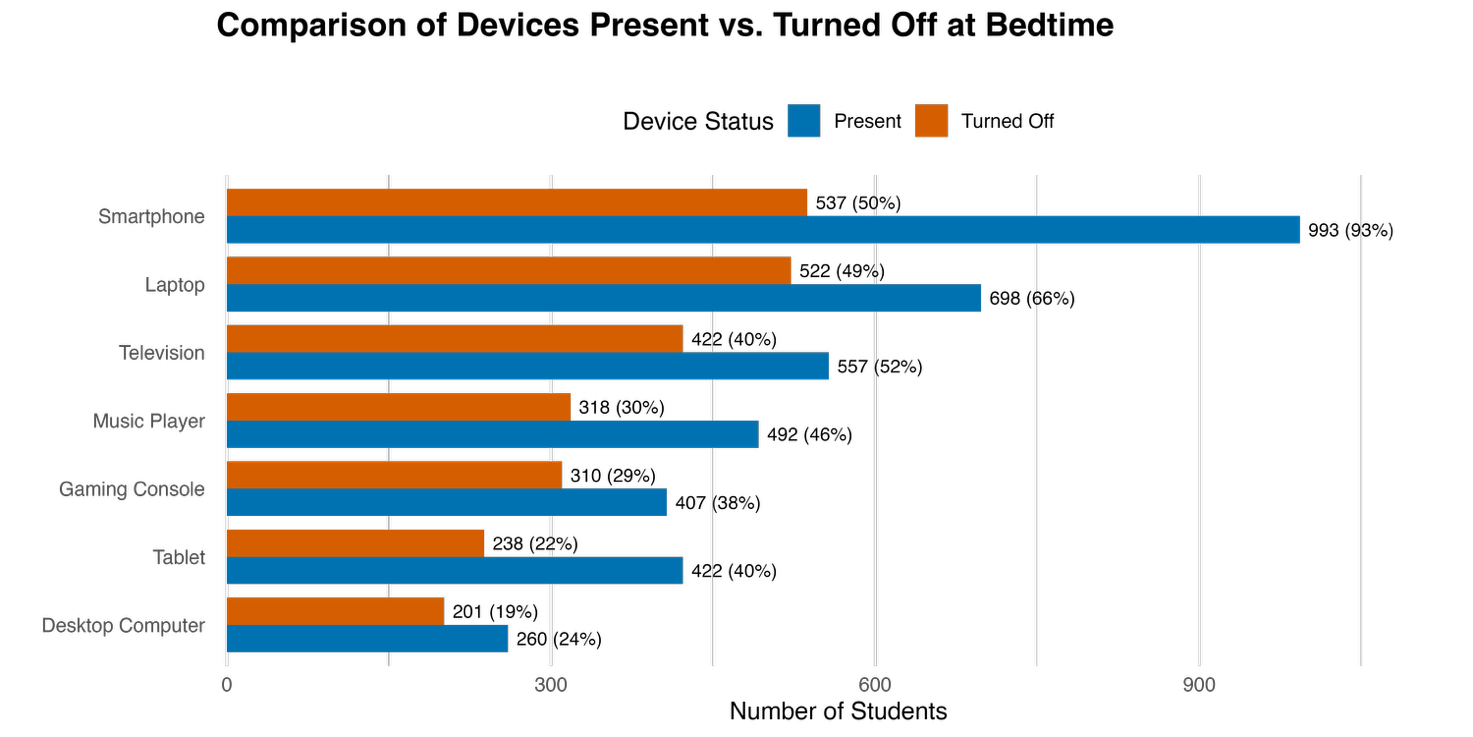
Figure 2. Comparison of Devices Present vs. Turned Off at Bedtime.
Data regarding gender, age, height, and weight (from which BMI was calculated) were collected primarily for descriptive purposes to provide a comprehensive demographic and physical profile of the adolescent sample. These variables were intentionally excluded from the subsequent SEM analyses for three main theoretical and methodological reasons. First, relying on self-reported height and weight in adolescents is known to frequently introduce measurement error and social desirability bias, making the calculated BMI a potentially weak and noisy metric for rigorous structural pathways. Second, to preserve model parsimony and maintain the adequate observation-to-parameter ratio (13:1) achieved in the current model, the inclusion of multiple demographic covariates and their respective paths was avoided to prevent unnecessary loss of statistical power. Finally, excluding these variables allowed the structural model to remain strictly focused on its core theoretical aim: evaluating the impact of specific, daily modifiable lifestyle behaviours (e.g., physical activity, evening technology use, and diet) rather than non-modifiable or long-term demographic traits.
4.2. Correlations
Table 3 summarizes the bivariate correlations among the variables under consideration for inclusion in the SEM model. Although the high numerosity of the sample makes several of these correlations statistically significant, their magnitude is heterogeneous. Correlations of moderate strength were found, such as that of POOR_SLQ with DAY_DIS (r = .50, p < .001), of SL_EFF with POOR_SLQ (r = .42, p < .001), or of ENG_C with ENG_A (r = .34, p < .001), all statistically significant. Correspondingly, other correlations, even though statistically significant, point to direct interactions of weak strength. These are the negative correlations of VPA with SL_EFF (r = −.10, p < .001), POOR_SLQ (r = −.11, p < .001), and DAY_DIS (r = −.12, p < .001), the positive correlations of VPA with ENG_C (r = .13, p < .001) and ENG_A (r = .15, p < .001), or the correlation of SL_EFF with DEV (r = .10, p < .001).
Variable | 1 | 2 | 3 | 4 | 5 | 6 | 7 | 8 |
1. SL_EFF | ||||||||
2. POOR_SLQ | .42** | |||||||
[.36, .46] | ||||||||
p < .001 | ||||||||
3. DAY_DIS | .27** | .50** | ||||||
[.21, .33] | [.46, .55] | |||||||
p < .001 | p < .001 | |||||||
4. ENG_C | -.05 | -.09** | -.02 | |||||
[-.11, .01] | [-.15, -.03] | [-.08, .04] | ||||||
p = .111 | p = .005 | p = .562 | ||||||
5. ENG_A | -.06* | -.12** | -.05 | .34** | ||||
[-.12, -.00] | [-.18, -.06] | [-.11, .01] | [.28, .39] | |||||
p = .048 | p < .001 | p = .125 | p < .001 | |||||
6. VPA | -.10** | -.11** | -.12** | .13** | .15** | |||
[-.16, -.04] | [-.17, -.06] | [-.18, -.06] | [.07, .18] | [.09, .21] | ||||
p < .001 | p < .001 | p < .001 | p < .001 | p < .001 | ||||
7. TRP | -.07* | -.11** | -.11** | -.00 | -.00 | .08** | ||
[-.13, -.01] | [-.17, -.05] | [-.17, -.05] | [-.06, .06] | [-.06, .06] | [.02, .14] | |||
p = .017 | p < .001 | p < .001 | p = .872 | p = .908 | p = .007 | |||
8. DEV | .10** | .03 | .04 | .01 | .06* | .01 | -.05 | |
[.04, .16] | [-.04, .08] | [-.02, .10] | [-.05, .07] | [.00, .12] | [-.05, .07] | [-.11, .01] | ||
p < .001 | p = .415 | p = .225 | p = .653 | p = .045 | p = .703 | p = .082 | ||
9. DEV_OFF | .04 | -.03 | -.05 | .04 | .04 | .02 | -.04 | .71** |
[-.02, .10] | [-.09, .03] | [-.11, .01] | [-.02, .10] | [-.02, .10] | [-.04, .08] | [-.10, .02] | [.68, .74] | |
p = .241 | p = .273 | p = .088 | p = .176 | p = .234 | p = .484 | p = .231 | p < .001 |
Table 3. Correlations Among Variables Considered for Inclusion in the Structural Model. Note. SL_EFF = Sleep Efficiency; POOR_SLQ = Poor Sleep Quality; DAY_DIS = Daytime Dysfunction; ENG_C = Cognitive Engagement; ENG_A = Agentic Engagement; VPA = Vigorous Physical Activity; TRP = Tryptophan-rich food intake index; DEV = Total number of electronic devices present in the bedroom; DEV_OFF = Number of electronic devices switched off before sleep. Confidence intervals in brackets. * p < .05. ** p < .01.
4.3. Measurement Models Validation
Before proceeding to test the overall structural model, preliminary analyses of the measurement scales were conducted to confirm their factorial structure and evaluate the construct validity of the indicators in adequately representing their respective latent constructs. To provide a clear overview of the validation procedures and the resulting structures, the final Confirmatory Factor Analysis (CFA) path diagrams for both instruments are presented in Figure 3. The specific analytical steps, including item reduction and model fit indices for each scale, are detailed in the following subsections.
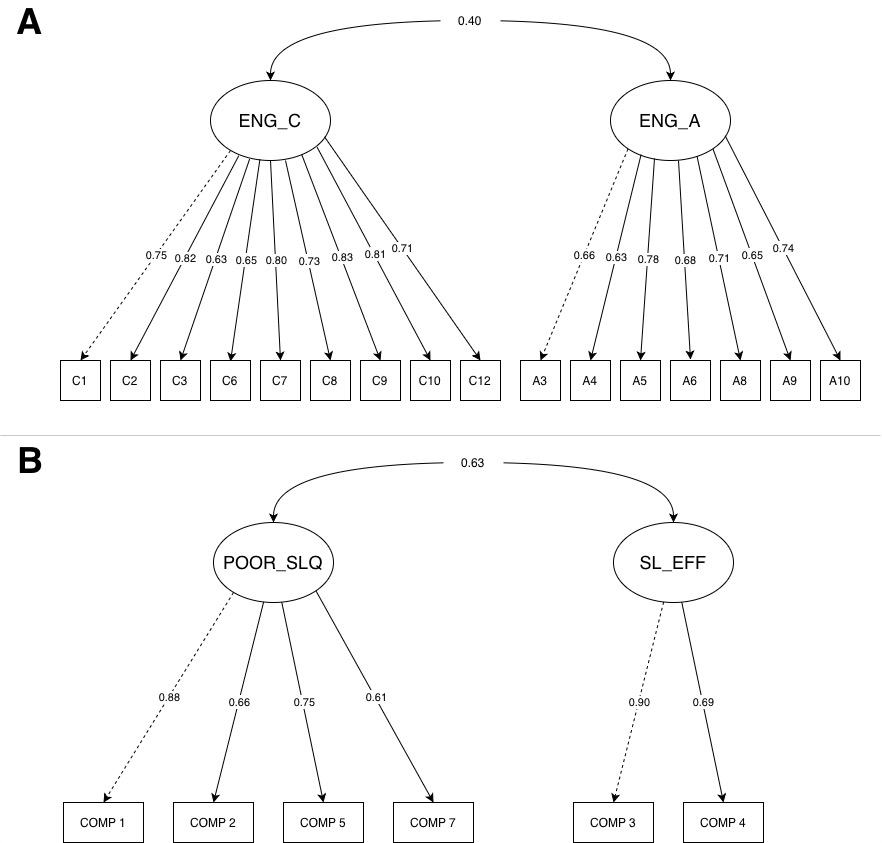
Figure 3. Confirmatory Factor Analysis Path Diagrams. Panel A displays the final measurement model for the Student Engagement Scale. Panel B displays the final measurement model for the Pittsburgh Sleep Quality Index.
Note. SES = Student Engagement Scale; AGN = Agentic Engagement; CGN = Cognitive Engagement; PSQI = Pittsburgh Sleep Quality Index; POOR_SLQ = Poor Sleep Quality; SL_EFF = Sleep Efficiency; COMP = Component. Standardized factor loadings are presented.
4.3.1. PSQI
The structural variability of the PSQI differs across various populations and studies, presenting one, two, or three-factor solutions. In the present study, a CFA was conducted on the PSQI components, treated as ordinal variables. The WLSMV estimator was used to evaluate a two-factor structure, consistent with the studies by Guo et al. (2016) and Pandey et al. (2025). The first factor included sleep efficiency (SL_EFF; component 3 + component 4), while the second described poor sleep quality (POOR_SLQ; component 1 + component 2 + component 5 + component 6 + component 7). Since the factor loading for the use of medicine was less than 0.3, component 6 “use of medicine” was deleted, and confirmatory factor analysis was performed again, similarly to Guo et al. (2016). The model fit indices are very good (CFI = 0.999, TLI = 0.997, RMSEA = 0.021 [IC 90% 0-0.051], SRMR = 0.020).
An acceptable Cronbach’s α value (0.762) was identified.
4.3.2. SES
Initial assessment of a four-factor measurement model via CFA using the full set of items was conducted using the MLR estimator, as multivariate normality was violated, and indicated poor model fit (CFI = 0.805, TLI = 0.797, RMSEA = 0.073 [90% CI 0.071-0.075], SRMR = 0.083). Following this lack of adequate fit, an Exploratory Factor Analysis (EFA) was conducted on the full dataset employing Principal Axis Factoring and Varimax rotation to explore the underlying factor structure (CFI = 0.877, TLI = 0.849, RMSEA = 0.062 [90% CI 0.060-0.064]). The results of the EFA were primarily used to inform the selection of item sets corresponding to conceptually clearer factors. Specifically, items belonging to emotional and behavioural engagement factors were removed from the dataset because they exhibited significant cross-loadings or poor differentiation in the EFA. A CFA was then conducted on the remaining subset of items. This model was further refined by iteratively removing individual items (C5, C11, A1, A2, A7) that displayed low factor loadings (below 0.6) within this reduced structure. This process resulted in the final model, which demonstrated good fit to the data (CFI = 0.951, TLI = 0.943, RMSEA = 0.055 [IC 90% 0.050-0.060], SRMR = 0.058).
SES exhibited robust internal consistency, with Cronbach’s alpha coefficients indicating good reliability for cognitive (α = 0.92), and agentic (α = 0.879) subscales, and excellent reliability for the overall scores (α = 0.945).
Although the practice of drastically reducing an established multidimensional scale is often debated in the psychometric literature and should be approached with caution (MacCallum et al., 1992), robust results can still be obtained when such procedures are anchored to a strong theoretical background. Precedents in psychological research demonstrate that an extensive reduction of items and dimensions can be a valid methodological strategy to purify an instrument and achieve a superior phenomenological fit with the empirical data (e.g. Benson & Bandalos, 1992; Cox et al., 2003). In our study, this analytical step allowed us to isolate the most structurally stable components for our specific sample.
Furthermore, from a theoretical standpoint, the retention of only the cognitive and agentic dimensions is highly consistent with the physiological focus of this study. As highlighted by Wong and Liem (2024), student engagement dimensions operate differently: affective and participatory behavioural engagement are heavily tied to social connectedness and the school community context. Conversely, cognitive engagement involves an active mental state and internal cognitive investment. Building on this conceptual distinction, sleep deprivation primarily impairs endogenous neurocognitive resources, such as top-down attentional control, cognitive flexibility, and working memory (Campbell et al., 2024; Sen & Tai, 2023), which are the foundational elements of cognitive engagement. Furthermore, recent literature strongly supports the isolation of the agentic dimension when studying sleep. As highlighted by Van de Casteele et al. (2025), autonomous and agentic drives are deeply intertwined with internal regulatory mechanisms, such as subjective vitality and adaptive physiological responses to stress (e.g., lower cortisol levels), which closely couple them with sleep regulation. Therefore, while acknowledging that this approach inherently narrows the original multidimensional construct, isolating the cognitive and agentic dimensions may offer a focused and theoretically coherent lens to explore the specific neurocognitive toll of poor sleep, potentially mitigating the confounding effects of external social dynamics.
4.4. Structural model
The measurement model specifies the latent variables SL_EFF, POOR_SLQ, DAY_DIS, ENG_C, and ENG_A, which are measured by their respective observed indicators. The latent variable sleep quality (SLQ) is modelled as a higher-order factor measured by SL_EFF, and POOR_SLQ.
In the structural component, direct pathways were created from the exogenous observed variables (i.e., VPA, TRP, DEV, and DEV_OFF) to the endogenous latent variable SLQ, and from the endogenous latent variable SLQ to the endogenous latent variables ENG_C and ENG_A. This model posits that the effects of the exogenous variables are mediated through SLQ towards ENG_C and ENG_A. Covariances were also calculated between the residuals of ENG_C and ENG_A, as well as among the latent variables SL_EFF, and POOR_SLQ.
The model maintained excellent fit measures from this analysis (CFI = 0.975, TLI = 0.980, RMSEA = 0.034 [90% CI 0.031-0.038], SRMR = .050), except for the χ2 statistic, whose value is sensitive to large sample sizes (Bentler & Bonett, 1980). To facilitate comparison of the relative strength of the relationships, the regression coefficients are reported in standardized form (β).
Mediation analysis was conducted to examine the indirect effects of the exogenous variables (VPA, TRP, DEV, and DEV_OFF) on the endogenous latent variables (ENG_C and ENG_A) through the latent variable POOR_SLQ. Vigorous physical activity has a significant association with the mediator poor sleep quality (β = -.493, p < 0.001), as well the number of devices switched off before sleep (β = -.211, p = 0.034) while tryptophan-rich food intake (β = -.105, p > 0.05) and the total number of electronic devices present in the bedroom (β = .134, p > 0.05) are not significant. Interestingly, while the total number of electronic devices in the bedroom does not havea direct impact on sleep quality, switching off devices before sleep had a beneficial effect, suggesting the importance of positive pre-sleep habits distinct from device ownership.
Furthermore, the mediator poor sleep quality significantly predicted both cognitive engagement (β = -.226, p = 0.001) and agentic engagement (β = -.293, p < 0.001). These results indicate that poorer sleep quality is associated with lower levels of academic engagement, highlighting the mediating role of POOR_SLQ in the relationship between the exogenous variables and scholastic engagement (see Figure 4).
Regarding the specific indirect effects, the analysis confirmed the mediating role of POOR_SLQ. Specifically, VPA demonstrated a significant positive indirect effect on both cognitive engagement (β = .111, p < 0.001) and agentic engagement (β = .144, p < 0.001) through improved sleep quality. Similarly, the habit of switching off devices before sleep yielded a significant positive indirect effect on agentic engagement via POOR_SLQ (β = .062, p = 0.045), while its indirect effect on cognitive engagement approached significance (β = .048, p = 0.052).
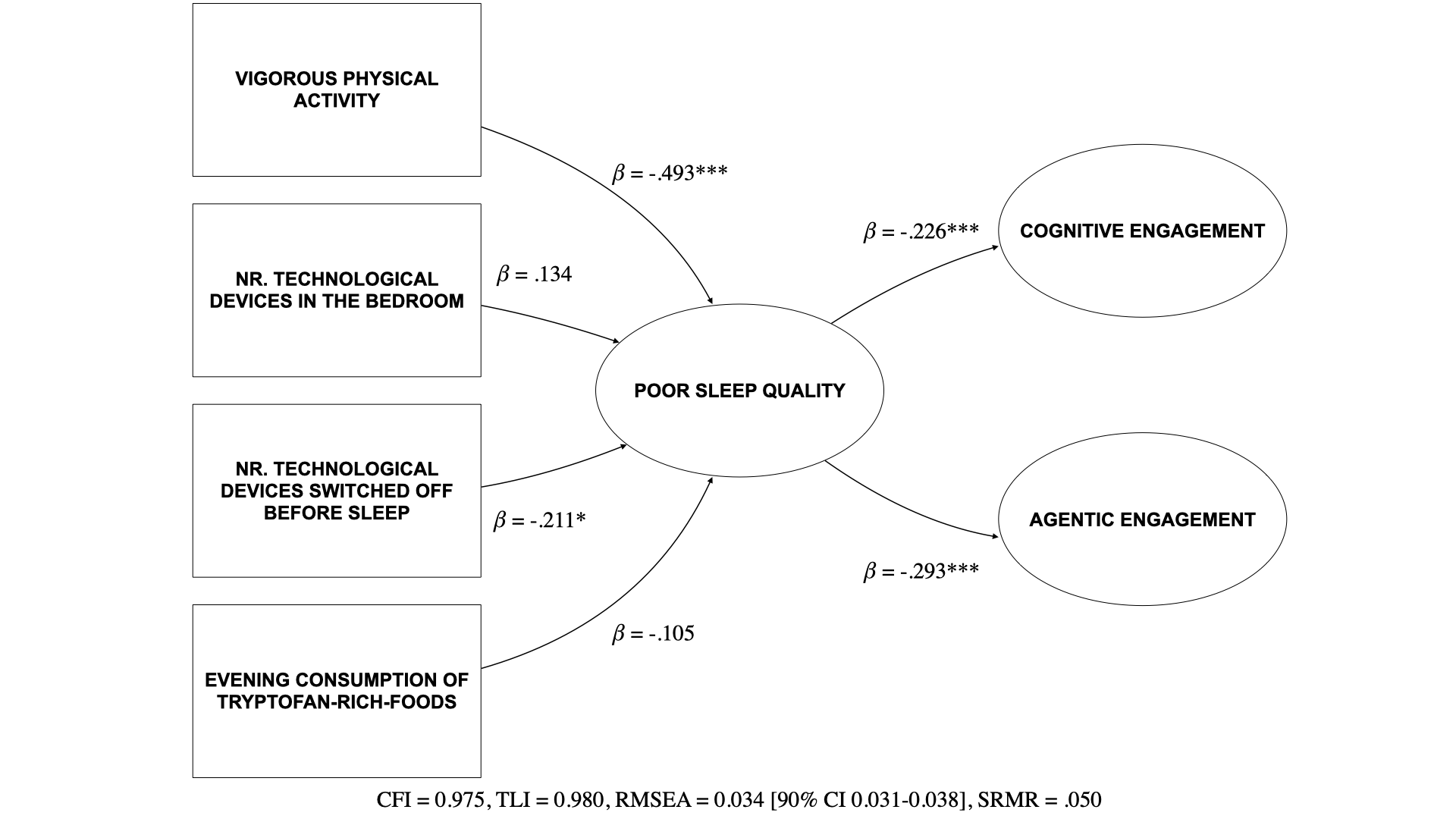
Figure 4. Path diagram of the structural equation model. Standardized regression coefficients (β) and statistical significance are displayed on the paths. p < 0.05*, p < 0.01**, p < 0.001***
5. Discussion
The aim of this study was to examine how specific lifestyles, such as vigorous physical activity, a tryptophan-rich diet, and technology use before sleep, influence student engagement through the mediation of poor sleep quality in a sample of Italian adolescents. The results show that poor sleep quality is a crucial mediator between certain behaviours and both cognitive and agentic engagement. Specifically, engaging in vigorous physical activity and turning off electronic devices in the bedroom before sleeping are predictors of good sleep quality, which in turn is associated with higher levels of engagement. Contrary to the hypotheses, however, the consumption of tryptophan-rich foods for dinner and the number of devices present in the bedroom did not show a direct association with poor sleep quality.
5.1. Sleep Quality and Engagement
Consistent with H1, the results show a significant negative association between poor sleep quality and both cognitive (β = −.226, p = 0.001) and agentic engagement (β = −.281, p < 0.001). Poor sleep quality is linked to impairments in executive functions (Campbell et al., 2024), jeopardizing attention and working memory (Bruin et al., 2017; Jiang et al., 2011), and reducing cognitive flexibility and inhibitory control (Sen & Tai, 2023), constructs that form the neurocognitive basis of cognitive engagement. Similarly, the association with agentic engagement suggests a link between inadequate sleep and a reduced student capacity to actively participate in learning experiences.
These findings are supported and expanded upon by the existing literature, which not only confirms the relationship but also explores its complexity. For example, Xu et al. (2025) highlighted the crucial role of mental health as a moderator in the sleep-engagement relationship, while Raniti et al. (2021) found that sleep hygiene and quality mediate the impact of anxiety on academic engagement. More broadly, Dunbar et al. (2017) confirmed the longitudinal robustness of this relationship, which can have significant medium-term repercussions on students’ lives, thus highlighting the importance of sleep quality as a significant protective factor for adolescents.
The link between poor sleep quality and engagement cannot be fully understood without considering the tension between the biological changes typical of adolescence and the demands imposed by social contexts. Indeed, during this life stage, the biological clock naturally tends to shift towards an evening chronotype (Hagenauer et al., 2009). However, this predisposition conflicts with predominantly morning-based school schedules, leading to a chronic misalignment known as social jetlag. The latter represents a significant risk factor, associated with both poorer sleep quality and reduced academic performance (Wittmann et al., 2006).
The findings should therefore be framed within a broader context in which, in addition to the predictors identified, biological and contextual variables must be considered, as they could create a mismatch between the need for sleep and the actual opportunity to sleep.
Although the aforementioned results are certainly noteworthy, a series of methodological issues emerged during the research, jeopardizing the generalizability of the findings. These issues include low participation, a high dropout rate, and some problems related to the measurement of variables. Such limitations are described below in the limitations section.
5.2. Lifestyle Predictors of Sleep Quality
Regarding technology use, and contrary to the findings of, for example, Bruni et al. (2015), the model does not support hypothesis H4, which posited that the number of devices in the bedroom influences sleep quality (β = .134, p > 0.05). Instead, the data support H5, which proposed that the number of devices actually turned off before sleeping predicts better sleep quality (β = −.211, p = 0.034). This finding is consistent with research highlighting the risk factor of making technology accessible to adolescents in their sleeping environment (Carter et al., 2016; Saunders et al., 2022) and can be attributed to multiple explanations. First, it can be hypothesized that the availability of a device in the bedroom (especially a portable one) may encourage its use. Second, some devices can disturb sleep even in standby mode through intermittent lights, vibrations, or sounds. Finally, it is plausible to hypothesize that the latent awareness of the presence of technological devices in the adolescent’s bedroom could maintain the brain in a state of hypervigilance, hindering the relaxation and psychophysiological disconnection necessary for an efficient transition to sleep. Such a hypothesis would be the sleep-related analogue to what Ward et al. (2017) proposed for wakefulness. According to the author, the mere presence of a smartphone in a room reduces individuals’ cognitive capacity, although this hypothesis is not universally accepted, and its replicability is a subject of debate (Böttger et al., 2023; Parry, 2023; Ruiz Pardo & Minda, 2022).
In line with hypothesis H3, vigorous physical activity emerged as a strong predictor of better sleep quality (β = −.493, p < 0.001). This result is consistent with suggestions from, for example, Zhou et al. (2024), that vigorous activity may be more impactful than moderate activity. The effect of high physical activity on sleep can be associated with the physiological, psychological, and behavioural effects it elicits (Alnawwar et al., 2023; Ezdini & Faraeen, 2025; Sejbuk et al., 2022).
In general, a healthy daily diet is a fundamental element for the quality of sleep and the psychophysical well-being of adolescents. A balanced and regular diet can, in fact, provide the nutritional context within which the intake of specific nutrients, such as tryptophan, is able to fully express its beneficial effects. Although some studies highlight various effects of tryptophan on sleep (Binks et al., 2020), contrary to hypothesis H2, no benefit to sleep was found from the evening intake of tryptophan-rich foods (β = −.105, p > 0.05). This result aligns with recent studies in which evidence for a direct effect of tryptophan intake on sleep is limited. For example, both Alafif (2024) and Fukushige et al. (2014) do not find a strong association between the two constructs, opening up the possibility that other factors need to be considered, such as exposure to bright light during the day or participation in nighttime activities, which may limit its effect, consistent with the aforementioned social jetlag. Other dietary behaviors, not considered in the present study, may inhibit the effects of tryptophan intake. These include consuming stimulating substances during the evening meal or before bedtime, such as coffee, energy drinks, alcoholic beverages, or foods containing monosodium glutamate. Cooking methods and complex dishes may also be associated with poor sleep quality; for instance, consuming dishes prepared with cream, béchamel, or fried foods, as well as an excessive intake of meat, animal proteins, and aged cheeses. Such foods remain in the stomach longer, as they require more gastric juices and a prolonged period for digestion. Furthermore, any substance that increases blood pressure and heart rate can impede sleep onset, as the cardiovascular system must begin to decelerate approximately 30 minutes before sleep. Excessive salt and spicy seasonings are also detrimental to good sleep.
5.3. Limitations and Future Research
The present study has several limitations. First, its cross-sectional design precludes the establishment of causal relationships. Although some findings and the SEM analysis suggest causal pathways, these can only be definitively confirmed through longitudinal studies.
The data were collected using self-report measures, which may introduce bias. For instance, adolescents’ perception of their sleep quality does not always align with objective measurements (Lucas-Thompson et al., 2020). Another data collection issue pertains to the engagement measure. Due to problems with its factorial structure, the measure was reduced to two factors, thereby limiting the construct’s representation to its agentic and cognitive dimensions. Finally, while the use of a single item to measure vigorous physical activity contributed to a more parsimonious model, it may have oversimplified the complexity of this behaviour. Furthermore, the instrument used did not clarify the exact time of day the physical activity was performed, nor the specific type of activity in which individuals were engaged. A comprehension of both of these variables could be critical for a more in-depth understanding of the impact of physical activity on sleep.
Future research should focus on longitudinal designs to confirm these associative pathways and incorporate objective measures of sleep and physical activity, such as actigraphy, to overcome self-report biases.
6. Conclusions
From a theoretical perspective, this study highlights the value of sleep as a potential mediator between lifestyle and school engagement, an associationthat has been underexplored in the literature. Furthermore, the study contributes to the debate on the interaction between adolescents and technology, specifically regarding the importance of the behavioural management of technological devices, especially in the evening and in the bedroom.
6.1. Practical Implications
Regarding practical applications, the findings of this study can inform educational practices, health promotion initiatives, and interventions aimed at improving adolescent well-being. Caregivers and policymakers should strongly consider the critical association between good sleep quality and students’ neurocognitive resources. Since the data suggest that modifying specific evening behaviours, such as engaging in vigorous physical activity during the week and actively turning off electronic devices before bedtime, is positively associated with sleep quality, schools and families could implement targeted psychoeducational programs. By respecting the biological chronotype of adolescents and promoting healthy pre-sleep habits, stakeholders can foster an environment that supports higher levels of cognitive and agentic engagement in the academic context.
References
Abbott-Chapman, J., Martin, K., Ollington, N., Venn, A., Dwyer, T., & Gall, S. (2014). The longitudinal association of childhood school engagement with adult educational and occupational achievement: Findings from an Australian national study. British Educational Research Journal, 40, 102–120. https://doi.org/10.1002/BERJ.3031
Alafif, N. (2024). Association between consumption of tryptophan with sleep quality in King Saud University students. Journal of King Saud University – Science, 36(2), Article 103046. https://doi.org/10.1016/j.jksus.2023.103046
Alfonsi, V., Scarpelli, S., D’Atri, A., Stella, G., & De Gennaro, L. (2020). Later school start time: The impact of sleep on academic performance and health in the adolescent population. International Journal of Environmental Research and Public Health, 17(7), Article 2574. https://doi.org/10.3390/ijerph17072574
Alnawwar, M., Alraddadi, M. I., Algethmi, R., Salem, G. A., Salem, M. A., & Alharbi, A. A. (2023). The effect of physical activity on sleep quality and sleep disorder: A systematic review. Cureus, 15, Article e43595. https://doi.org/10.7759/cureus.43595
Astin, A. W. (1984). Student involvement: A developmental theory for higher education. Journal of College Student Personnel, 25, 297–308. https://psycnet.apa.org/record/1985-18630-001
Bacaro, V., Carpentier, L., & Crocetti, E. (2023). Sleep well, study well: A systematic review of longitudinal studies on the interplay between sleep and school experience in adolescence. International Journal of Environmental Research and Public Health, 20(6), Article 4829. https://doi.org/10.3390/ijerph20064829
Beebe, D. (2011). Cognitive, behavioral, and functional consequences of inadequate sleep in children and adolescents. Pediatric Clinics of North America, 58(3), 649–665. https://doi.org/10.1016/j.pcl.2011.03.002
Benson, J., & Bandalos, D. L. (1992). Second-order confirmatory factor analysis of the reactions to tests scale with cross-validation. Multivariate Behavioral Research, 27(3), 459–487. https://doi.org/10.1207/s15327906mbr2703_8
Bentler, P. M., & Bonett, D. G. (1980). Significance tests and goodness-of-fit in analysis of covariance structures. Psychological Bulletin, 88, 588–606. https://doi.org/10.1037/0033-2909.88.3.588
Binks, H., Vincent, G., Gupta, C., Irwin, C., & Khalesi, S. (2020). Effects of diet on sleep: A narrative review. Nutrients, 12(4), Article 936. https://doi.org/10.3390/nu12040936
Böttger, T., Poschik, M., & Zierer, K. (2023). Does the brain drain effect really exist? A meta-analysis. Behavioral Sciences, 13(9), Article 751. https://doi.org/10.3390/bs13090751
Bowles, T. V., Scull, J., & Jimerson, S. (2022). School connection through engagement associated with grade scores and emotions of adolescents: Four factors to build engagement in schools. Social Psychology of Education, 25, 675–696. https://doi.org/10.1007/s11218-022-09697-4
Brautsch, L. A., Lund, L., Andersen, M. M., Jennum, P. J., Folker, A. P., & Andersen, S. (2023). Digital media use and sleep in late adolescence and young adulthood: A systematic review. Sleep Medicine Reviews, 68, Article 101742. https://doi.org/10.1016/j.smrv.2022.101742
Bruni, O., Sette, S., Fontanesi, L., Baiocco, R., Laghi, F., & Baumgartner, E. (2015). Technology use and sleep quality in preadolescence and adolescence. Journal of Clinical Sleep Medicine, 11, 1433–1441. https://doi.org/10.5664/jcsm.5282
Buysse, D. J., Reynolds, C. F., Monk, T. H., Berman, S. R., & Kupfer, D. J. (1989). The Pittsburgh sleep quality index: A new instrument for psychiatric practice and research. Psychiatry Research, 28(2), 193–213. Author suffix in source: Reynolds, C. F., III.
Cacciari, E., Milani, S., Balsamo, A., Spada, E., Bona, G., Cavallo, L., Cerutti, F., Gargantini, L., Greggio, N., & Tonini, G. (2006). Italian cross-sectional growth charts for height, weight and BMI (2 to 20 yr). Journal of Endocrinological Investigation, 29, 581–593.
Cadime, I., Pinto, A., Lima, S., Rego, S., Pereira, J., & Ribeiro, I. (2016). Well-being and academic achievement in secondary school pupils: The unique effects of burnout and engagement. Journal of Adolescence, 53, 169–179. https://doi.org/10.1016/j.adolescence.2016.10.003
Campbell, I. G., Kurinec, C., Zhang, Z. Y., Cruz-Basilio, A., Figueroa, J. G., Bottom, V., Whitney, P., Hinson, J., & Van Dongen, H. V. V. (2024). Sleep restriction and age effects on distinct aspects of cognition in adolescents. Sleep, 47(12), zsae216. https://doi.org/10.1093/sleep/zsae216
Carpenter, J. S., & Andrykowski, M. A. (1998). Psychometric evaluation of the Pittsburgh sleep quality index. Journal of Psychosomatic Research, 45(1), 5–13.
Carter, B., Rees, P., Hale, L., Bhattacharjee, D., & Paradkar, M. S. (2016). Association between portable screen-based media device access or use and sleep outcomes: A systematic review and meta-analysis. JAMA Pediatrics, 170(12), 1202–1208. https://doi.org/10.1001/jamapediatrics.2016.2341
Chase, P. A., Hilliard, L. J., Geldhof, G. J., Warren, D. J. A., & Lerner, R. (2014). Academic achievement in the high school years: The changing role of school engagement. Journal of Youth and Adolescence, 43, 884–896. https://doi.org/10.1007/s10964-013-0085-4
Chen, J., Wu, C., & Wang, L. C. (2021). Longitudinal associations between school engagement and bullying victimization in school and cyberspace in Hong Kong: Latent variables and an autoregressive cross-lagged panel study. School Mental Health, 13, 462–472. https://doi.org/10.1007/s12310-021-09439-5
Cox, R. H., Martens, M. P., & Russell, W. D. (2003). Measuring anxiety in athletics: The revised Competitive State Anxiety Inventory-2. Journal of Sport and Exercise Psychology, 25(4), 519–533.
Cruz, J., Llodio, I., Iturricastillo, A., Yanci, J., Sánchez-Díaz, S., & Romaratezabala, E. (2024). Association of physical activity and/or diet with sleep quality and duration in adolescents: A scoping review. Nutrients, 16(19), Article 3345. https://doi.org/10.3390/nu16193345
Curcio, G., Tempesta, D., Scarlata, S., Marzano, C., Moroni, F., Rossini, P. M., Ferrara, M., & De Gennaro, L. (2013). Validity of the Italian version of the Pittsburgh sleep quality index (PSQI). Neurological Sciences, 34, 511–519.
Curran, P. J., West, S. G., & Finch, J. F. (1996). The robustness of test statistics to nonnormality and specification error in confirmatory factor analysis. Psychological Methods, 1(1), 16–29. https://doi.org/10.1037/1082-989X.1.1.16
Dahl, R., & Lewin, D. (2002). Pathways to adolescent health sleep regulation and behavior. Journal of Adolescent Health, 31(6 Suppl.), 175–184. https://doi.org/10.1016/S1054-139X(02)00506-2
Demirci, İ. (2020). School engagement and well-being in adolescents: Mediating roles of hope and social competence. Child Indicators Research, 13, 1573–1595. https://doi.org/10.1007/s12187-020-09722-y
Dibben, G. O., Martin, A., Shore, C. B., Johnstone, A., McMellon, C., Palmer, V., Pugmire, J., Riddell, J., Skivington, K., Wells, V., McDaid, L., & Simpson, S. A. (2023). Adolescents’ interactive electronic device use, sleep and mental health: A systematic review of prospective studies. Journal of Sleep Research, 32, Article e13899. https://doi.org/10.1111/jsr.13899
Doroshenko, V. V., Meleha, K., & Favorytov, V. M. (2024). The role of physical activty in improving the quality of patients with various sleep disorders. Art of Medicine, 31(3), 226–230. https://doi.org/10.21802/artm.2024.3.31.226
Dunbar, M., Mirpuri, S., & Yip, T. (2017). Ethnic/racial discrimination moderates the effect of sleep quality on school engagement across high school. Cultural Diversity and Ethnic Minority Psychology, 23, 527–540. https://doi.org/10.1037/cdp0000146
Eccles, J. S. (2016). Engagement: Where to next? Learning and Instruction, 43, 71–75. https://doi.org/10.1016/j.learninstruc.2016.02.003
Estévez, I., Rodríguez-Llorente, C., Piñeiro, I., González-Suárez, R., & Valle, A. (2021). School engagement, academic achievement, and self-regulated learning. Sustainability, 13(6), Article 3011. https://doi.org/10.3390/su13063011
Ezdini, E. S., & Faraeen, M. (2025). Exercise and sleep during adolescence: Examining the effects of different types of physical activity on sleep quality. KMAN Counseling and Psychology Nexus, 3(5), 1–19. https://doi.org/10.61838/kman.cp.psynexus.3.11
Fatou, N., & Kubiszewski, V. (2018). Are perceived school climate dimensions predictive of students’ engagement? Social Psychology of Education, 21, 427–446. https://doi.org/10.1007/S11218-017-9422-X
Fomina, T., Potanina, A. M., Bondarenko, I., & Morosanova, V. (2022). Dynamics of school engagement and its relationship with development of conscious self-regulation in adolescents. Experimental Psychology (Russia), 15(4), 167–180. https://doi.org/10.17759/exppsy.2022150411
Fredricks, J. A., Blumenfeld, P. C., & Paris, A. H. (2004). School engagement: Potential of the concept, state of the evidence. Review of Educational Research, 74(1), 59–109. https://doi.org/10.3102/00346543074001059
Fukushige, H., Fukuda, Y., Tanaka, M., Inami, K., Wada, K., Tsumura, Y., Kondo, M., Harada, T., Wakamura, T., & Morita, T. (2014). Effects of tryptophan-rich breakfast and light exposure during the daytime on melatonin secretion at night. Journal of Physiological Anthropology, 33(1), Article 33. https://doi.org/10.1186/1880-6805-33-33
Giannotta, F., Nilsson, K. W., Åslund, C., Olofdotter, S., Vadlin, S., & Larm, P. (2024). Anxiety, sleep problems, and vigorous physical activity: Bidirectional associations from early adolescence to early adulthood in Swedish adolescents. Journal of Youth and Adolescence, 53, 1355–1369. https://doi.org/10.1007/s10964-024-01980-1
Guo, S., Sun, W., Liu, C., & Wu, S. (2016). Structural validity of the Pittsburgh sleep quality index in Chinese undergraduate students. Frontiers in Psychology, 7, Article 1126. https://doi.org/10.3389/fpsyg.2016.01126
Gurcan, F., Erdogdu, F., Cagiltay, N. E., & Cagiltay, K. (2023). Student engagement research trends of past 10 years: A machine learning-based analysis of 42,000 research articles. Education and Information Technologies, 28, 15067–15091. https://doi.org/10.1007/s10639-023-11803-8
Hagenauer, M. H., Perryman, J. I., Lee, T. M., & Carskadon, M. A. (2009). Adolescent changes in the homeostatic and circadian regulation of sleep. Developmental Neuroscience, 31(4), 276–284.
Hagströmer, M., Bergman, P., De Bourdeaudhuij, I., Ortega, F. B., Ruiz, J. R., Manios, Y., Rey-López, J., Phillipp, K., von Berlepsch, J., & Sjöström, M. (2008). Concurrent validity of a modified version of the international physical activity questionnaire (IPAQ-A) in European adolescents: The HELENA study. International Journal of Obesity, 32(5), S42–S48.
Hale, L., & Guan, S. (2015). Screen time and sleep among school-aged children and adolescents: A systematic literature review. Sleep Medicine Reviews, 21, 50–58. https://doi.org/10.1016/j.smrv.2014.07.007
Hashimoto, A., Inoue, H., & Kuwano, T. (2020). Low energy intake and dietary quality are associated with low objective sleep quality in young Japanese women. Nutrition Research, 80, 44–54. https://doi.org/10.1016/j.nutres.2020.06.002
Huang, S., Deshpande, A., Yeo, S., Lo, J., Chee, M., & Gooley, J. (2016). Sleep restriction impairs vocabulary learning when adolescents cram for exams: The need for sleep study. Sleep, 39(9), 1681–1690. https://doi.org/10.5665/sleep.6092
Hysing, M., Pallesen, S., Stormark, K. M., Jakobsen, R., Lundervold, A. J., & Sivertsen, B. (2015). Sleep and use of electronic devices in adolescence: Results from a large population-based study. BMJ Open, 5, Article e006748. https://doi.org/10.1136/bmjopen-2014-006748
Jiang, F., Vandyke, R., Zhang, J., Li, F., Gozal, D., & Shen, X. (2011). Effect of chronic sleep restriction on sleepiness and working memory in adolescents and young adults. Journal of Clinical and Experimental Neuropsychology, 33, 892–900. https://doi.org/10.1080/13803395.2011.570252
Jurić, P., Karuc, J., Martinko, A., Mišigoj-Duraković, M., & Sorić, M. (2022). Does time of the day matter? Temporal associations between physical activity and quality and quantity of subsequent sleep in adolescents. Sleep Medicine, 92, 41–49. https://doi.org/10.1016/j.sleep.2022.02.020
Kline, R. B. (2023). Principles and practice of structural equation modeling (5th ed.). Guilford Publications.
Konold, T. R., Cornell, D., Jia, Y., & Malone, M. (2018). School climate, student engagement, and academic achievement: A latent variable, multilevel multi-informant examination. AERA Open, 4(4), 1–17. https://doi.org/10.1177/2332858418815661
Kortesoja, L., Vainikainen, M. P., Hotulainen, R., Rimpelä, A., Dobewall, H., Lindfors, P., Karvonen, S., & Merikanto, I. (2020). Bidirectional relationship of sleep with emotional and behavioral difficulties: A five-year follow-up of Finnish adolescents. Journal of Youth and Adolescence, 49, 1277–1291. https://doi.org/10.1007/s10964-020-01203-3
Ladd, G. W., & Dinella, L. M. (2009). Continuity and change in early school engagement: Predictive of children’s achievement trajectories from first to eighth grade? Journal of Educational Psychology, 101, 190–206. https://doi.org/10.1037/a0013153
Lang, C., Kalak, N., Brand, S., Holsboer-Trachsler, E., Pühse, U., & Gerber, M. (2016). The relationship between physical activity and sleep from mid-adolescence to early adulthood: A systematic review of methodological approaches and meta-analysis. Sleep Medicine Reviews, 28, 32–45. https://doi.org/10.1016/j.smrv.2015.07.004
Lee, H., & Henry, K. (2022). Adolescent substance use prevention: Long-term benefits of school engagement. The Journal of School Health, 92, 337–344. https://doi.org/10.1111/josh.13133
Lei, H., Cui, Y., & Zhou, W. (2018). Relationships between student engagement and academic achievement: A meta-analysis. Social Behavior and Personality, 46, 517–528. https://doi.org/10.2224/SBP.7054
Lemos, M., Gonçalves, T., & Cadima, J. (2020). Examining differential trajectories of engagement over the transition to secondary school: The role of perceived control. International Journal of Behavioral Development, 44, 313–324. https://doi.org/10.1177/0165025419881743
Li, B., Gu, Y., Yang, Y., Zhao, M., & Dong, Y. (2023). The effect of problematic smartphone use on school engagement and disengagement among middle school students: The mediating role of academic procrastination and sleep quality. Journal of Adolescence, 95, 1033–1044. https://doi.org/10.1002/jad.12173
Liu, B., Gao, F., Zhang, J., Zhou, H., Sun, N., Li, L., Liang, L., Ning, N., Wu, Q., & Zhao, M. (2020). Sleep quality of students from elementary school to university: A cross-sectional study. Nature and Science of Sleep, 12, 855–864. https://doi.org/10.2147/NSS.S266493
Lucas-Thompson, R., Crain, T. L., & Brossoit, R. M. (2020). Measuring sleep duration in adolescence: Comparing subjective and objective daily methods. Sleep Health, 7(1), 79–82. https://doi.org/10.1016/j.sleh.2020.06.005
Lund, L., Sølvhøj, I. N., Danielsen, D., & Andersen, S. (2021). Electronic media use and sleep in children and adolescents in Western countries: A systematic review. BMC Public Health, 21, Article 1598. https://doi.org/10.1186/s12889-021-11640-9
MacCallum, R. C., Roznowski, M., & Necowitz, L. B. (1992). Model modifications in covariance structure analysis: The problem of capitalization on chance. Psychological Bulletin, 111(3), 490–504. https://doi.org/10.1037/0033-2909.111.3.490
Mameli, C., & Passini, S. (2017). Measuring four-dimensional engagement in school: A validation of the student engagement scale and of the agentic engagement scale. TPM: Testing, Psychometrics, Methodology in Applied Psychology, 24(4), 527–541. https://doi.org/10.4473/TPM24.4.4
Mannocci, A., Masala, D., Mei, D., Tribuzio, A. M., Villari, P., & La Torre, G. (2021). International physical activity questionnaire for adolescents (IPAQ-A): Reliability of an Italian version. Minerva Pediatr (Torino), 73(5), 383–390. https://doi.org/10.23736/S2724-5276.16.04727-7
Markus, C., Jonkman, L. M., Lammers, J., Deutz, N., Messer, M., & Rigtering, N. (2005). Evening intake of alpha-lactalbumin increases plasma tryptophan availability and improves morning alertness and brain measures of attention. The American Journal of Clinical Nutrition, 81(5), 1026–1033. https://doi.org/10.1093/AJCN/81.5.1026
Martins, J., Cunha, J., Lopes, S., Moreira, T., & Rosário, P. (2021). School engagement in elementary school: A systematic review of 35 years of research. Educational Psychology Review, 34, 793–849. https://doi.org/10.1007/s10648-021-09642-5
Mazzer, K., Bauducco, S., Linton, S. J., & Boersma, K. (2018). Longitudinal associations between time spent using technology and sleep duration among adolescents. Journal of Adolescence, 66, 112–119. https://doi.org/10.1016/j.adolescence.2018.05.004
Meijer, A. M., Habekothé, H. T., & van den Wittenboer, G. L. H. (2000). Time in bed, quality of sleep and school functioning of children. Journal of Sleep Research, 9, 145–153. https://doi.org/10.1046/j.1365-2869.2000.00198.x
Mireku, M., Barker, M., Mutz, J., Dumontheil, I., Thomas, M., Röösli, M., Elliott, P., & Toledano, M. (2019). Night-time screen-based media device use and adolescents’ sleep and health-related quality of life. Environment International, 124, 66–78. https://doi.org/10.1016/j.envint.2018.11.069
Mishra, B., Sahu, N., & Dhaka, S. (2022). Association between Pittsburgh sleep quality index factors, academic performance and health. Sleep and Vigilance, 6, 313–322. https://doi.org/10.1007/s41782-022-00212-5
Mollayeva, T., Thurairajah, P., Burton, K., Mollayeva, S., Shapiro, C. M., & Colantonio, A. (2016). The Pittsburgh sleep quality index as a screening tool for sleep dysfunction in clinical and non-clinical samples: A systematic review and meta-analysis. Sleep Medicine Reviews, 25, 52–73.
Nagata, J. M., Cheng, C. M., Shim, J., Kiss, O., Ganson, K. T., Testa, A., He, J., & Baker, F. C. (2024). Bedtime screen use behaviors and sleep outcomes in early adolescents: A prospective cohort study. Journal of Adolescent Health, 75(4), 650–655. https://doi.org/10.1016/j.jadohealth.2024.06.006
Negele, L., Flexeder, C., Koletzko, S., Bauer, C. P., von Berg, A., Berdel, D., Schikowski, T., Standl, M., Peters, A., & Schulz, H. (2020). Association between objectively assessed physical activity and sleep quality in adolescence: Results from the GINIplus and LISA studies. Sleep Medicine, 72, 65–74. https://doi.org/10.1016/j.sleep.2020.03.007
Nys, L. D., Anderson, K., Ofosu, E. F., Ryde, G., Connelly, J., & Whittaker, A. (2022). The effects of physical activity on cortisol and sleep: A systematic review and meta-analysis. Psychoneuroendocrinology, 143, Article 105843. https://doi.org/10.1016/j.psyneuen.2022.105843
Otsuka, Y., Itani, O., Nakajima, S., Kaneko, Y., Suzuki, M., & Kaneita, Y. (2023). Impact of chronotype, insomnia symptoms, sleep duration, and electronic devices on nonrestorative sleep and daytime sleepiness among Japanese adolescents. Sleep Medicine, 110, 36–43. https://doi.org/10.1016/j.sleep.2023.07.030
Pandey, A., Tripathi, V., Shukla, M., & Pandey, R. (2025). Dimensionality and cross-language invariance of Pittsburgh sleep quality index among Indian adolescents and adults. Journal of Sleep Research, 34(1), Article e14319.
Parry, D. A. (2023). Does the mere presence of a smartphone impact cognitive performance? A meta-analysis of the “brain drain effect”. Media Psychology, 27(5), 737–762. https://doi.org/10.1080/15213269.2023.2286647
Paruthi, S., Brooks, L. J., D’Ambrosio, C., Hall, W. A., Kotagal, S., Lloyd, R. M., Malow, B. A., Maski, K., Nichols, C., Quan, S. F., Rosen, C. L., Troester, M. M., & Wise, M. S. (2016). Consensus statement of the American Academy of Sleep Medicine on the recommended amount of sleep for healthy children: Methodology and discussion. Journal of Clinical Sleep Medicine, 12(11), 1549–1561. https://doi.org/10.5664/jcsm.6288
Perrault, A. A., Bayer, L., Peuvrier, M., Afyouni, A., Ghisletta, P., Brockmann, C., Spiridon, M., Vesely, S. H., Haller, D. M., Pichon, S., Perrig, S., Schwartz, S., & Sterpenich, V. (2019). Reducing the use of screen electronic devices in the evening is associated with improved sleep and daytime vigilance in adolescents. Sleep, 42, Article zsz125. https://doi.org/10.1093/sleep/zsz125
Quin, D. (2017). Longitudinal and contextual associations between teacher–student relationships and student engagement. Review of Educational Research, 87, 345–387. https://doi.org/10.3102/0034654316669434
Raniti, M., Astill, R., Allen, N., Scott, N., & Reece, J. (2021). Effects of anxiety and sleep on academic engagement among university students. Australian Psychologist, 56(4), 291–302. https://doi.org/10.1080/00050067.2021.1904490
Raniti, M., Chairilsyah, M. R., Suma, M. N. I., & Sawyer, S. M. (2025). The association between school connectedness and sleep health in children and adolescents: A systematic review. Nature and Science of Sleep, 17, 489–504. https://doi.org/10.2147/NSS.S498002
Reeve, J., & Tseng, C. M. (2011). Agency as a fourth aspect of students’ engagement during learning activities. Contemporary Educational Psychology, 36(4), 257–267. https://doi.org/10.1016/j.cedpsych.2011.05.002
Reuter, M., Zamoscik, V., Plieger, T., Bravo, R., Ugartemendia, L., Rodriguez, A. B., & Kirsch, P. (2021). Tryptophan-rich diet is negatively associated with depression and positively linked to social cognition. Nutrition Research, 85, 14–20.
Rosseel, Y. (2012). lavaan: An R package for structural equation modeling. Journal of Statistical Software, 48(2), 1–36. https://doi.org/10.18637/jss.v048.i02
Ruiz Pardo, A. C., & Minda, J. P. (2022). Reexamining the “brain drain” effect: A replication of Ward et al. (2017). Acta Psychologica, 230, Article 103717. https://doi.org/10.1016/j.actpsy.2022.103717
Salmela-Aro, K., Tang, X., Symonds, J., & Upadyaya, K. (2021). Student engagement in adolescence: A scoping review of longitudinal studies 2010–2020. Journal of Research on Adolescence, 31, 256–272. https://doi.org/10.1111/jora.12619
Saunders, T. J., McIsaac, T., Campbell, J., Douillette, K., Janssen, I., Tomasone, J. R., Ross-White, A., Prince, S. A., & Chaput, J. P. (2022). Timing of sedentary behaviour and access to sedentary activities in the bedroom and their association with sleep quality and duration in children and youth: A systematic review / revue systématique des liens entre, d’une part, l’horaire des comportements sédentaires et l’accès à des activités sédentaires dans la chambre et, d’autre part, la qualité et la durée du sommeil chez les enfants et les adolescents. Health Promotion and Chronic Disease Prevention in Canada: Research, Policy and Practice, 42(4), 139–149. https://doi.org/10.24095/hpcdp.42.4.03
Schnitzler, K., Holzberger, D., & Seidel, T. (2021). All better than being disengaged: Student engagement patterns and their relations to academic self-concept and achievement. European Journal of Psychology of Education, 36, 627–652. https://doi.org/10.1007/s10212-020-00500-6
Schreiber, J. B., Nora, A., Stage, F. K., Barlow, E. A., & King, J. (2006). Reporting structural equation modeling and confirmatory factor analysis results: A review. The Journal of Educational Research, 99(6), 323–338.
Sejbuk, M., Mirończuk-Chodakowska, I., & Witkowska, A. (2022). Sleep quality: A narrative review on nutrition, stimulants, and physical activity as important factors. Nutrients, 14(9), Article 1912. https://doi.org/10.3390/nu14091912
Sen, A., & Tai, X. Y. (2023). Sleep duration and executive function in adults. Current Neurology and Neuroscience Reports, 23, 801–813. https://doi.org/10.1007/s11910-023-01309-8
Siebers, T., Beyens, I., Baumgartner, S. E., & Valkenburg, P. M. (2024). Adolescents’ digital nightlife: The comparative effects of day- and nighttime smartphone use on sleep quality. Communication Research, 53(5), 632–658. https://doi.org/10.1177/00936502241276793
Skinner, E. A., Kindermann, T. A., & Furrer, C. J. (2009). A motivational perspective on engagement and disaffection: Conceptualization and assessment of children’s behavioral and emotional participation in academic activities in the classroom. Educational and Psychological Measurement, 69(3), 493–525. https://doi.org/10.1177/0013164408323233
Società Italiana di Nutrizione Umana. (2014). LARN: Livelli di assunzione di riferimento di nutrienti ed energia per la popolazione italiana. SICS. 4th rev.
Su, Y., Wang, S. B., Zheng, H., Tan, W., Li, X., Huang, Z. H., Hou, C., & Jia, F. (2021). The role of anxiety and depression in the relationship between physical activity and sleep quality: A serial multiple mediation model. Journal of Affective Disorders, 290, 219–226. https://doi.org/10.1016/j.jad.2021.04.047
Sutanto, C. N., Loh, W. W., Toh, D. W. K., Lee, D. P. S., & Kim, J. E. (2022). Association between dietary protein intake and sleep quality in middle-aged and older adults in Singapore. Frontiers in Nutrition, 9, 832341. https://doi.org/10.3389/fnut.2022.832341
Symonds, J. E., D’Urso, G., & Schoon, I. (2023). The long-term benefits of adolescent school engagement for adult educational and employment outcomes. Developmental Psychology, 59, 503–514. https://doi.org/10.1037/dev0001458
ten Brink, M., Lee, H. Y., Manber, R., Yeager, D. S., & Gross, J. J. (2021). Stress, sleep, and coping self-efficacy in adolescents. Journal of Youth and Adolescence, 50, 485–505. https://doi.org/10.1007/s10964-020-01337-4
Twenge, J., Krizan, Z., & Hisler, G. (2017). Decreases in self-reported sleep duration among U.S. adolescents 2009–2015 and association with new media screen time. Sleep Medicine, 39, 47–53. https://doi.org/10.1016/j.sleep.2017.08.013
U.S. Department of Agriculture, Agricultural Research Service. (2020). Standard reference 11 to 28. Retrieved June 22, 2026, from https://www.ars.usda.gov/northeast-area/beltsville-md-bhnrc/beltsville-human-nutrition-research-center/methods-and-application-of-food-composition-laboratory/mafcl-site-pages/sr11-sr28
Upadyaya, K., & Salmela‐Aro, K. (2013). Development of school engagement in association with academic success and well-being in varying social contexts: A review of empirical research. European Psychologist, 18, 136–147. https://doi.org/10.1027/1016-9040/A000143
Van de Casteele, M., Soenens, B., Campbell, R., Ponnet, K., Vermote, B., & Vansteenkiste, M. (2025). Too pressured to sleep? Exploring the role of study motivation, test anxiety and procrastination in university students’ sleep patterns during exam periods. Stress and Health, 41(3), Article e70040. https://doi.org/10.1002/smi.70040
Wang, F., & Boros, S. (2019). The effect of physical activity on sleep quality: A systematic review. European Journal of Physiotherapy, 23, 11–18. https://doi.org/10.1080/21679169.2019.1623314
Wang, L., Ge, T., & Gao, X. (2024). Unveiling the protective role of school engagement: Mitigating cyberbullying perpetration through mastery and student-student relationship. Children and Youth Services Review, 162, Article 107725. https://doi.org/10.1016/j.childyouth.2024.107725
Wang, M. T., & Eccles, J. S. (2012). Adolescent behavioral, emotional, and cognitive engagement trajectories in school and their differential relations to educational success. Journal of Research on Adolescence, 22, 31–39. https://doi.org/10.1111/j.1532-7795.2011.00753.x
Ward, A. F., Duke, K., Gneezy, A., & Bos, M. W. (2017). Brain drain: The mere presence of one’s own smartphone reduces available cognitive capacity. Journal of the Association for Consumer Research, 2, 140–154. https://doi.org/10.1086/691462
Wittmann, M., Dinich, J., Merrow, M., & Roenneberg, T. (2006). Social jetlag: Misalignment of biological and social time. Chronobiology International, 23(1–2), 497–509.
Wong, Z. Y., & Liem, G. A. D. (2022). Student engagement: Current state of the construct, conceptual refinement, and future research directions. Educational Psychology Review, 34, 107–138. https://doi.org/10.1007/s10648-021-09628-3
Wong, Z. Y., Liem, G. A. D., Chan, M., & Datu, J. A. D. (2024). Student engagement and its association with academic achievement and subjective well-being: A systematic review and meta-analysis. Journal of Educational Psychology, 116(1), 48–75. https://doi.org/10.1037/edu0000833
Xu, Z., Niu, M., Du, W., & Dang, T. (2025). The effect of sleep quality on learning engagement of junior high school students: The moderating role of mental health. Frontiers in Psychology, 16, Article 1476840. https://doi.org/10.3389/fpsyg.2025.1476840
Zhong, L., Han, X., Li, M., & Gao, S. (2024). Modifiable dietary factors in adolescent sleep: A systematic review and meta-analysis. Sleep Medicine, 115, 100–108. https://doi.org/10.1016/j.sleep.2024.02.009
Zhou, Z., Yang, X., & Chen, Z. (2024). Frequency of vigorous physical activity and sleep difficulty in adolescents: A multiply-country cross-sectional study. Complementary Therapies in Clinical Practice, 55, Article 101843. https://doi.org/10.1016/j.ctcp.2024.101843
Zuraikat, F. M., Wood, R. A., Barragán, R., & St-Onge, M. P. (2021). Sleep and diet: Mounting evidence of a cyclical relationship. Annual Review of Nutrition, 41, 309–332. https://doi.org/10.1146/annurev-nutr-120420-021719